# Artificial Superintelligence Alliance

Artificial Intelligence must be open, decentralized, and built for the benefit of all sentient beings.

<figure><img src="https://434267010-files.gitbook.io/~/files/v0/b/gitbook-x-prod.appspot.com/o/spaces%2FE0eZgP8lxRNljW57Uw4H%2Fuploads%2FEJGWcaNUOQKpBxzv1EUE%2F1500x500.jpg?alt=media&amp;token=800af541-9e19-45b7-8c85-02ead611850f" alt=""><figcaption></figcaption></figure>

The Artificial Superintelligence (ASI) Alliance is a collective formed by Fetch.ai, SingularityNET and CUDOS. As the largest open-sourced, independent entity in decentralized AI research and development, this Alliance aims to accelerate the advancement of decentralized Artificial General Intelligence (AGI) and, ultimately, Artificial Superintelligence.

***

Stay up to date with the latest ASI Alliance news and updates via: [X](https://twitter.com/ASI_Alliance) | [LinkedIn](https://www.linkedin.com/company/artificial-superintelligence-alliance) | [Telegram](https://t.me/ASI_Alliance)


# To the ASI & Ocean Communities: An Open Note on Governance and “Community” Assets

An Open Note to the ASI and Ocean Communities on Governance and “Community” Assets.

We’ve read Ocean’s new post. We respect that it is Ocean’s perspective. Rather than argue line‑by‑line, we invite everyone—across the ASI community and the Ocean community in particular—to look at publicly available documents and on‑chain facts, and draw your own conclusions. Ocean’s post itself provides useful starting points.

**What Ocean says today about oceanDAO and Ocean Expeditions (OE).**

Ocean states that oceanDAO is separate and “not controlled” by Ocean Protocol Foundation.&#x20;

Ocean further states that in June 2025 the oceanDAO collective established a Cayman structure called Ocean Expeditions (OE), transferred oceanDAO assets to OE, and that Bruce Pon is the sole director of OE (while one of several keyholders).&#x20;

Ocean’s post also records that on 1 July 2025, 661m OCEAN in the “Ocean community wallet” were converted into FET, and that OE ultimately raised about USD 22.4m for the “Ocean community.”

**What earlier public materials said about these tokens.**

In May 2023, Ocean’s own technical note stated that 719,100,000 OCEAN (51% of supply) were minted to a multisig “for community incentives,” with another 77,800,859 OCEAN sent to the oceanDAO multisig, and ownership of the OCEAN contract then renounced.&#x20;

In the joint [ASI Vision Paper](https://434267010-files.gitbook.io/~/files/v0/b/gitbook-x-prod.appspot.com/o/spaces%2FE0eZgP8lxRNljW57Uw4H%2Fuploads%2FzuLTqcvU0P6PejPUONJG%2FArtificial%20Superintelligence%20\(ASI\)%20Alliance%20Vision%20Paper.pdf?alt=media\&token=e794c589-d4ef-44d3-97c0-697b06956479) (April 2024), Section B.4.1 (“Ocean Incentives Programs”) explains that “around 700M OCEAN tokens in multisigs and vesting contracts \[are] designed for community incentives” and that post‑merge, those rewards would still be used for upcoming incentives programs. This was agreed upon by all three founding members.

<figure><img src="https://434267010-files.gitbook.io/~/files/v0/b/gitbook-x-prod.appspot.com/o/spaces%2FE0eZgP8lxRNljW57Uw4H%2Fuploads%2Fxp0yhsLQIaalNd5rwtvA%2Fimage.png?alt=media&amp;token=c6b0a8c6-0cce-4db1-811a-053d43757c32" alt=""><figcaption></figcaption></figure>

**Questions for the Ocean Community (asked in good faith)**

1. When has oceanDAO functioned as a DAO in practice, beyond the grant‑distribution era? Specifically:
2. What on‑chain governance decisions (proposals, votes, executions) has oceanDAO made since the grants program?
3. Who selected the keyholders of the oceanDAO and successor OE wallets? By what process were they elected? What are their terms, and when are they up for re‑election?

Ocean’s current post emphasizes separation and independence of oceanDAO/OE; clear, on‑chain answers would help all of us understand how that independence is maintained in practice.

**How did the oceanDAO → OE transfer occur, and who ultimately benefits?**

Ocean’s post states that assets were transferred to a Cayman entity, OE, with Mr. Pon as sole director. For community reassurance, can Ocean publish: (i) corporate documents, including the shareholder register, (ii) the ultimate beneficial owner (UBO)’s identities and their ownership share, and (iii) the decision‑making and removal mechanisms for directors/keyholders? These are standard transparency items for any structure purportedly “for the benefit of the community.”&#x20;

**Were there community votes authorizing the July 1, 2025, conversion and subsequent dispositions?**

Ocean’s post records the full 661m OCEAN → FET conversion on 1 July 2025, and later notes USD 22.4m raised. If these were “community assets,” where is the on‑chain signal (or even an archived off‑chain community mandate) authorizing:

(a) the conversion, and (b) subsequent sales, swaps, or placements?

**Do the present actions align with the public commitment that these tokens are “for community incentives”?**

The 2023 technical note and the Vision Paper §B.4.1 both characterize the \~700m OCEAN block as community‑incentives fuel, to be deployed for ecosystem growth programs—not as a discretionary treasury for off‑chain control by a handful of signatories. We invite Ocean to explain how current OE activities map to those publicly stated community‑incentives purposes.

### What the wider community can check today

**On‑chain activity.**

Independent analytics (e.g., [Bubble Maps](https://intel.bubblemaps.io/cases/67/ocean-protocol-fet-dump) and other explorers) have documented wallet flows associated with the oceanDAO/OE cluster around July–October 2025. We encourage everyone to review the data directly and form your own view:&#x20;

* <https://v2.bubblemaps.io/map/m9MmHGy86jLJqFROnpcT>,&#x20;
* <https://etherscan.io/address/0x4d9b76df13df257a674aec7ec7232741a6e73883>.&#x20;

Ocean’s post itself acknowledges the July 1, 2025 conversion and aggregate proceeds; those provide concrete anchors for your review.

**Our position and next steps**&#x20;

Principle. Community‑earmarked assets should be governed transparently and used for community incentives, consistent with the shared understanding recorded before and throughout the ASI collaboration. We believe the fairest reading of the public record supports that norm.

Proposal. We invite Ocean to join an independent, time‑boxed community review led by neutral contributors to verify: (i) the governance basis for the OE structure and keyholder appointments, (ii) the mandate for major dispositions since July 2025, and (iii) a forward plan that returns decision‑rights to token‑holder‑driven processes for any remaining community‑earmarked funds.

No trial by blog. There are ongoing legal processes; we won’t litigate them in public. This note is not about blame. It is a request—for clarity, for governance, and for the community’s voice to matter where “community” assets are concerned.

Keep building. We remain focused on delivering open, decentralized AI and on safeguarding community trust. Thank you for taking the time to review the primary sources and reach your own conclusion.


# From the Board of Directors of Superintelligence Alliance LTD.

Statement from the Board of Directors of Superintelligence Alliance LTD.

On 09 October 2025, Ocean Protocol Foundation Ltd (“Ocean”) issued to the Board of Directors of the Company its Notice of Removal of Appointed Member Directors and of Resignation as Member of Superintelligence Alliance Ltd. (“Ocean’s Notice”).

Also on 09 October 2025, Ocean issued certain statements (“Ocean’s Public Statements”) promoting the independent listing of the $OCEAN token on exchanges. These statements including Ocean’s announcement that “\[a]ny exchange that has de-listed $OCEAN may assess whether they would like to re-list the $OCEAN token”.

## Comment

The Board is in the process of seeking legal advice as to the consequences of Ocean’s conduct, and in particular Ocean’s Public Statements and related actions given the Board’s preliminary view that such conduct is in apparent breach of Ocean’s contractual obligations owed to Fetch.AI and SingularityNET as well as to the aims of the Company. In view of that fact that those actions have had a material and significant financial and reputational impact on the ASI Community (among other aspects, there has been a negative impact on token price), it does not appear that Ocean and its Directors have been acting in the best interests of the ASI Community.

The Board intends to seek urgent/immediate clarification/confirmation from Ocean as to its position/intentions before making a final decision as to what should be done. In the interim and as a matter of prudence and risk mitigation, the Board will suspend the operation of the conversion bridge pending confirmation sought from Ocean and a final decision of the Board.

The Board is also taking legal advice with a view to protect and pursue its legal rights including obtaining restitution or compensation for the ASI Community for any wrongful actions. Legal advice is also being sought as to whether the 110 million FET tokens which have yet to be converted to the bridge can be put to the ASI Community to decide what should be done with those tokens including burning them.


# Key Benefits of the Partnership

A Decentralized Alternative to Existing AI Projects Controlled by Big Tech

* Creates the largest open-source, decentralized player in AI research and development.
* The deal provides an unprecedented opportunity for the three influential, decentralized leaders to create a powerful, compelling alternative to Big Tech’s control over AI development, use and monetization.&#x20;
* The fusion of SingularityNET and Fetch.ai’s research, brands, technologies and products creates a foundation to build an unprecedentedly scalable decentralized AI infrastructure, ensuring ethical and trustworthy practices.
* The token merger facilitates the combination of thought-leaders in the research and development of AGI (Humayun Sheikh and Dr. Ben Goertzel), advancing the path to development of the technology on the blockchain.
* Sheikh and Goertzel have long been acolytes and early-adopters of Artificial Intelligence. This Alliance facilitates the commercialization of each company’s technology, granting universal access to cutting-edge AI platforms and large databases.&#x20;
* This groundbreaking move advances the path to AGI’s development on the blockchain.


# Leadership and Governance

The governing council for the Superintelligence Alliance will monitor and guide the operations of the newly merged tokenomic network. The Superintelligence Alliance is led by Ben Goertzel as the CEO and Humayun Sheikh as the Chairman, and Bruce Pon and Trent McConaghy will represent Ocean Protocol. The organizations helping guide the development of the three merging networks, Fetch.ai, Ocean Protocol Foundation and SingularityNET Foundation, will continue to operate as separate entities, but will collaborate closely in the shared FET (ASI) tokenomic ecosystem and in the operation of the Superintelligence Alliance. This merger brings together the complementary talents and capabilities of highly-regarded AI pioneers, including:

**Dr. Ben Goertzel**&#x20;

Recognized for launching the term Artificial General Intelligence in a 2005 book of that name, Dr. Goertzel is among the most prolific AI scientists with 25+ books and 150+ research papers published and is often recognized for his contributions to AGI theory and software and co-creation of Sophia the Robot, the first humanoid robot citizen while Chief Scientist at Hanson Robotics.

**Humayun Sheikh**

Mr. Sheikh is considered a visionary with a forward-looking and pragmatic approach. Mr. Sheikh was an early investor in several tech companies, including DeepMind, where he supported commercialization of early-stage AI and deep neural network technology. Currently, he is putting his experience as an innovator and problem-solver to Build, Deploy and Monetize through an open powerful Fetch.ai platform for the new generation of AI economy.

**Janet Adams**

As the Chief Operating Officer (COO) of SingularityNET, Janet brings her extensive expertise and insights to the stage, captivating audiences with her deep understanding of disruptive technologies and their potential impact on various industries. With a passion for AI ethics and regulation, Janet's talks often revolve around the responsible and ethical use of AI in today's rapidly evolving world, alongside the positive potential of decentralised Artificial General Intelligence (AGI). Her dedication to a positive and beneficial Singularity for the benefit of humanity makes her an influential thought leader in the AI and blockchain industries.


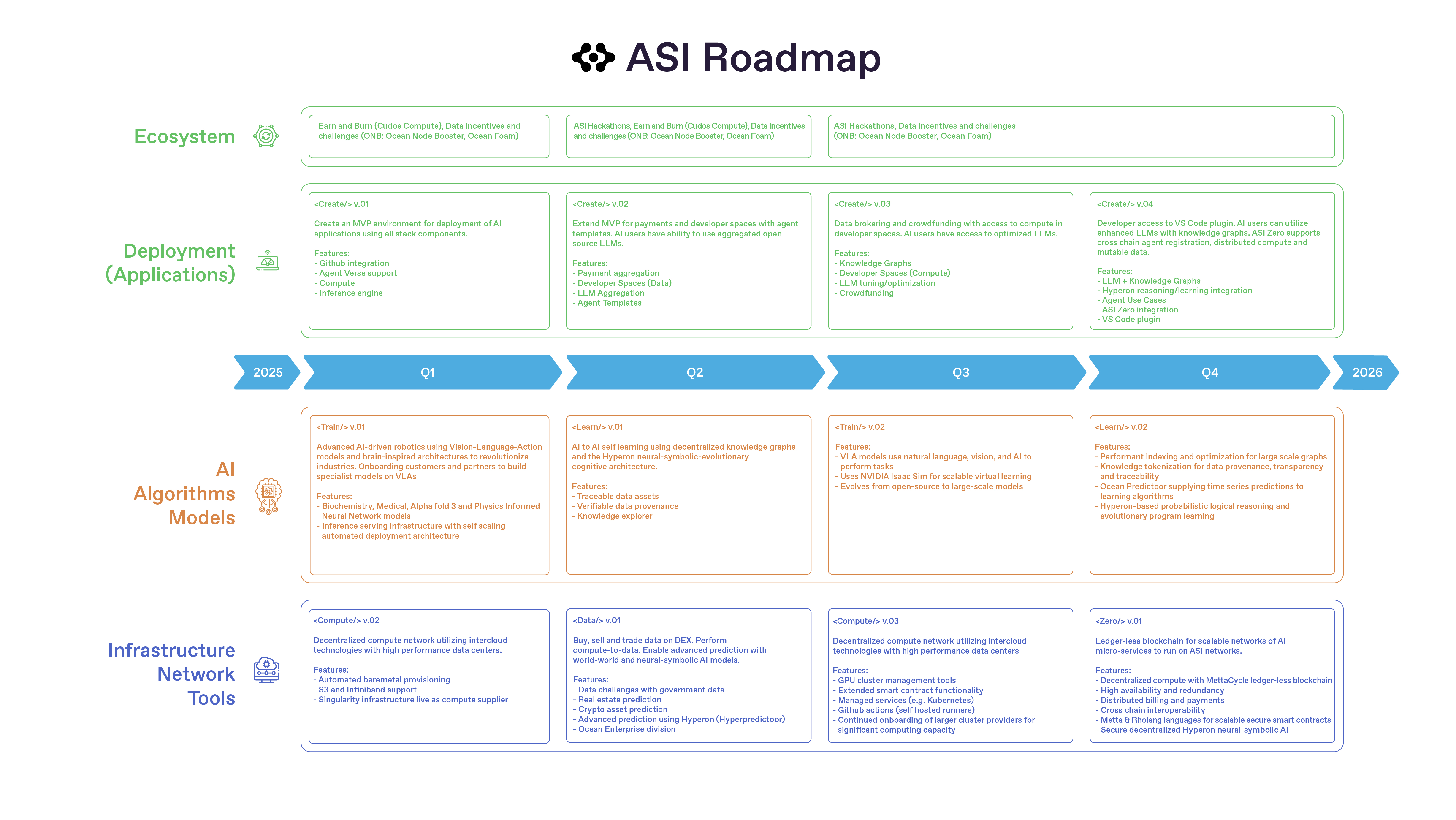
# ASI Roadmap 2025

Charting the way to beneficial AGI and ASI

<figure><img src="https://434267010-files.gitbook.io/~/files/v0/b/gitbook-x-prod.appspot.com/o/spaces%2FE0eZgP8lxRNljW57Uw4H%2Fuploads%2FYsQi8WyTy3eqxgPDKPG4%2FCopy%20of%20ASI_ROADMAP-301.png?alt=media&amp;token=b170afb5-3d28-44ba-af8a-e77de7ee7a7f" alt=""><figcaption></figcaption></figure>

The ASI Alliance laid out an ambitious and realistic timeline for progressing our core technologies. This roadmap outlines key initiatives across four interconnected areas: Ecosystem, Deployment (Applications), AI models/systems, and Infrastructure. These initiatives are designed to foster collaboration, drive technological advancements, and build scalable infrastructure for decentralized AI and true AGI.

Our commitment to creating decentralized, democratic, inclusive, and beneficial AGI has never been more resolute. There is still more research and development needed to get to human-level AGI —and shortly after, ASI— but we have charted a clear roadmap to advance our decentralized AI infrastructure and advance the other research and development streams that are being pursued within the Alliance, namely the Hyperon Neural-Symbolic Evolutionary approach, LLMs, World-World models, and Agent Networks.

Going into 2025, we will take a series of concrete steps to execute against these plans, expanding our ecosystem, and defining a clear strategy to lead in the AGI era. Each of these moves opens new opportunities for the ASI ecosystem, and their impact will continue to be felt far into the future.


# ASI Innovation Stack

Creating a full technology stack for decentralised AI, AGI and ASI.

<figure><img src="https://434267010-files.gitbook.io/~/files/v0/b/gitbook-x-prod.appspot.com/o/spaces%2FE0eZgP8lxRNljW57Uw4H%2Fuploads%2Fotb2hSO6jz348kS7yvYa%2Fimage.png?alt=media&amp;token=5c27d4f2-b680-4f62-9fce-bac5dcebe10b" alt=""><figcaption></figcaption></figure>

The ASI Innovation Stack is a fully integrated framework designed to power the next wave of AI-driven breakthroughs.

We are bringing every essential component together—data, modeling, deployment, and beyond—so that ambitious developers and founders can seamlessly create transformative solutions, all in one place.

Together, we are creating a fully decentralized technology backbone that supports AI, AGI, and ASI, redefining the future of intelligence and empowering you to build, innovate, and excel in a rapidly evolving landscape.


# ASI \<CREATE/>

<figure><img src="https://434267010-files.gitbook.io/~/files/v0/b/gitbook-x-prod.appspot.com/o/spaces%2FE0eZgP8lxRNljW57Uw4H%2Fuploads%2F4Eoj067d33afyZfVOTDS%2FASI_CREATE%402x-80.jpg?alt=media&amp;token=2db57305-7957-46dc-8e32-cee3342e8b72" alt=""><figcaption></figcaption></figure>

ASI: Create is a platform that connects AI developers with users to make deploying agents easy.\
\
For users, the platform bridges sophisticated AI capabilities with practical implementation. It offers a multi-modal natural language interface that aggregates a variety of agent types for machine learning, LLMs, and neural symbolic systems with domain specific knowledge (starting with crypto algo trading and drug discovery). In this way, users have one interface to access networks of agents that can be composed to execute tasks and workflows.&#x20;

For AI developers, the platform's architecture delivers three innovations: First, it provides access to stable and reasonably-priced decentralized AI compute. Task decomposition makes chaining tasks for agents easier. Advanced neural symbolic system reasoning systems use knowledge graphs to deliver better performance while paving the way for future Hyperon AGI interoperability. Second, this infrastructure catalyzes development with template code and use cases for common types of agents. Deployment is simplified with AI-centric CI/CD (continuous integration and deployment) workflows. Third, multi-agent protocols facilitate interoperability between agents and networks to provide registration and payment services for decentralized environments. Also, fiat on/off ramps will be available to support crowdfunding. This positions ASI at the forefront of accessible and open AI agent infrastructure.


# Introducing ASI \<CREATE/>

The AI Launchpad that makes funding, creating, deploying and monetising agents faster and easier.

**November 7, 2024** — ASI: Create is announced today as the gateway to an unprecedented era of Artificial Superintelligence, transforming the landscape of AI with composable tools, accessibility, and community-driven collaboration. Backed by the ASI Alliance—a powerful partnership including SingularityNET, Fetch.ai, CUDOS and Ocean Protocol: Create positions itself as a revolutionary platform, empowering developers, innovators, and communities to take part in the journey toward ASI.

ASI, or Artificial Super Intelligence, envisions intelligence that goes beyond human capabilities in complex problem-solving, creativity, and emotional understanding. To achieve ASI, the alliance is advancing through successive stages of AI and AGI (Artificial General Intelligence). ASI: Create is the launchpad supporting these transformative advancements, representing a cornerstone of the ASI AI DePIN stack. The journey toward ASI requires unique tools and collaboration, and ASI: Create is designed precisely for that purpose.

### Core Features Inside ASI: Create

**1. AI Launchpad**

* Enables crowdfunding and grant access for AI projects
* Provides tools for rapid AI agent development
* Offers affordable hosting and compute power

The AI Launchpad democratizes AI creation, enabling innovators to bring ideas to life without high initial costs or technical barriers, creating a smoother path to launching impactful projects.

**2. Cross-Domain GenAI**

* Supports applications across various industries
* Powered by enhanced Large Language Models (LLMs)
* Utilises knowledge graphs for accurate and transparent responses

This feature allows for versatile AI applications, from crypto market analysis to biotech innovations, enhancing decision-making across sectors.

**3. Developer Spaces**

* Integrates with platforms like Telegram, Discord, and X.com
* Facilitates connections with users
* Enables data buying, selling, and trading

Developer Spaces create a vibrant ecosystem for AI projects, fostering community growth and accelerating project development through optimized crowdfunding and data exchange.

**4. Pre-Trained Custom AI Agents**

* Offers customisable templates for various AI capabilities
* Supports automation across different fields
* Enables innovation in areas like algo trading and drug discovery

These pre-trained agents significantly reduce development time and allow for rapid deployment of specialised AI solutions across diverse domains.

### The Impact and Vision of ASI: Create

ASI: Create is not just a collection of advanced tools; it represents a critical step forward in the journey toward AGI (Artificial General Intelligence) and ASI (Artificial Super Intelligence). By providing developers with access to free compute resources, digital commodity funding, and a vibrant community, ASI: Create fosters a thriving ecosystem for innovation. Users benefit from high-performance, open-source AI with a secure, privacy-centric architecture, enabling them to engage with advanced AI capabilities safely and effectively. For investors, ASI: Create presents an opportunity to support pioneering AI projects through liquid staking and digital commodities, driving the growth of impactful, forward-looking initiatives.

At the core of ASI: Create lies the ASI AI DePIN stack, designed around four innovation pillars: Enhanced Large Language Models, Neural-Symbolic Systems, World-World Models, and Agent Networks. This decentralised stack powers applications across industries, paving the path toward AGI and ASI while upholding community governance, data privacy, and adaptable, industry-specific solutions.

ASI: Create reveals its potential with the release of the prototype video. This showcase highlights a new era of decentralised, community-driven AI that is set to redefine the future of artificial intelligence. Discover how ASI: Create empowers users to build, collaborate, and innovate—ushering in the next chapter of AI.


# ASI \<LEARN/>

<figure><img src="https://434267010-files.gitbook.io/~/files/v0/b/gitbook-x-prod.appspot.com/o/spaces%2FE0eZgP8lxRNljW57Uw4H%2Fuploads%2FH2ZoylOH38VUHXpG59RT%2FASI_LEARN%403x-100.jpg?alt=media&amp;token=0909be8f-a225-4eb6-8b54-224a08a7f114" alt=""><figcaption></figcaption></figure>

ASI: Learn establishes transparent and traceable pathways for data-to-graph conversion. The platform implements graph transformations through semantic, perceptual inputs and experiential learning.

The architecture delivers the following: indexing for graph search, knowledge asset tokenization, collaborative annotation frameworks, data privacy management, performance optimization, and cross-chain interoperability. The system monetizes data from source to transformation while maintaining contributor privacy.


# ASI \<TRAIN/>

<figure><img src="https://434267010-files.gitbook.io/~/files/v0/b/gitbook-x-prod.appspot.com/o/spaces%2FE0eZgP8lxRNljW57Uw4H%2Fuploads%2FLoISzSYj60FaD6TbJ0pL%2FASI_TRAIN%402x-80.jpg?alt=media&amp;token=19169ff1-13c8-4a99-9392-c0d6cbd098d2" alt=""><figcaption></figcaption></figure>

ASI: Train creates an ecosystem of aggregated open-source foundation models trained and owned by the community. Inference is served by autonomous agents with a cognitive search layer enabling discovery through natural language prompts and data protocols.

ASI: Train’s architecture delivers the following: data pipeline, model quantization, scalable compute, agent-based search and discovery of models. The system implements comprehensive tools for deployment, data provisioning, compute, and finetuning. Fetch.ai agents facilitate ecosystem onboarding for research entities, business data providers, and end users.

ASI: Train integrates Cudos’ infrastructure, Ocean’s data tools, and SingularityNET’s capabilities for model selection and optimization. Fetch.ai delivers agent-based inference. The platform creates workflows, and automates training and inference processes. This allows new services to be composed from multi-agent networks.


# An introduction to ASI\<Train/>

## Abstract

Large Language Models (LLMs) have revolutionized natural language processing and artificial intelligence (AI) applications. Despite remarkable progress, scaling LLMs further is neither sustainable nor sufficient to meet the growing demands for quality, speed, and domain specificity. LLMs cater to solving for breadth of knowledge and general intelligence rather than depth of knowledge within a specific domain.&#x20;

This paper argues that the future of LLM development lies in combining domain-specific foundational models with cognitive search capabilities. Using robotics, biotechnology, and physics as case studies, it demonstrates how specialization and enhanced retrieval mechanisms can overcome the inherent limitations of generalist LLMs to make progress and unlock new revenue streams. These advances can ensure efficiency, relevance, and depth in addressing complex challenges across disciplines.

## Introduction to ASI\<Train/>

The advent of LLMs, such as OpenAI's GPT series, Meta's Llama, Anthropic's Claude, and Google's Gemini, has fundamentally changed how AI interacts with humans and has made AI assistants mainstream. By training on vast, diverse datasets, these models achieve general-purpose utility. However, this generality is also their limitation.&#x20;

More sustainable solutions exist than scaling LLMs by increasing their training parameters and datasets. The path forward lies in developing domain-specific foundational models that prioritize specialized knowledge and cognitive search to enhance retrieval and synthesis capabilities. ASI\<Train/> is a Web3 platform that is one of the first to target the training of domain-specific foundational models to solve monumental challenges within such domains and democratize access and ownership of advanced AI capabilities from these models.

## Why is ASI\<Train/> needed?

In our view, generalist LLMs will co-exist with domain-specific foundational models because of the limitations of the LLMs.

### LLM limitations

#### Generalist limitations for domain-specific challenges&#x20;

* Contextual Depth: They often fail to address domain-specific nuances, producing outputs that lack precision or are factually incorrect in specialized fields.
* Relevance: Responses may be verbose or irrelevant due to overgeneralized training datasets.
* Biases: Training on diverse datasets introduces biases, which can be detrimental in critical domains like biotechnology or physics.&#x20;
* Multimodality: While LLMs are expanding into multimodality, they struggle to scale across all possible modalities due to the vast diversity of data and challenges in aligning outputs consistently across different types.&#x20;

#### Scaling limitations with diminishing returns

As model sizes grow, performance improvements on benchmarks like GLUE or SuperGLUE plateau. Studies, such as Kaplan et al.’s work on scaling laws (2020), show that larger models require exponentially extensive resources for marginal gains. This diminishing return is especially evident in tasks requiring domain expertise, where generalist LLMs produce surface-level responses.

#### Unsustainable resource requirements

Scaling LLMs is computationally expensive and environmentally unsustainable:

* OpenAI’s GPT-3 reportedly consumed 1,287 MWh of energy during training, equivalent to the annual electricity consumption of 120 U.S. homes (Patterson et al., 2021).
* Inference latency increases with model size, making real-time applications like robotics and biotech simulations impractical.

### Case for domain-specific foundational models

Domain-specific foundational models are pre-trained and optimized for a particular discipline. Unlike generalist LLMs, these models use curated datasets, specialized architectures, and require domain expertise to address the unique challenges. Advantages of specialization can be attributed to three areas:

#### 1. Enhanced accuracy&#x20;

Domain-specific foundational models demonstrate remarkable potential within their respective domains because of unparalleled accuracy and precision in complex applications. For example,

* In robotics, models trained on robotic process datasets can produce accurate kinematics or path optimization predictions.
* In biotech, foundational models can analyze protein structures or genomic sequences with unmatched precision.

#### 2. Efficiency gains

Accrue from dealing with a significantly smaller subset of domain data rather than an entire corpus of internet data. Specifically, efficiency gains include:

* Smaller, specialized models require fewer computational resources.
* Real-time applications like robotics control systems benefit from reduced latency.

#### 3. Tailored inputs and outputs

Specialized models can integrate with the regulatory, ethical, and practical requirements of the domains. For example,&#x20;

* Models related to robotics need to adhere to safety requirements in a human-robot hybrid environment.&#x20;
* Models related to drug discovery must conform to ethical and regulatory requirements from local governing bodies.
* Models related to quantum mechanics should reflect fundamental aspects of quantum reality, including entanglement, superposition, measurement effects, quantum decoherence, as well as practical considerations like material limitations and the impact of observation.

## What is ASI\<Train/>?&#x20;

### An agent-based training framework for specialist foundation models

As industries increasingly adopt specialized AI models, traditional centralized inference serving systems face scalability, cost, and latency challenges. By leveraging Fetch.ai’s Autonomous Inference Model (AIM) Agents and FET tokenomics, ASI\<Train/> can overcome these limitations and provide a decentralized, incentivized, and efficient framework for inference serving across diverse domains such as robotics, material science, molecular design, and physics simulations.

#### Framework components

1. AIM agents&#x20;

* AIMs are lightweight, autonomous software agents that host and manage trained ASI\<Train/> models.
* They are specialized for tasks in distinct domains, e.g., robotics, drug design, or physics simulations.

2. Inference nodes

* Distributed network nodes where AIMs are deployed.
* Inference nodes process user requests, ensuring low-latency inference serving.

3. Validation nodes

* Validate inference outputs to ensure accuracy and quality.
* Validators are rewarded in FET tokens for successful and fair validations.

4. FET token system

* Facilitates transactions between users, AIMs, and validators.
* Rewards are distributed based on computational resources, model quality, and inference accuracy.

5. Dynamic subnetworks

* AIMs form dynamic subnetworks based on domain-specific requirements, optimizing resource allocation and communication.

#### An AIMs-based inference serving layered architecture

1. Application layer

* Hosts user-facing interfaces for submitting inference requests.
* Manages subscription plans and integrates payment systems for FET transactions.

2. Agent layer (AIMs)

* Each AIM agent specializes in hosting domain-specific ASI\<Train/> models (e.g., robotics, PINNs, molecular design).
* AIMs handle model deployment, request processing, and result generation.

3. Resource management layer

* Allocates computational resources across the network, optimizing workload distribution for inference nodes.
* Implements demand-based scaling to match network capacity with request volume.

4. Validation layer

* A decentralized layer of validators ensures inference accuracy and model performance.
* Uses reputation systems to prioritize validators with a history of reliable assessments.

5. Blockchain layer

* Secures all transactions, model updates, and validation records using Fetch.ai’s blockchain.
* Ensures transparency and immutability of FET token flows and inference outcomes.

#### Workflow for inference serving

* Inference request submission\
  Users submit requests through the Application Layer, specifying the desired model and parameters.
* Request routing via AIM agent\
  The Resource Management Layer routes the request to the most suitable AIM agent based on performance metrics and computational availability.
* Model execution\
  The AIM agent processes the request using the hosted ASI\<Train/> model and generates the inference output.
* Validation\
  Validation nodes assess the quality of the inference result, ensuring correctness and reliability.
* Result delivery and reward distribution
  * Results are returned to the user.
  * FET tokens are distributed among AIMs, validators, and node operators based on contribution and performance.

#### Additional features of the framework

1. **Interoperability across domains - Fetch.ai AIMs enable seamless integration of diverse domain-specific models, fostering collaboration across industries.**
2. **Real-time collaboration - Decentralized AIMs allow researchers and industries to collaborate and share models without relying on centralized infrastructures.**
3. **On-demand scalability - Dynamic subnetworks ensure the system scales efficiently based on real-time demand for domain-specific inference services.**
4. **Incentivization for specialization - FET rewards encourage the creation and maintenance of high-quality, specialized models, ensuring continuous innovation.**

### Enhanced tokenomics model

#### Multi-tier reward system

The tokenomics are structured to incentivize various stakeholders in the network, ensuring fairness and fostering collaboration.

1. Model providers (AIMs)

* Revenue Model: Earn FET tokens based on the number and quality of inference requests served.
* Performance Bonuses: Additional FET rewards for high accuracy, low latency, and model optimization.

2. Validators

* Primary Rewards: Validators assess inference outputs for accuracy and reliability and are rewarded with FET for successful validations.
* Staking Incentives: Validators stake FET tokens to ensure commitment and are penalized for invalid or biased validations.

3. Users

* Pay-per-Inference: Users pay in FET tokens based on the complexity and resource intensity of their requests.
* Subscription Model: Users can subscribe to domain-specific subnets for frequent access to inference services at a reduced cost.

4. Network operators

* Infrastructure Incentives: Nodes providing computational resources to AIMs are compensated in FET for hosting and maintaining the network.

#### Dynamic pricing mechanism

* Demand-based pricing: FET token costs for inference services fluctuate based on demand and resource availability within the network.
* Complexity-based pricing: Inference requests with higher computational requirements are priced higher, ensuring equitable distribution of resources.

#### Governance and staking

* Governance tokens: A portion of staked FET tokens can be converted to governance tokens, enabling participants to vote on subnet parameters, model priorities, and token distribution policies.
* Revenue redistribution: A percentage of FET fees is reinvested into the network for research, development, and community growth.

#### Sustainability funds

* Green incentives: A sustainability fund ensures that a portion of FET tokens is allocated to optimizing energy efficiency and supporting environmentally friendly computation.

### First candidate model for ASI\<Train/>

#### Cortex: a brain inspired robotics model

For decades, humanity has envisioned robots working alongside people, enabling humans to focus on solving complex problems. However, robots come in many forms—not just humanoid figures. From robotic arms used for item picking in warehouses and robotized assembly lines to advanced medical robots, the field of robotics is vast and diverse. As of now, the global robotics market is expected to reach $165 billion by 2029, with the robotics software market projected to grow to $80 billion by 2032.

The rise of artificial intelligence (AI) has unlocked unprecedented opportunities in robotics. Traditional robotics relied on heuristic methods and preprogrammed instructions, but AI introduces adaptive and learning-based algorithms, enabling robots to better understand and interact with their environments. Despite this progress, creating AI systems capable of processing multiple information sources and navigating the physical world remains a significant challenge.

Recent advancements in Large Language Models (LLMs) have expanded the horizons of robotics. Multimodal LLMs, capable of processing both text and images, open up possibilities for robotics systems that combine environmental visual data with internal states. These advancements pave the way for robots that are not only reactive but also contextually aware and adaptive.

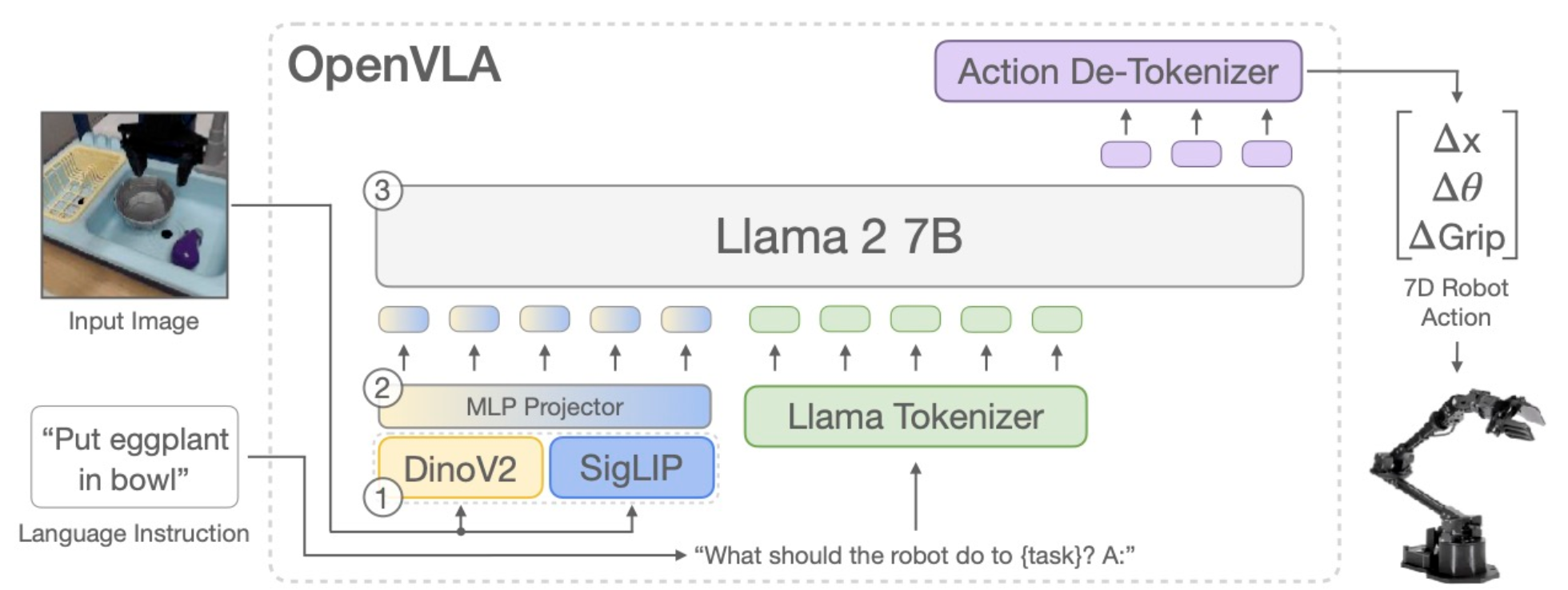
Building on these developments, we plan to take inspiration from existing models as practical starting points. Google has been a leader in this area, releasing RT-1 and RT-2, with the closed-source RT-2-X representing a significant leap in capability. The open-source community has also made strides, such as developing the OpenVLA model in an effort to replicate RT-2-X. The ASI team intends to start with OpenVLA as a foundation and innovate further, creating the next generation of robotic control models inspired by how the human brain operates.

Brain-inspired robotics hold immense potential to transform industries such as manufacturing, healthcare, and hospitality. Collectively, these industries stand to gain an annual financial impact of $1 billion to $3 billion from such advancements.&#x20;

### Future directions

#### Science domains being explored

**Novel material discovery**

* Challenge: Accurately predicting material properties is a critical yet challenging task in the field of inorganic materials design. While quantum mechanical approaches like Density Functional Theory (DFT) provide a strong theoretical foundation for understanding material behavior at the atomic and subatomic levels, they are computationally intensive and highly dependent on specific functionals. This makes large-scale material screening impractical and creates a bottleneck in advancing high-growth industries such as batteries, semiconductors, and nanotechnology.
* Solution: The ASI\<Train/> initiative will leverage artificial intelligence (AI) to predict material properties with high accuracy while drastically reducing computational demands. By training AI models on large datasets of DFT-calculated and experimentally verified material properties, ASI\<Train/> will accelerate high-throughput screening processes. This integration of AI and physics-based methods should complement traditional approaches, enabling efficient and scalable new material discovery.
* Impact: By overcoming the computational limitations of traditional methods, initiatives like ASI\<Train/> will drive breakthroughs in materials design, particularly in energy storage, electronics, and nanotechnology. These advancements are pivotal in addressing global challenges such as clean energy and sustainability while contributing to the rapid growth of markets like batteries (projected to reach $680 billion by 2033) and advanced materials (expected to grow to $115 billion by 2030).

**Molecule design for drug discovery**

* Challenge: Accurately predicting effective drug molecules is a critical yet challenging task in pharmaceutical drug discovery. A key bottleneck is molecular docking—a computational method used to identify molecules that bind effectively to target proteins and influence disease progression. However, molecular docking is complicated by the intricate nature of biological interactions and the vast chemical space of potential drug candidates, which consists of billions of possible molecules.
* Solution: Data-driven approaches, particularly AI-based models like DiffDock, offer a promising solution to these challenges. These machine learning models leverage advanced algorithms to more accurately predict protein-ligand interactions by accounting for the flexibility of the molecules. By improving the efficiency and accuracy of molecular docking, models like DiffDock can significantly accelerate the identification of viable small-molecule candidates. The ASI team is committed to scaling up these AI models to enhance their robustness and versatility in discovering high-potential drug candidates. This involves implementing strategies such as expanding training datasets to encompass a broader diversity of molecular structures and protein interactions, refining algorithms and model architectures, leveraging state-of-the-art computational resources, and improving scoring functions and conformational sampling techniques. This will enhance the robustness and versatility of AI tools in discovering high-potential drug candidates.
* Impact: By accelerating the identification of viable small-molecule candidates, scaling up AI-based models like DiffDock can significantly reduce the time and cost associated with drug discovery. Currently, developing a single new drug ranges from $1 billion to $2 billion due to extensive research, clinical trials, and regulatory hurdles. This efficiency not only reduces financial burdens but also enables researchers to allocate more resources toward exploring complementary therapeutic modalities and tackling diseases with diverse underlying causes. Furthermore, these advancements can help the pharmaceutical industry meet the growing demands of a market valued at $1.5 trillion, with an expected compound annual growth rate of over 6%. Ultimately, the ASI team's efforts will contribute significantly to advancing computational tools in medicine, bridging the gap between discovery and delivery, and bringing life-saving treatments to patients faster and more cost-effectively.

**Physics-Informed Neural Networks (PINNs)**

* Challenge: Solving complex partial differential equations (PDEs) in real-time for physics simulations, fluid dynamics, structural analysis, etc.
* Solution: AIMs host PINNs trained for specific physics problems, enabling decentralized inference serving for industries like aerospace, automotive, and civil engineering.
* Impact: Efficient simulations reduce computational costs and enable faster prototyping and testing.

**Environmental modeling**

* Challenge: Accurate climate modeling requires handling large-scale, dynamic datasets for phenomena like weather prediction or ocean simulations.
* Solution: AIMs host domain-specific PINNs trained on climate datasets, providing real-time predictions and analyses.
* Impact: Supports sustainable decision-making and disaster preparedness.

**Personalized medicine**

* Challenge: Identifying personalized treatment options based on patient genomics and phenotypic data.
* Solution: AIMs use ASI-trained models to analyze individual patient data and suggest tailored therapeutic options.
* Impact: Enhances treatment efficacy and patient outcomes.

#### Models being explored

**ChemBERTa**

* Description: A transformer-based model for molecular property prediction, inspired by BERT (Bidirectional Encoder Representations from Transformers).
* Applications: Predicting bioactivity, toxicity, and other chemical properties of organic molecules.
* Key Model Features:
  * Leverages SMILES (Simplified Molecular Input Line Entry System) for molecular representation.
  * Employs self-supervised pretraining on a curated dataset of 77M SMILES from PubChem.
  * Offers competitive performance on MoleculeNet benchmarks.
* Key Paper: [ChemBERTa: Large-Scale Self-Supervised Pretraining for Molecular Property Prediction](https://arxiv.org/pdf/2010.09885)

**DiffSBDD (Diffusion-Based Structure-Based Drug Design)**

* Description: An SE(3)-equivariant diffusion model for structure-based drug design (SBDD), enabling the generation of molecular structures conditioned on protein binding pockets.
* Applications: Generating novel ligands for drug discovery, property optimization, explicit negative design, and partial molecular design with inpainting.
* Key Model Features:
  * Formulates SBDD as a 3D-conditional generation task.
  * Leverages diffusion models to capture the statistical properties of natural ligands.
  * Allows for additional constraints to optimize generated candidates for specific computational metrics.
  * Supports a flexible framework for various drug design challenges without retraining.
* Key Paper: [Structure-based Drug Design with Equivariant Diffusion Models](https://arxiv.org/pdf/2210.13695)

**Alphafold3**

* Description: AlphaFold 3 is an advanced AI model developed by Google DeepMind and Isomorphic Labs for predicting the 3D structures of protein complexes, including interactions with DNA, RNA, ligands, ions, and chemical modifications.&#x20;
* Applications: Facilitates the study of biomolecular interactions, aiding in drug discovery and molecular biology research.&#x20;
* Key Model Features:
  * Predicts structures of protein complexes with nucleic acids and small molecules.
  * Employs the Pairformer architecture for enhanced interaction modeling.
  * Incorporates a diffusion model to refine 3D structural predictions.&#x20;
* Key Paper: [Accurate structure prediction of biomolecular interactions with AlphaFold 3](https://www.nature.com/articles/s41586-024-07487-w)

**MatBERT**

* Description: A transformer-based language model framework for materials property prediction, combining human-readable descriptions of crystal structures with AI-powered insights.
* Applications: Predicting material properties, explaining structure-property relationships, and facilitating materials design and education.
* Key Model Features:
  * Utilizes transformer models pretrained on 2 million peer-reviewed articles.
  * Represents materials with text-based descriptions incorporating chemical composition, crystal symmetry, and site geometry.
  * Demonstrates high accuracy even in ultra-small data scenarios.
  * Provides transparent and interpretable predictions via local explainability techniques.
* Key Paper: [Accurate, interpretable predictions of materials properties within transformer language models](https://www.sciencedirect.com/science/article/pii/S2666389923001587)

**CGCNN (Crystal Graph Convolutional Neural Network)**

* Description: A graph-based neural network framework for predicting material properties directly from the atomic connections in crystalline structures.
* Applications: Property prediction, discovering new inorganic materials, and deriving empirical design rules.
* Key Model Features:
  * Utilizes crystal graphs to represent atomic connections, ensuring universality across crystal types.
  * Predicts diverse properties such as formation energy, elasticity, and electronic characteristics.
  * Trained on 10⁴ data points to achieve high accuracy for density functional theory (DFT) properties.
  * Provides interpretability by attributing global properties to local chemical environments.
  * Facilitates empirical insights for materials design, demonstrated with perovskite materials.
* Key Paper: [Crystal Graph Convolutional Neural Networks for an Accurate and Interpretable Prediction of Material Properties](https://arxiv.org/pdf/1710.10324)

**GeoCGNN (Geometric-information-enhanced crystal graph neural network)**

* Description: A geometric-information-enhanced graph neural network for predicting the properties of crystalline materials by incorporating full topological and spatial geometric structure information.
* Applications: Accurate prediction of properties like formation energy and band gap for crystalline materials.
* Key Model Features:
  * Encodes geometric information using distance vectors and mixed basis functions.
  * Learns both topological and spatial structural details for comprehensive material representation.
  * Outperforms existing GNN models (e.g., CGCNN, MEGNet, iCGCNN) in prediction accuracy across multiple datasets.
  * Achieves significant improvements: 25.6% for formation energy and 27.6% for band gap compared to CGCNN.
* Key Paper: [A geometric-information-enhanced crystal graph network for predicting properties of materials](https://www.nature.com/articles/s43246-021-00194-3)

**DeePMD (Deep Potential Molecular Dynamics)**

* Description: A deep neural network-based method for learning accurate many-body potential energy surfaces, designed for molecular dynamics simulations.
* Applications: Simulating the dynamics of both organic and inorganic molecules in materials and chemical systems.
* Key Model Features:
  * Trained with ab initio data to accurately model interatomic forces and potential energy surfaces.
  * Preserves natural symmetries of the molecular system, ensuring physical consistency.
  * Scales efficiently with system size, providing results indistinguishable from original data.
  * Applicable to a wide range of systems, from small molecules to bulk materials.
* Key Paper: [Deep Potential Molecular Dynamics: a scalable model with the accuracy of quantum mechanics](https://arxiv.org/pdf/1707.09571)

**G-SchNet**

* Description: A generative neural network designed to create 3D molecular structures while preserving rotational invariance, enabling the generation of molecules with targeted quantum-chemical properties.
* Applications: Molecular generation for quantum chemistry, including the design of molecules with specific electronic properties such as a small HOMO-LUMO gap for organic solar cells.
* Key Model Features:
  * Captures 3D geometry and electronic property relationships.
  * Respects rotational invariance to distinguish spatial isomerism and non-bonded interactions.
  * Approximates the distribution of equilibrium molecular structures using spatial and chemoinformatics metrics.
  * Guides molecular generation toward desired properties by biasing the generator's output distribution.
* Key Paper: [Symmetry-adapted generation of 3d point sets for the targeted discovery of molecules](https://papers.nips.cc/paper_files/paper/2019/file/a4d8e2a7e0d0c102339f97716d2fdfb6-Paper.pdf)

**DiffDock**

* Description: A diffusion generative model for molecular docking that predicts ligand binding structures on a non-Euclidean manifold of poses.
* Applications: Drug discovery and design by accurately predicting small molecule-protein binding structures.
* Key Model Features:
  * Frames docking as a generative task, modeling ligand poses in translational, rotational, and torsional degrees of freedom.
  * Achieves state-of-the-art performance with a 38% top-1 success rate (RMSD < 2Å) on PDBBind, surpassing traditional (23%) and deep learning (20%) methods.
  * Maintains superior accuracy (21.7%) on computationally folded protein structures compared to prior methods (10.4%).
  * Offers fast inference times and confidence estimates with high selective accuracy.
* Key Paper:[ DIFFDOCK: DIFFUSION STEPS, TWISTS, AND TURNS FOR MOLECULAR DOCKING](https://arxiv.org/pdf/2210.01776)

#### Impact vs training effort for the models being explored

<figure><img src="https://434267010-files.gitbook.io/~/files/v0/b/gitbook-x-prod.appspot.com/o/spaces%2FE0eZgP8lxRNljW57Uw4H%2Fuploads%2FYtw82RPYDE279rGla8P5%2Fimage1.png?alt=media&amp;token=1d524b6e-6aea-44e8-94ee-00b797f56a2b" alt=""><figcaption></figcaption></figure>

#### Tokenomics and framework

Enhanced tokenomics for multi-tiered contributions

* Introduce differentiated FET rewards for tasks like training, hosting, validating, and improving models.
* Allow staking mechanisms to ensure long-term engagement and quality assurance.

Adaptive subnetworks

* Implement AI-driven subnet formation for optimal resource allocation based on demand patterns and model complexity.

Integration with edge computing

* Extend AIMs to edge devices, enabling localized and low-latency inference for applications like autonomous vehicles and IoT.

Ethical and regulatory compliance

* Develop mechanisms to ensure hosted models meet ethical guidelines and domain-specific regulations, particularly in sensitive areas like drug discovery and climate modeling.

### Conclusion

The enhanced ASI\<Train/> x ASI framework combines Fetch.ai’s AIM-based architecture with domain-specific models to provide an efficient, scalable, and incentivized system for decentralized inference serving. By expanding use cases in the domains of novel material discovery, molecule design for drug discovery, physics-informed neural networks (PINNs), environmental model, and personalized medicine, this framework addresses critical challenges across industries, enabling innovation while maintaining accessibility and sustainability. This approach not only democratizes advanced AI capabilities but also fosters a collaborative, decentralized ecosystem poised to tackle global challenges effectively.

<br>


# ASI\<Train/> CORTEX: Brain Inspired Robotics Model

### Abstract

ASI\<Train/> is an initiative dedicated to developing foundational models across various verticals in artificial intelligence, with robotics being a key focus area. This white paper introduces the first model that ASI\<Train/> aims to build and train, Cortex, aiming to enhance robotic capabilities through advanced AI models. Leveraging recent advancements in Large Language Models (LLMs) and multimodal AI systems, the project seeks to create robots that are not only reactive but also contextually aware and adaptive.

A significant area of exploration for ASI\<Train/> is Vision-Language-Action (VLA) models. These models utilize natural language instructions to guide robot actions, enhanced by continual visual feedback from the environment. By repurposing unused tokens from core LLMs to represent robot movements, VLA models enable efficient network training and inference. Building upon existing open-source models like OpenVLA, the project plans to innovate further by delivering new state of the art models.

While VLA models are a primary focus for this divestment, ASI\<Train/> remains open to developing and integrating different types of models that can enhance robotic functionality. This includes incorporating brain-inspired architectures, such as recurrent neural networks and reinforcement learning modules. These components will enable robots to adapt their actions over repeated tasks, cooperate with other robots, and plan complex, multi-step operations in changing environments.

These advancements have the potential to revolutionize industries such as manufacturing, healthcare, and hospitality, with an estimated annual financial impact of $1 billion to $3 billion. By focusing on the creation of one or more advanced AI/ML models—such as enhanced VLA models and other innovative architectures—ASI\<Train/> aims to deliver tangible, deployable solutions that directly enhance robotic capabilities. This emphasis on producing concrete AI models will accelerate the development of decentralized Artificial General Intelligence (AGI) and ultimately Artificial Superintelligence (ASI), ushering in a new era of intelligent robotics.

### Problem statement

Developing AI systems that can understand and interact with the physical world while processing multiple sources of information remains a significant challenge. Traditional robotics has relied on heuristic methods and preprogrammed instructions, which limit a robot's ability to adapt to dynamic environments. Recent advancements in Large Language Models (LLMs) have opened new possibilities in robotics, especially with the advent of multimodal LLMs capable of processing both text and images. These models enable robots to gather visual information from their environment and internal states, paving the way for systems that are contextually aware and adaptive.

However, despite the rapid evolution of these models, they are not yet practical for most real-world applications. Limitations such as scalability issues, real-time processing constraints, and difficulties in integrating with existing robotic control systems hinder their widespread adoption. There is a pressing need to develop advanced AI models that can effectively bridge this gap, enabling robots to better understand and navigate the complexities of the physical world while efficiently handling multiple streams of information.

### Solution

The project seeks to enhance robotic capabilities by leveraging existing models and recent advancements in artificial intelligence. Recognizing the significant progress made by the open-source community, we begin by focusing on fine-tuning the OpenVLA model for specific robotic applications. OpenVLA, which builds upon LLaMA 2 and incorporates vision capabilities through technologies like CLIP and DINOv2, has demonstrated promising results in replicating and even outperforming proprietary models like Google's RT-2-X.

By customizing OpenVLA for specific robots and tasks across different industries, we aim to deliver immediate improvements in robotic functionality. This involves adjusting the model's parameters and architecture to suit the unique requirements of various robots, incorporating domain-specific data to improve performance, and optimizing the model for efficient real-time inference on different robotic platforms. This approach allows for rapid deployment and validation of the model's capabilities in real-world settings, enhancing robots with more accurate and generalized control.

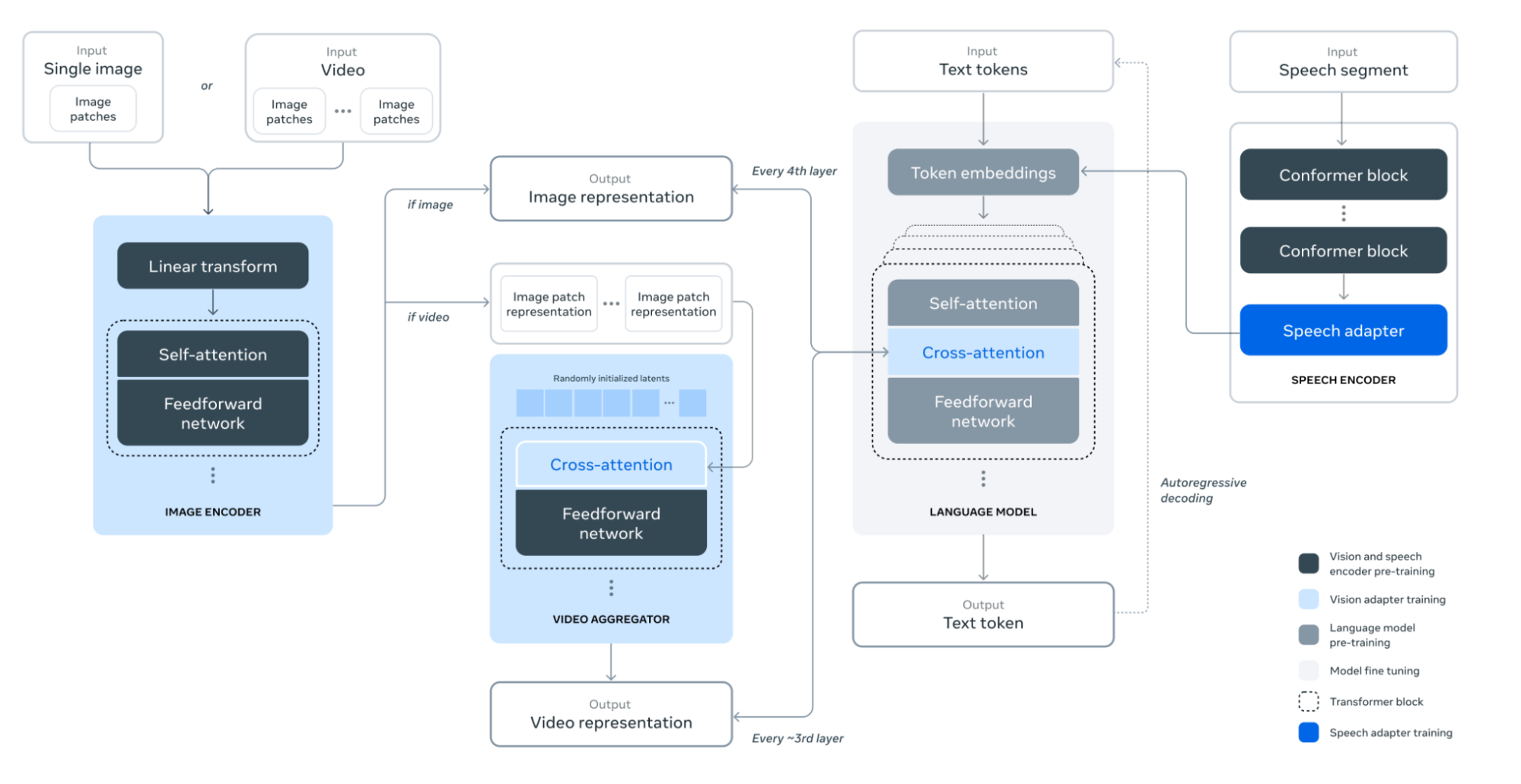
Looking ahead, the next significant advancement involves building upon LLaMA 3.2, a multimodal model that integrates both vision and language capabilities. By leveraging LLaMA 3.2's advanced features, we aim to develop a new state-of-the-art foundational model that surpasses existing solutions in both performance and versatility. This model will enhance robots' ability to interpret complex visual and linguistic information simultaneously, enabling more sophisticated understanding and interaction with their environments.

An essential aspect of our long-term vision is to draw inspiration from the human brain to develop a comprehensive solution. Emulating the brain's structure and function, the approach involves combining models of various sizes and capabilities. Larger models will focus on higher-level reasoning and coarse-grain planning, while smaller models, constrained by the broader context, will handle fine movements. This hierarchical structure mirrors the brain's organization, where different regions perform specialized functions.

Implementing this approach requires training models at different scales, which the project intends to undertake. Additionally, an essential part of human learning is the ability to learn from experience. This concept inspires the integration of reinforcement learning techniques, specifically training methods that allow models to improve through interaction with their environment. The potential for further training these models in virtual environments offers significant opportunities for growth and refinement, enabling the development of robots that can adapt and learn in a manner akin to human cognition.

### Financial impact

The development of advanced AI/ML models for robotics has the potential to significantly impact various industries by enhancing automation, efficiency, and innovation. An analysis of the Total Addressable Market (TAM), Serviceable Available Market (SAM), and Serviceable Obtainable Market (SOM) provides insight into this potential.

**Market Sizes (TAM)**

* Global Robotics Market: Currently valued at $71.2 billion, the robotics market is projected to grow to $165 billion by 2029. This includes industrial robots, service robots, and other robotic systems across multiple sectors.
* Robotics Software Market: Valued at approximately $20 billion, it is expected to expand to $80 billion by 2032. The growth is driven by increasing demand for sophisticated software that enables advanced functionalities in robots.
* Computer Vision Market: With a current value of $25 billion, the computer vision market is anticipated to reach $46.9 billion by 2030. Computer vision is critical for enabling robots to interpret and interact with their environments effectively.
* Large Language Models Market: Valued at $5.6 billion, the market for large language models is expected to grow to $35 billion by 2030. This expansion reflects the broadening applications of LLMs across various industries, including robotics.

**Potential Industry Impact (SAM)**

Advanced AI/ML models can substantially affect several key industries:

* Manufacturing: The integration of intelligent robotics can lead to automation savings and efficiency improvements valued at $500 million to over $1 billion annually on a global scale. Enhanced models can optimize production lines, reduce downtime, and improve quality control.
* Healthcare: Intelligent robotic assistants could drive innovation worth $200 million to $500 million annually. Applications include surgical robots with advanced precision, patient monitoring systems, and robots assisting in rehabilitation therapies.
* Service Robotics: Applications in sectors like retail, logistics, hospitality, and customer service could be valued at over $1 billion annually. Robots equipped with advanced AI models can improve inventory management, streamline supply chains, and enhance customer interactions.

**Revenue Potential and Market Capture (SOM)**

By developing state-of-the-art AI/ML models that outperform existing solutions, there is an opportunity to capture a meaningful share of these markets. Assuming a conservative market penetration of 1% to 5% within a few years:

* Annual Revenue Potential: This translates to approximately $50 million to $100 million in the short term, with significant scaling potential as adoption increases.

Given the high-growth nature of the deep tech domain, particularly in AI and robotics, these models could achieve valuations reflecting a multiple of their revenue potential:

* Valuation Estimates: With a 10x revenue multiple, the models could reach valuations ranging from $500 million to $1 billion.

**Benchmarking Against Competitors**

Competitors in the field provide valuable benchmarks for potential valuation and impact:

* OpenAI's GPT Models: With similar foundational architectures, these models are estimated to have valuations exceeding $1 billion each. Their success underscores the substantial value attributed to cutting-edge AI capabilities.
* Robotics AI Startups: Companies like Boston Dynamics often secure funding at valuations of $500 million to over $1 billion, even when focusing on niche applications within robotics. This indicates strong investor confidence in the growth potential of advanced robotics solutions.

**Comparative Model Valuations**

* Advanced Proprietary Models: Models like Google's RT-2-X, while proprietary, are estimated to have valuations ranging from $100 million to $300 million. Their advanced capabilities set industry benchmarks but are not readily accessible for broader application.
* Fine-Tuned OpenVLA: OpenVLA represents a significant community effort to reproduce and enhance advanced models. With fine-tuning, its valuation is estimated between $50 million and $200 million, reflecting its potential impact and accessibility.
* State-of-the-Art Models After Extensive Training: Developing a new family of advanced models through multiple rounds of training could achieve valuations between $500 million and $1 billion. These models would offer superior performance and versatility, positioning them at the forefront of the industry.

The development of one or more advanced AI/ML models for robotics presents a substantial financial opportunity. By capturing even a small percentage of the rapidly expanding markets in robotics hardware, software, computer vision, and large language models, these models can generate significant revenue and achieve high valuations.

The potential impact across industries like manufacturing, healthcare, and service robotics underscores the importance of investing in these technologies. Enhanced models can lead to:

* Increased Efficiency: Streamlining operations and reducing costs across various sectors.
* Innovation Acceleration: Driving the development of new applications and services.
* Market Leadership: Establishing a competitive edge in a rapidly evolving industry.

By focusing on the creation of advanced AI/ML models—such as enhanced Vision-Language-Action (VLA) models and other innovative architectures—ASI\<Train/> aims to deliver tangible, deployable solutions that directly enhance robotic capabilities. This emphasis on producing concrete AI models will accelerate the development of decentralized Artificial General Intelligence (AGI) and ultimately Artificial Superintelligence (ASI), ushering in a new era of intelligent robotics and significant economic growth.

### Comparable Companies

To contextualize the potential financial impact and valuation of advanced AI/ML models in robotics, it is insightful to examine comparable companies in the industry. These companies illustrate the significant market valuations and investment interests in robotics and AI-driven solutions.

Physical Intelligence

* Valuation: Approximately $2.4 billion.
* Focus: Development of robots for domestic assistance.
* Overview: Physical Intelligence specializes in creating robotic systems designed to perform household tasks, aiming to revolutionize domestic automation. Their substantial valuation reflects investor confidence in the potential for robots to become integral in everyday home life.

Covariant

* Valuation: Over $160 million raised in funding as of 2023.
* Focus: AI-powered robotic solutions for warehousing and manufacturing.
* Overview: Covariant develops AI software that enables robots to manipulate objects in warehouses and factories. Their technology enhances automation in fulfillment centers, improving efficiency and reducing operational costs. Covariant has formed partnerships with major companies but has not been acquired by Amazon as of the latest information.

Sereact

* Valuation: Estimated at $30 million.
* Focus: AI solutions for warehousing robots.
* Overview: Sereact offers AI-powered systems that enable robots to perform complex tasks in logistics and warehousing environments. Their focus on niche applications demonstrates the breadth of opportunities in the robotics sector.

Wayve

* Valuation: Over $200 million raised in funding, with valuations estimated around $1 billion.
* Focus: Autonomous driving technologies using end-to-end machine learning.
* Overview: Wayve specializes in developing AI models that enable vehicles to navigate complex urban environments using reinforcement learning and computer vision. Their approach reflects significant advancements in AI and robotics integration in the automotive industry.

Waymo

* Valuation: Estimates range from $30 billion to $100 billion.
* Focus: Autonomous vehicle technology.
* Overview: Waymo, a subsidiary of Alphabet Inc. (Google's parent company), is a leader in self-driving car technology. With extensive testing and deployment of autonomous vehicles, Waymo's high valuation reflects the transformative potential of AI in transportation.

Tesla

* Market Capitalization: Approximately $800 billion to $1 trillion as of 2023.
* Focus: Electric vehicles and autonomous driving technologies.
* Overview: Tesla is at the forefront of integrating AI and robotics in the automotive industry. Analysts from firms like ARK Invest have projected optimistic future valuations for Tesla based on its advancements in autonomous driving and robotics initiatives. Projections suggest a potential market capitalization reaching $8.2 trillion by 2029, highlighting the immense economic potential associated with advancements in AI and robotics.

**Analysis**

The valuations and activities of these companies demonstrate the substantial financial opportunities in developing advanced AI and robotics technologies:

* Investor Confidence: High valuations and significant funding rounds indicate strong investor belief in the future growth of AI and robotics applications across various sectors.
* Strategic Partnerships and Acquisitions: Collaborations and acquisitions in the industry highlight the strategic importance of robotics in enhancing operational efficiency and competitiveness.
* Diverse Applications: The range of focus areas—from domestic robots and warehousing automation to autonomous vehicles—underscores the vast potential market for advanced AI/ML models.
* Economic Impact: Projections for companies like Tesla and Waymo illustrate how advancements in AI and robotics can significantly influence market capitalization and drive economic growth.

By comparing ASI\<Train/>'s potential developments to these industry leaders, it becomes evident that creating advanced AI/ML models for robotics can lead to substantial valuations and market impact. The focus on delivering state-of-the-art models positions ASI\<Train/> to capitalize on the growing demand for intelligent robotic solutions.

The success of companies like Physical Intelligence, Covariant, and Wayve showcases the market's readiness to adopt advanced AI models that enhance robotic capabilities. ASI\<Train/>'s initiative to develop one or more advanced AI/ML models—such as enhanced Vision-Language-Action (VLA) models and brain-inspired architectures—aligns with industry trends and investor interests.

### Communities & organizations interested in the model

The advanced AI models for robotics proposed by ASI\<Train/> are poised to capture the attention of a diverse array of communities and organizations. By engaging with these communities, ASI\<Train/> aims to foster a collaborative environment that accelerates innovation and adoption.

#### Communities

OpenVLA Community\
The OpenVLA (Vision-Language-Action) project on GitHub represents an active community dedicated to advancing multimodal AI models for robotics. This group of developers and researchers focuses on creating open-source models that enable robots to interpret visual inputs and execute language-guided actions. ASI\<Train/>'s work aligns with the interests of this community, presenting opportunities for future collaboration and mutual enhancement of models.

Robotics Forums and Online Communities

* Reddit's r/robotics: A dynamic platform where professionals, enthusiasts, and hobbyists discuss the latest developments in robotics. The community is known for its collaborative problem-solving and knowledge sharing, making it a potential hub for feedback and dissemination of ASI\<Train/>'s advancements.
* Robot-Forum.com: An international forum that brings together robotics professionals to exchange technical insights and discuss industry trends. Engaging with this forum could provide valuable perspectives on practical challenges and industry needs.
* RoboDK Forum: Focused on robot simulation and offline programming, this community comprises developers and engineers working on robotic applications. Their expertise could be beneficial in refining and testing the practical applications of the models.

Neuro-AI and Robotics Groups

* Neuro-AI Robotics Research Consortium: This group explores the intersection of neuroscience, artificial intelligence, and robotics, investigating brain-inspired models and learning algorithms. Their research interests align closely with ASI\<Train/>'s vision of integrating brain-inspired architectures, suggesting potential for future collaboration.

#### Universities

Leading universities and research centers are at the forefront of robotics and AI innovation.

University of California, Los Angeles (UCLA)

* Robotics & Mechanisms Laboratory (RoMeLa): Specializing in robot locomotion and manipulation, RoMeLa explores autonomous systems and human-robot interaction. ASI\<Train/>'s models could be of interest for research projects focusing on enhancing robotic mobility and adaptability.

Stanford University

* Stanford Robotics Center (SRC): Engaging in interdisciplinary research, SRC covers robotic perception, learning, and human-robot interaction. The models developed by ASI\<Train/> might complement ongoing research initiatives, potentially leading to future collaborative efforts.

Massachusetts Institute of Technology (MIT)

* Department of Electrical Engineering and Computer Science (EECS)
* Computer Science and Artificial Intelligence Laboratory (CSAIL): Known for pioneering work in AI and robotics, MIT's departments could find ASI\<Train/>'s advancements relevant to their research, especially in integrating AI models with robotic systems.

University of California, Berkeley

* Department of Mechanical Engineering
* Department of Electrical Engineering and Computer Sciences (EECS): With research areas including machine learning, control systems, and bio-inspired robotics, UC Berkeley might have potential interest in the brain-inspired architectures proposed by ASI\<Train/>.

Imperial College London

* Robot Intelligence Lab: Focusing on robot learning, perception, and decision-making, the lab's research objectives align with ASI\<Train/>'s goals. This presents possibilities for future academic collaborations or knowledge exchange.

#### Companies

The development of advanced AI/ML models for robotics, such as enhanced Vision-Language-Action (VLA) models, holds significant appeal across various industries. Companies that could benefit from integrating these models into their operations include:

1. Manufacturing and Industrial Automation:

* ABB Robotics: A leader in industrial automation, ABB is leveraging AI to make robotics smarter and easier to program across all industries they serve.
* KUKA: Specializes in robotics and automation solutions for diverse industries, including automotive and electronics.

2. Logistics and Warehousing:

* Amazon Robotics: Amazon has introduced several warehouse robots designed to improve efficiency and reduce employee injuries, such as the autonomous mobile robot Proteus and the humanoid Digit.
* Covariant: Develops AI-powered robotic solutions for warehousing and manufacturing, enabling robots to manipulate objects in warehouses and factories.

3. Healthcare and Medical Robotics:

* Intuitive Surgical: Known for the da Vinci surgical system, integrating advanced robotics with AI for minimally invasive procedures.
* Medtronic: Develops robotic-assisted surgical technologies and AI-driven healthcare solutions.

4. Agriculture:

* Carbon Robotics: Creates agricultural robots powered by AI, specializing in weed control with products like the LaserWeeder.

5. Service and Hospitality:

* SoftBank Robotics: Develops humanoid robots like Pepper, designed for customer interaction in retail and hospitality settings.
* Savioke: Provides service robots for the hospitality industry, enhancing guest experiences through automation.

6. Automotive:

* Tesla: Integrates AI and robotics in manufacturing and autonomous driving technologies.
* Waymo: Focuses on autonomous vehicle technology, utilizing advanced AI models for navigation and decision-making.

7. Construction:

* Built Robotics: Develops AI guidance systems to transform heavy equipment into autonomous robots for construction.

These companies are at the forefront of integrating advanced AI models into their operations, aiming to enhance efficiency, safety, and innovation across various sectors.

### Details of the methodology

The ASI\<Train/> project will progress through a series of stages, each demonstrating incremental improvements in developing advanced AI models for robotics. This staged approach allows for systematic development, testing, and refinement of models, ensuring that each phase builds upon the successes of the previous ones.

#### Model Training Process

Each stage involves a comprehensive model training process consisting of the following steps:

1. Data Preparation

* Description: Collection, preprocessing, and augmentation of datasets necessary for training. This may involve generating synthetic data to enhance diversity and cover scenarios not readily available in real-world data.
* Objective: To ensure the model has access to high-quality, diverse data that represents the complexities of real-world environments.

2. Model Preparation

* Description: Selection and configuration of model architectures suitable for the task. This may include adapting existing models or developing new architectures to meet specific requirements.
* Objective: To establish a solid foundation for training by choosing models that are best suited for learning the desired behaviors.

3. Compute Preparation

* Description: Setting up the computational infrastructure needed for training, including hardware (GPUs, TPUs) and software environments. Optimization of resources to handle the computational demands efficiently.
* Objective: To ensure that the training process is efficient and scalable, minimizing bottlenecks and resource constraints.

4. Training

* Description: Execution of the training algorithms using the prepared data and models. This involves adjusting hyperparameters, monitoring training progress, and employing techniques to prevent overfitting.
* Objective: To iteratively improve the model's performance through exposure to data, enabling it to learn the underlying patterns and behaviors.

5. Evaluation

* Description: Assessment of the trained model's performance using validation datasets and predefined metrics. Analysis of strengths, weaknesses, and areas requiring improvement.
* Objective: To determine the model's effectiveness and readiness for deployment or further development.

After the evaluation step, the process is iterative. Based on the results, the cycle may return to Compute Preparation (Step 3) or even Data Preparation (Step 1) to refine and enhance the model's capabilities. This feedback loop is essential for continuous improvement and adaptation to new challenges.

#### Project progression

**Phase 1**

The initial phase establishes the groundwork by leveraging state-of-the-art generalist robotics systems based on Vision-Language-Action (VLA) models. The focus is on understanding and utilizing existing architectures to create a baseline for further development.

Key Components:

* OpenVLA Architecture
  * Description: Combines the Llama 2 7B parameter language model with two image embedding models (DINOv2 and SigLIP) to train a 7-dimensional robot action model.
  * Dataset: Utilizes the Open X-Embodiment Dataset, containing data for various robot arms controlled by uniform action control vectors.
  * Functionality: The model processes visual and textual inputs to predict sequences of action vectors, enabling robots to execute tasks based on multimodal information.

<figure><img src="https://434267010-files.gitbook.io/~/files/v0/b/gitbook-x-prod.appspot.com/o/spaces%2FE0eZgP8lxRNljW57Uw4H%2Fuploads%2FRyLJArOxJY5HCewrkZxA%2Fimage2(1).png?alt=media&amp;token=05709789-899a-47bb-b772-3799054ef187" alt=""><figcaption><p>Figure 1. The OpenVLA architecture is built by combining the Llama 2 7B parameter language model with two image embedding models that are collectively used to train a 7D robot action model. The Open X-Embodiment Dataset contains data for many different robot arms but they are controlled by the same action control vectors.</p></figcaption></figure>

Process:

* Integration of Vision and Language Models: The Llama 2 LLM is augmented with visual embeddings from vision transformer networks, creating a multimodal model capable of understanding complex inputs.
* Supervised Learning: The model is trained using supervised learning to map inputs to desired actions, establishing a foundation for robotic control.

Objective:

* To establish a strong starting point by building upon proven architectures, setting the stage for subsequent advancements.

**Phase 2**

In the second phase, the project aims to develop an improved foundational model by leveraging the latest advancements in multimodal Large Language Models (LLMs).

Key Components:

* Llama 3.2 11B Model
* Description: An 11-billion-parameter multimodal model incorporating both vision and language capabilities, trained on internet-scale data.
* Advantages: Offers enhanced understanding and generalization due to its larger size and extensive training data.

<figure><img src="https://434267010-files.gitbook.io/~/files/v0/b/gitbook-x-prod.appspot.com/o/spaces%2FE0eZgP8lxRNljW57Uw4H%2Fuploads%2FTHs5XwvVSlDGBBdbwKYX%2Fimage1(1).png?alt=media&amp;token=b981ab91-2ecc-477e-9490-908f9f374b28" alt=""><figcaption><p>Figure 2. Llama 3.2 model. The picture illustrates how the multimodal capabilities of this model are built modularly and trained in different stages.</p></figcaption></figure>

Process:

* Model Adaptation: Utilize Llama 3.2 11B's integrated vision-language capabilities to create a superior VLA model without the need for separate conditioned language models.
* Specialization for Robotics: Adapt the model to the robotics domain, ensuring it can process relevant inputs and produce effective action outputs.

Objective:

* To produce a better foundational VLA model that can be specialized for specific robots, enabling the development of a fleet of specialized models through iterative refinement.

**Phase 3**

Building upon the foundational model from Phase 2, the third phase focuses on refining the model for specific use cases using simulated environments and exploring advanced learning methods.

Key Components:

* Simulation Environment
  * Tool: NVIDIA Isaac Sim and other simulation environments
  * Purpose: Provides a realistic and controllable environment for training and testing models without the constraints of physical hardware.
* Proprietary Data
  * Description: Data collected from specific use cases, enhancing the model's relevance and performance in targeted applications.

Process:

* Fine-Tuning: Adjust the model's parameters using data from simulated environments to improve performance on specific tasks.
* Reinforcement Learning: Investigate and implement reinforcement learning techniques, allowing the model to learn optimal behaviors through trial and error and reward signals.

Objective:

* To enhance the model's adaptability and effectiveness in real-world scenarios by leveraging simulation and advanced learning methods.

**Phase 4**

The fourth phase involves scaling the model's capabilities by training a larger, more powerful version based on the Llama 3.2 70B model.

Key Components:

* Llama 3.2 70B Model
  * Description: A 70-billion-parameter model offering significantly greater capacity for learning and generalization.

Process:

* Methodology Reuse: Apply the techniques and knowledge gained from Phase 2 to the larger model, addressing the challenges associated with increased computational requirements.
* Training Optimization: Implement strategies to efficiently train the large model, such as distributed computing and advanced optimization algorithms.

Objective:

* To develop a state-of-the-art VLA model with enhanced performance and versatility, pushing the boundaries of robotic intelligence.

**Phase 5**

The final phase draws inspiration from the human brain to create a hierarchical system, integrating multiple models to achieve efficient and real-time robotic control.

Key Components:

* Hierarchical Model Structure
  * Coarse-Level Models: Handle high-level planning, decision-making, and abstract reasoning.
  * Fine-Level Models: Manage precise control, motor functions, and detailed execution of tasks.
* Integration Mechanism
  * Communication Protocols: Establish methods for models at different levels to interact seamlessly.
  * Optimization: Ensure that the combined system operates efficiently without redundant computations.

Process:

* Model Fine-Tuning: Adjust models to focus on their respective levels of detail, optimizing them for their specific roles.
* System Integration: Combine the models into a cohesive unit, mirroring the brain's ability to coordinate multiple functions simultaneously.
* Performance Enhancement: Implement techniques to achieve real-time performance, such as parallel processing and efficient resource allocation.

Objective:

* To create an advanced robotic control system that emulates human cognitive processes, enabling robots to perform complex tasks with high efficiency and adaptability.

#### Available Data Sets

The success of the ASI\<Train/> project heavily relies on the availability of high-quality datasets that provide diverse and rich information for training advanced AI models in robotics. Utilizing both open-source datasets, proprietary datasets, and synthetic data generated through simulation environments enhances the models' ability to generalize and perform effectively in real-world scenarios.

Open-Source Datasets

Leveraging publicly available datasets allows for a broad foundation of knowledge, covering various robotic embodiments, tasks, and environments. Below are key datasets that are instrumental for different stages of the project:

1. Open X-Embodiment

* Description: Contains 2.4 million trajectories across 22 different robotic embodiments.
* Content: The dataset includes diverse robotic actions and interactions, providing extensive coverage of motion patterns and control strategies.

2. BridgeData V2

* Description: Comprises 60,000 trajectories focusing on bridging the gap between simulated and real-world data.
* Content: Offers paired data that connects simulation results with real-world observations.

3. RoboNet

* Description: Contains 82,000 trajectories collected from a variety of robotic platforms.
* Content: Features multi-task demonstrations across different robots and environments.

4. RH20T

* Description: A dataset of 110,000 trajectories focusing on robotic hand manipulation tasks.
* Content: Includes detailed recordings of grasping, manipulation, and dexterous hand movements.

5. Robo360

* Description: Consists of 2,000 trajectories with 360-degree views of robotic tasks.
* Content: Provides comprehensive visual data capturing full environmental contexts.

6. Other Relevant Datasets

* Google's Robotic Manipulation Dataset
  * Description: Offers a large collection of robotic manipulation experiences.
* Yale-CMU-Berkeley (YCB) Object and Model Set
  * Description: Provides detailed 3D models and physical properties of common objects.

**Synthetic Data Generation**

In addition to open datasets, synthetic data plays a crucial role in expanding the training data and covering scenarios that are difficult to capture in real life.

**NVIDIA Isaac Sim**

* Description: A powerful simulation platform that enables the creation of photorealistic, physics-accurate virtual environments for robotics.
* Capabilities:
  * Realistic Simulation: Provides high-fidelity rendering and physics simulation, allowing for accurate replication of real-world conditions.
  * Scalable Data Generation: Facilitates the generation of large volumes of diverse training data, including edge cases and rare events.
  * Customizable Environments: Users can design specific scenarios, tasks, and environments tailored to the project's needs.
* Usage:
  * Phase 3: Key tool for fine-tuning models using simulated environments. Enables the exploration of reinforcement learning techniques by providing a safe and controlled setting for agents to learn from interactions.
  * Reinforcement Learning: Supports the implementation of reinforcement learning algorithms by simulating reward mechanisms and feedback loops.
  * Validation and Testing: Offers a platform for preliminary testing of models before deploying them on physical hardware, reducing risks and costs.

**Benefits of Synthetic Data**

* Data Augmentation: Enhances the diversity of training data, improving the model's robustness and generalization.
* Controlled Variables: Allows for manipulation of specific environmental factors to study their impact on model performance.
* Accessibility: Eliminates the need for physical robots during early development stages, making the process more accessible and cost-effective.

#### Model training and data curation cost

Developing advanced AI models for robotics is a resource-intensive endeavor that involves significant computational costs. This section outlines detailed cost estimates for each stage of the ASI\<Train/> project, providing a clear understanding of the financial requirements and considerations involved.

Baseline Training Reference

To establish a foundation for cost estimations, the training of the OpenVLA model serves as a benchmark. The OpenVLA model was trained on the Open X-Embodiment dataset, utilizing 970,000 trajectories from this comprehensive dataset. The training process was conducted on a cluster of 64 Nvidia A100 GPUs over a period of 15 days, amounting to approximately 23,040 GPU-hours (64 GPUs × 360 hours).

Compute Infrastructure

For the training requirements of the ASI\<Train/> project, the proposed computational setup is as follows:

* Compute Instance Configuration:
  * 8 Nvidia H100 GPUs
  * 32 Virtual CPUs (vCPUs)
  * 128 GB RAM
  * 10 TB External Storage + 1 TB Boot Disk

This configuration is estimated to cost approximately $16,000 per month, translating to an hourly rate of about $22. The choice of Nvidia H100 GPUs is strategic, as they offer approximately a 5x speed improvement over the previous generation A100 GPUs, thereby reducing overall training time and costs.

**Phase 1: Fine-Tuning the OpenVLA Model**

In Phase 1, we aim to fine-tune the existing OpenVLA model to adapt it to specific robotic applications.

* Assumptions:
  * Fine-tuning requires 10% of the computational resources used for full training.
  * Nvidia H100 GPUs offer a 5x speed improvement over A100 GPUs.
  * Compute Requirements:
* Original OpenVLA training compute: 23,040 GPU-hours.
  * Fine-tuning compute requirement: 2,304 GPU-hours (10% of 23,040 GPU-hours).
  * Adjusted for H100 GPU performance: 461 GPU-hours (2,304 GPU-hours ÷ 5).
* Cost Calculation:
  * Total Cost: 461 GPU-hours × $2.75 per GPU-hour = $1,268.

Result:

* The estimated cost for fine-tuning the OpenVLA model in Phase 1 is approximately $1,300. Various finetuning and adaptations will cost N \* 1300 USD.

**Phase 2: Training a New Robotic VLA Model**

Phase 2 involves training a new Vision-Language-Action (VLA) model using the LLaMA 3.2 11B multimodal model as the backbone, leveraging recent advancements to improve performance.

* Dataset Specifications:
  * 2M trajectory (episode)
  * On average 150 timestep per episode
  * Image size: 384x384
* Token Estimations:
  * Tokens per Image: Approximately 500.
  * Tokens per Natural Language Instruction: 73 (average).
  * Tokens per Trajectory: Approximately 86,000 (500 tokens × 150 timesteps + 73 tokens).
* Training Parameters:
  * Training Tokens per Epoch: 86 billion (86,000 tokens × 1 million trajectories).
  * Number of Epochs: 27.
  * Total Training Tokens: Approximately 2.32 trillion (86 billion tokens × 27 epochs).
* Compute Performance:
  * Throughput per H100 GPU: Approximately 3,000 tokens per second (using LoRA rank 64 method).
  * Total Compute Time Required: Approximately 214,814 GPU-hours (2.32 trillion tokens ÷ (3,000 tokens/sec × 3,600 sec/hour)).
* Distributed Training Setup:
  * Compute Instances: 128 machines (each with 8 H100 GPUs).
  * Total GPUs: 1,024 GPUs.
  * Network Overhead: Assuming a 15% performance hit due to inter-node communication.
  * Adjusted GPU-hours: 214,814 GPU-hours × 1.15 ≈ 247,036 GPU-hours.
  * Total Training Time: 247,036 GPU-hours ÷ 1,024 GPUs ≈ 241 hours (about 10 days).
* Cost Calculation:
  * Total Cost: 247,036 GPU-hours × $2.75 per GPU-hour ≈ $679,599.

Result:

* The estimated cost for training the new VLA model in Stage 2 is approximately $680,000.

**Phase 3: Fine-Tuning with Simulated Data**

In Phase 3, we focus on fine-tuning the model using simulated environments and, when necessary, proprietary data collected from real robots to adapt it to specific use cases.

Data Generation:

* Simulation Data:
  * Utilization: Leveraging simulation tools like NVIDIA Isaac Sim to generate synthetic data.
  * Cost: The cost of generating data through simulation is relatively low and can be considered negligible compared to training costs.
* Proprietary Data with Real Robots:
  * Utilization: Collecting data using real robotic hardware to capture specific use cases and environments.
  * Cost: Generating proprietary data with real robots is expensive, estimated between $10,000 and $100,000 per 10,000 trajectories, depending on complexity and resource requirements.

Training Costs:

* Fine-Tuning with Simulated Data:
  * Compute Requirements: Due to the smaller dataset and reduced number of epochs (e.g., 4 epochs), the compute cost is relatively low.
  * Cost Estimate: Approximately $1,000 per 10,000 trajectories.
* Fine-Tuning with Proprietary Data from Real Robots:
  * Compute Requirements: Similar to fine-tuning with simulated data.
  * Cost Estimate: Approximately $1,000 per 10,000 trajectories, plus the higher data generation costs.

Results:

* Using Simulated Data Only:
  * Total Cost: Primarily the training cost of approximately $1,000 per 10,000 trajectories.
  * Data Generation Cost: Negligible.
* Using Proprietary Data from Real Robots:
  * Data Generation Cost: Between $10,000 and $100,000 per 10,000 trajectories.
  * Total Cost: Data generation cost plus training cost, totaling $11,000 to $101,000 per 10,000 trajectories.

Conclusion:

* Simulation Advantage: Fine-tuning the model using simulated data is cost-effective, allowing for adaptation to specific use cases at a relatively low cost.
* Proprietary Data Consideration: When real-world proprietary data is necessary, the data collection costs significantly increase the overall expenses.

Result:

* The estimated cost for fine-tuning with simulated data is approximately $1,000 per 10,000 trajectories, plus data generation costs.

**Phase 4: Scaling Up to the LLaMA 3.2 70B Model**

Phase 4 involves training a larger VLA model based on the LLaMA 3.2 70B model.

* Scaling Factors:
  * The 70B model is 7 times larger than the 11B model, requiring proportionally more compute.
* Compute Requirements:
  * Total GPU-hours needed: 214,814 GPU-hours × 7 ≈ 1,503,698 GPU-hours.
  * Adjusted for Network Overhead: 1,503,698 GPU-hours × 1.15 ≈ 1,729,252 GPU-hours.
* Total Training Time:
  * Total GPUs: 1,024 GPUs.
  * Training Duration: 1,729,252 GPU-hours ÷ 1,024 GPUs ≈ 1,689 hours (about 70 days).
* Cost Calculation:
  * Total Cost: 1,729,252 GPU-hours × $2.75 per GPU-hour ≈ $4,755,193.
* Scaling Consideration:
  * Doubling the dataset to 2 million trajectories would roughly double the compute cost to $9.5 million.

Result:

* The estimated cost for training the 70B model in Phase 4 is approximately $4.76 million.

### Risks

There are numerous risks associated with the robotics project.&#x20;

* It may not be possible to replicate the results of the initial training of OpenVLA.&#x20;
* Non-disclosed hardware issues such as the interconnect speed between nodes may greatly increase the cost of training.&#x20;
* It is possible that larger, deeper and more complex backbone LLMs may require substantially more training time and/or data than the smaller architectures.
* The project is reliant on simulated data comprising synthetic images, feedback and responses. It may be too expensive to obtain this data and it may also not be as effective as real-world experimental data.&#x20;
* The algorithm’s performance may be insufficient for real-world applications and/or the inference costs may be excessively high or too slow for edge-located devices.&#x20;
* Robotics is a highly competitive field, and it is possible that a new approach to training robotic agents may greatly surpass the current state-of-the-art.
* Larger models like LLaMA 3.2 70B may face scalability and inference latency challenges.

### References

* <https://www.mordorintelligence.com/industry-reports/robot-software-market>
* <https://www.bccresearch.com/market-research/engineering/robotics.html>
* <https://www.gminsights.com/industry-analysis/robotic-software-market>
* <https://www.statista.com/outlook/tmo/artificial-intelligence/computer-vision/worldwide>
* <https://www.grandviewresearch.com/industry-analysis/large-language-model-llm-market-report>
* <https://github.com/openvla/openvla>
* <https://www.reddit.com/r/robotics/>
* <https://www.robot-forum.com/>
* <https://robodk.com/forum/>
* <https://neuro-ai-robotics.github.io/>
* <https://samueli.ucla.edu/robotics/>
* <https://src.stanford.edu/>
* <https://www.eecs.mit.edu/research/explore-all-research-areas/robotics/>
* <https://www.csail.mit.edu/>
* <https://me.berkeley.edu/research-areas-and-major-fields/robotics/>
* <https://eecs.berkeley.edu/>
* <https://www.imperial.ac.uk/robot-intelligence/>
* <https://www.therobotreport.com/abb-edge-using-ai-robotics-transform-industries/>
* <https://www.inven.ai/company-lists/top-25-robotics-and-automation-companies>
* <https://apnews.com/article/amazon-robots-warehouse-automation-workers-6da0e5ed0273ed15ec43b38b007918df>
* <https://en.wikipedia.org/wiki/Covariant_%28company%29>
* <https://builtin.com/robotics/robotics-companies-roundup>
* <https://arxiv.org/pdf/2407.21783>
* <https://docs.google.com/spreadsheets/d/1rPBD77tk60AEIGZrGSODwyyzs5FgCU9Uz3h-3_t2A9g/edit?pli=1&gid=0#gid=0>


# ASI \<DATA/>

<figure><img src="https://434267010-files.gitbook.io/~/files/v0/b/gitbook-x-prod.appspot.com/o/spaces%2FE0eZgP8lxRNljW57Uw4H%2Fuploads%2FHJsXNOj8blU7NupUkSZ1%2FASI_DATA%402x-80.jpg?alt=media&amp;token=c9eaf4e1-269d-486f-a79f-29c46140335c" alt=""><figcaption></figcaption></figure>

ASI: Data is a marketplace to buy, sell, and trade data with provenance and traceability. The platform combines compute-to-data capabilities with advanced prediction markets, leveraging neural-symbolic systems for reasoning and analytics.

ASI: Data’s architecture delivers the following features: a buy/sell/trade framework integrated with Ocean Node infrastructure, prediction systems covering crypto, real estate, traffic, air pollution, climate and other domains, and advanced neural symbolic reasoning through Hyperpredictor technology. The system enables data scientists and programmers to participate in challenge competitions while promoting decentralized computing adoption through Ocean Node contributions.

ASI: Data facilitates data lifecycle management. From sourcing and transformation, to distribution - integrated compute-to-data capabilities support future development for AI prediction and analytics. This creates a foundation for data brokering, compute-to-data operations, and advanced prediction systems.


# ASI \<COMPUTE/>

<figure><img src="https://434267010-files.gitbook.io/~/files/v0/b/gitbook-x-prod.appspot.com/o/spaces%2FE0eZgP8lxRNljW57Uw4H%2Fuploads%2FwzxLui5iSKOjeEDgOZNN%2FASI_COMPUTE%402x-80.jpg?alt=media&amp;token=b9da07d7-0438-434d-b2f1-8cdfe6cc5a23" alt=""><figcaption></figcaption></figure>

ASI: Compute is a high-performance computing infrastructure providing both virtual and physical cloud and edge capabilities optimized for AI and AGI. This infrastructure aims to establish itself as a leading compute provider.

The infrastructure delivers the following: bare metal servers (VMs), S3 storage, Infiniband connectivity, flexible payment systems supporting both fiat and crypto, tokenization of compute resources, cluster management, and comprehensive cloud resource management through UI, API and smart contract interfaces. It provides reliable and affordable data centre infrastructure, giving users access to state-of-the-art GPUs, CPUs and compute hardware while enhancing the ASI ecosystem.

ASI: Compute functions as the underlying layer necessary for all AI development stages: pre-training, training, deployment and optimization. It delivers independence from centralized compute providers while generating revenue and visibility for web2 use that is enhanced by FET (ASI) token utility, through staking discounts and more.


# ASI \<ZERO/>

<figure><img src="https://434267010-files.gitbook.io/~/files/v0/b/gitbook-x-prod.appspot.com/o/spaces%2FE0eZgP8lxRNljW57Uw4H%2Fuploads%2FbKJ6oXu8rB905O8OhoRi%2FASI_0%402x-80.jpg?alt=media&amp;token=9616495a-b9c9-4b99-b7d2-87d62ac00a2f" alt=""><figcaption></figcaption></figure>

ASI: Zero is an AI-centric layer zero ledgerless blockchain that enables high performance and concurrency for decentralized compute and data operations. The L0 will support nodes across the ASI network and beyond: Solana, Ethereum, Cosmos, and Cardano.

The architecture enables mutable decentralized data operations with reliable search and indexing capabilities. In addition, robust concurrency is coupled with scalability to specifically support energy efficiency while delivering high performance for decentralized AI operations.\
ASI: Zero functions as the foundation for flexible, low-cost, cross-chain interoperability of the ASI core node, enabling data handling and training facilitation.


# Vision Paper

Building Decentralized Artificial Superintelligence

🆕 **Artificial Superintelligence (ASI) Alliance Vision Paper: CUDOS Edition**

{% file src="/files/IdJDNh0b9eYzplbWOA8b" %}

**ASI Alliance Vision Paper**

{% file src="/files/yxeqrVmGuUl9SYhYASMO" %}


# Scientific Papers

Explore a selection of publications authored by ASI Alliance researchers and developers

**Next-Gen DeAI Ecosystem: Tokenomics and Shard Economy – Motivation, Formal Model, Dynamics-Analysis and Simulation**

We present a unified tokenomic design for a Next-Gen DeAI Ecosystem that aligns shard-level productivity with global value creation while embedding rigorous safeguards for adverse conditions. The model has three complementary layers. (1) A formal, equation-based specification couples a decaying emission schedule and fee burns with fee routing to validators, treasury, and main staking; shard fees fund mandatory buybacks that accumulate per-shard reserves, which emit yield to shard stakers. (2) An adaptive control layer introduces an automated health score Ht that triggers higher burn, temporary emission hibernation, dynamic reserve emission rates γt, and a θcircuit/month reserve circuit breaker; it also adds a fee-funded insurance pool, cross-shard mutual support, protocol-owned liquidity (POL), and optional external yield for reserves. (3) A theoretical analysis proves activity takeover of supply, reserve convergence and half-life with adaptive γt, impulse/decay responses for bubbles, flash crashes, bear runs, memecoin spikes, and slow-burn adoption, plus lower/upper bounds for main-staking rewards and stability tradeoffs for policy knobs. We corroborate these results with a 36-month baseline simulation and three adaptive stress simulations that demonstrate circuit breaking, death-spiral protection, and diversification benefits for a slow-growth shard. The combined architecture maintains crypto-native incentives while providing automatic, transparent responses to extreme scenarios, improving robustness without sacrificing upside for value-creating shards.

{% file src="/files/5h8YqbhFsmmzBOMUx09U" %}

***

**Autonomous Intelligent Reinforcement Inferred Symbolism**

This paper introduces AIRIS (Autonomous Intelligent Reinforcement Inferred Symbolism) to enable causality-based artificial intelligent agents. The system builds sets of causal rules from observations of changes in its environment which are typically caused by the actions of the agent. These rules are similar in format to rules in expert systems, however rather than being human-written, they are learned entirely by the agent itself as it keeps interacting with the environment.

{% file src="/files/wKO9ouZbhqQgEMVMyXY7" %}

***

**ActPC-Geom: Towards Scalable Online Neural-Symbolic Learning via Accelerating Active Predictive Coding with Information Geometry & Diverse Cognitive Mechanisms**

This paper introduces ActPC-Geom, an approach to accelerate Active Predictive Coding (ActPC) in neural networks by integrating information geometry, specifically using Wasserstein-metric-based methods for measure-dependent gradient flows. We propose replacing KL-divergence in ActPC's predictive error assessment with the Wasserstein metric, suggesting this may enhance network robustness.

{% file src="/files/cCnaYuwCckqvxlJ41tHM" %}

***

**Metagoals Endowing Self-Modifying AGI Systems with Goal Stability or Moderated Goal Evolution: Toward a Formally Sound and Practical Approach**

We propose metagoals for AGI systems using fixed-point theorems from functional analysis, such as the Contraction Mapping Theorem and constructive approximations to Schauder's Theorem, applied to probabilistic models of behavior. These metagoals address goal stability and moderated goal evolution, balancing self-modification with the preservation of key goal invariants.

{% file src="/files/RbQwaiXzagycLJUkSvF9" %}


# Token Merger FAQ


# General Questions

In this FAQ, we have assembled common questions about our three-way integration. This page will be updated as more information is available as we work on our token merger.

<br>


# Why are these tokens merging?

This first-of-its-kind AI tokenomic merger combines three premier projects from the blockchain space, creating an independent, open-source leader in the development of artificial general intelligence. This merger seeks to accelerate progress toward decentralized AGI and further toward the next step of Artificial Superintelligence. This also leads to a single $ASI token with a combined utility of the three ecosystems. &#x20;


# How will this transaction work?

After the proposal receives approval from the respective communities, Fetch.ai ($FET) token holders will receive 1 $ASI token per 1 $FET token, SingularityNET ($AGIX) token holders will receive 0.433350 $ASI tokens per $AGIX token and Ocean Protocol ($OCEAN) token holders will have  receive 0.433226 $ASI tokens per $OCEAN token.&#x20;

The total token supply will be set to 2.63055 billion $ASI tokens. Soon after securing community approval, the merged tokens will be renamed Artificial Superintelligence ($ASI).


# How does this benefit token holders?

This token merger combines three premier projects from the blockchain space, creating an independent, open-source leader in the development of AGI. Token holders are expected to benefit as the project seeks to accelerate progress toward decentralized AGI, moving the world further toward the next step of Artificial Superintelligence. &#x20;

Exchanging the original tokens to $ASI tokens will result in the burning of the existing tokens. $ASI token supply will reflect the existing token supply of all three projects in terms of value.

Having a single utility token is a precursor for greater interoperability of the three ecosystems. This will result in increased collaboration for our combined communities.


# What are the token conversion rates?

The conversion rate of $FET to $ASI is 1:1. Therefore, if the user has 500 $FET, then this can be converted to 500 $ASI tokens.

Ocean Protocol ($OCEAN) token holders will receive 0.433226 ASI tokens per $OCEAN token and SingularityNET ($AGIX) token holders will receive 0.433350 $ASI tokens per $AGIX token.&#x20;


# Do I need to do anything to make sure my tokens are part of the merged asset?

Conversion steps to the $ASI token will depend on your specific situation. Conversion tools will be provided if further action is required.\
\
Please only refer to official communications released through the official channels of the three respective projects.


# When will the token swap be made available?

We’re going to aim for the first week of May, but given the complexities in coordinating with exchanges and assessing the further impacts, we will communicate a fixed date in the future.&#x20;

We encourage users to join the new ASI Telegram, Discord, Reddit and Twitter groups for the latest updates on this.


# What happens to my tokens on centralized exchanges?

If you have tokens on a centralised exchange, no action is needed. We will work with each exchange to ensure a smooth conversion and your holdings will automatically be converted to $ASI tokens directly by the exchange.

When an exchange has converted all old tokens, the ticker will be retired from the exchange. If anyone accidentally sends the old tokens to an exchange after the conversion event, we cannot guarantee that the tokens will be available or converted to $ASI. So please keep abreast of notices and announcements from your exchanges.

If you are holding your tokens in hardware wallets or offline, a token migration mechanism will be available in the coming weeks to allow holders to exchange their tokens for $ASI.

<br>


# Questions for $AGIX Holders

In the following pages you'll find answers to questions specific to the SingularityNET Community.


# How do I vote on the proposal?

SingularityNET token holders will be invited to vote on this token merger during the week of April 1st and perform a vote based on 'one token one vote'. AGIX on Cardano and Ethereum will have equal voting weights.

We will share a blog post detailing the voting process before the start of the voting period.


# What is the exchange rate for 1 $AGIX to $ASI token?&#x20;

If the token merger proposal receives approval from each respective community, SingularityNET ($AGIX) token holders will have the right to receive 0.433350 $ASI tokens per $AGIX token.


# What does this mean for my $AGIX tokens?&#x20;

If the token merger proposal receives approval from each respective community, SingularityNET ($AGIX) token holders will have the right to receive 0.433350 $ASI tokens per $AGIX token. Soon after securing community approvals, $FET will be renamed Artificial Superintelligence ($ASI) and the token merger for $AGIX and $OCEAN will begin. The total token supply will be set to 2.63055 billion $ASI tokens.


# How do I exchange my $AGIX token for a merged $ASI token?

A migration tool will become available in the coming weeks. We encourage users to refer to the official [Telegram, Discord and Twitter groups](https://linktr.ee/singularitynet) for updates on this.


# My $AGIX tokens are staked and I won’t have access to them to participate in the merger. What do I do?

A migration tool will be made available in the coming weeks. Should you be unable to migrate immediately you will be able to do so once you stop staking. The migration tool will remain available indefinitely.


# My situation doesn’t match any of the above, what do I do?

Don’t worry, you can contact us on [Telegram](https://t.me/singularitynet). Please be aware that our admins will NOT start a DM by you, there are many scammers on social media. Always verify in public groups and stay safe!


# Questions for $FET holders

In the following pages you'll find answers to question specific to the Fetch.ai Community.


# How do I vote on the proposal?

Fetch.ai community voting will take place on the Fetch Network using the standard governance proposal system. Voting for $FET holders will take place from Tuesday, April 2 to Sunday, April 7.

1. Voting on the governance proposal can be done in a variety of ways including directly from the Fetch wallet, Keplr wallet or the Cosmostation wallet.
2. In order to be eligible to vote on a governance proposal, users will need to stake on the network.


# My tokens are staked, and I won’t have access to them to participate in the merger. What do I do?

Staked tokens on the current Fetch Network will be automatically migrated to the new $ASI token. This will be one of the easiest options to convert existing $FET token to $ASI token.


# What happens if my $FET is not on the native network?

Conversion tools will be available for Ethereum and BSC networks.

Please only refer to official communications released through the official channels of the three respective projects.


# What happens if my $FET is on a decentralized exchange or other ecosystem platforms?

In general, it will be difficult to provide automatic conversion for all cases. We encourage users to use the conversion tools available.


# My $FET tokens were transferred to another Cosmos chain via IBC, what do I do?

Conversion on the native network is going to be seamless and we encourage the users to move the funds back on the network for the most convenient merger experience.

For users who are unable to do this, conversion tools will be provided.


# How can I verify the authenticity of the conversion tools?

Cross-verify any call to action to exchange your tokens by visiting Fetch.ai’s website and Twitter/X handles and check if our Tweets point to the same URL or destination.


# My situation doesn’t match any of the above, what do I do?

Don’t worry, you can contact us on discord: <https://discord.gg/fetchai>


# Questions for $OCEAN holders

In the following pages you'll find answers to question specific to the Ocean Protocol Community.


# What is the exchange rate for 1 $OCEAN to $ASI token? How will this affect the number of $ASI I own?

Upon the merger proposal receiving approval from each respective community, Ocean Protocol ($OCEAN) token holders will have the right to receive 0.433226 $ASI tokens per $OCEAN token.


# What does this mean for my $OCEAN tokens?&#x20;

Ocean Protocol ($OCEAN) token holders will have the right to receive 0.433226 $ASI tokens per $OCEAN token. $FET will be renamed Artificial Superintelligence ($ASI) and the token merger for $AGIX and $OCEAN will begin. The total token supply will be set to 2.63055 billion $ASI tokens.


# How do I exchange my $OCEAN token for a merged $ASI token?&#x20;

We encourage users to migrate over to the main [Telegram](https://t.me/OceanProtocol_Community), [Discord](https://discord.gg/TnXjkR5) and [Twitter](https://twitter.com/oceanprotocol) groups for updates on this.


# My situation doesn’t match any of the above, what do I do?

Don’t worry, you can contact us on [discord](https://discord.gg/TnXjkR5).


# Archive

This comprehensive archive serves as a repository of past official announcements andpress releases.


# Artificial Superintelligence Alliance Update on ASI Token Merger

ASI Alliance - Press Release

**Zug and Singapore – June 20, 2024** – The Artificial Superintelligence Alliance, a collective comprising SingularityNET, Fetch.ai, and Ocean Protocol, have today announced significant progress and updates on the ASI token merger. Scheduled for implementation starting July 1, 2024, the token merger will temporarily consolidate SingularityNET's AGIX and Ocean Protocol's OCEAN tokens into Fetch.ai's FET, before transitioning to the ASI ticker symbol at a later date. This update enables an efficient execution of the token merger, and outlines the timelines and crucial steps for token holders, ensuring a smooth and transparent process.

### Schedule and Token Merger Steps: Phase I Overview

* Project name and logos are updated to Artificial Superintelligence Alliance: The project undergoes rebranding to Artificial Superintelligence across major platforms including exchanges, CoinMarketCap (CMC), CoinGecko (CG), and others.
* AGIX and OCEAN temporarily merge into FET token: Tokens of SingularityNET (AGIX) and Ocean Protocol (OCEAN) are merged into Fetch.ai (FET) under the Artificial Superintelligence Alliance banner.
* FET markets remain open under FET ticker: Trading of the newly named Artificial Superintelligence Alliance continues as usual in all markets, under the FET ticker with no interruption.

### Phase I Timeline July 1, 2024

* Project name and logos are updated to Artificial Superintelligence Alliance.
* Deposits and withdrawals for AGIX and Ocean begin to close across exchanges in preparation for the migration process.
* Deposits, withdrawals, and trading for FET will continue as usual.
* Migration platform for AGIX and OCEAN to FET open on the SingularityDAO dApp, allowing holders to convert their tokens to FET.
* AGIX and OCEAN tokens begin to be delisted from exchanges.
* Spot and perpetual trading continues uninterrupted under the FET ticker.

### Conversion Rates to FET

* [$AGIX](https://x.com/search?q=%24AGIX\&src=cashtag_click) tokens migrate to FET, at a conversion rate of 1 [$AGIX](https://x.com/search?q=%24AGIX\&src=cashtag_click) to 0.433350 FET
* [$OCEAN](https://x.com/search?q=%24OCEAN\&src=cashtag_click) tokens migrate to FET, at a conversion rate of 1 [$OCEAN](https://x.com/search?q=%24OCEAN\&src=cashtag_click) to 0.433226 FET

### Phase II Overview

* ASI Token is deployed across chains.
* FET network upgrades to ASI network: Fetch.ai (FET) network undergoes upgrades to transition into the Artificial Superintelligence (ASI) network.
* Migration contracts from AGIX/OCEAN to FET depleted and deprecated: Existing migration contracts allowing conversion from AGIX and OCEAN to FET are no longer supported.
* Migration contracts from FET, AGIX, OCEAN to ASI open: New migration contracts are introduced, enabling token holders to migrate their holdings from FET, AGIX, and OCEAN to the ASI token.
* EVM and other bridges open: Ethereum Virtual Machine (EVM) and other interoperability bridges are activated, facilitating seamless ASI token transfers between different blockchain networks.
* Exchanges begin to migrate spot markets from FET to ASI.
* Phase II timelines to be confirmed.

### Final Conversion Rates into ASI

* FET will migrate to [$ASI](https://x.com/search?q=%24ASI\&src=cashtag_click), at a conversion rate of 1 FET to 1 [$ASI](https://x.com/search?q=%24ASI\&src=cashtag_click)
* AGIX tokens migrate to [$ASI](https://x.com/search?q=%24ASI\&src=cashtag_click), at a conversion rate of 1 AGIX to 0.433350 [$ASI](https://x.com/search?q=%24ASI\&src=cashtag_click)
* OCEAN tokens migrate to [$ASI](https://x.com/search?q=%24ASI\&src=cashtag_click), at a conversion rate of 1 OCEAN to 0.433226 [$ASI](https://x.com/search?q=%24ASI\&src=cashtag_click)

The strategy guarantees the smoothest transition possible. The Artificial Superintelligence Alliance remains dedicated to ensuring transparency and efficiency throughout the entire process. The alliance teams will continue to coordinate with stakeholders and necessary platforms to finalize the ticker updates in due time. Further updates and detailed instructions will be provided as necessary.

**About The Artificial Superintelligence Alliance**

The Artificial Superintelligence (ASI) Alliance is a collective formed by Fetch.ai, SingularityNET (SNET), and Ocean Protocol. As the largest open-sourced, independent entity in AI research and development, this alliance aims to accelerate the advancement of decentralized Artificial General Intelligence (AGI) and, ultimately, Artificial Superintelligence (ASI). For additional information on ASI, visit: [superintelligence.io](https://superintelligence.io/)

**About SingularityNET**

SingularityNET was founded by Dr. Ben Goertzel with the mission of creating a decentralized, democratic, inclusive and beneficial Artificial General Intelligence (AGI). According to Dr. Goertzel, AGI should be independent of any central entity, open to anyone and not restricted to the narrow goals of a single corporation or a single country. The SNET team includes seasoned engineers, scientists, researchers, entrepreneurs, and marketers. The core platform and the SNET AI teams are complemented by specialized teams devoted to various application areas such as robotics, biomedical AI, finance, media, arts and entertainment. For additional information visit: [singularitynet.io](https://singularitynet.io/)

**About Fetch.ai**

Fetch.ai, a Cambridge-based AI company, is redefining the possibilities of an intelligent and connected world through its AI agent-based technology.Fetch.ai's infrastructure technology enables developers and businesses to build, deploy & monetize through an agent-based modular platform for the new generation of AI applications. The company's core product, DeltaV, fuses Language Models (LLMs) and AI Agents to create an open and dynamic marketplace that connects users to services and reimagines the current search experience. For additional information visit: [fetch.ai](https://fetch.ai/)

**About Ocean Protocol**

Ocean was founded to level the playing field for AI and data. Ocean tools enable businesses and individuals to trade tokenized data assets seamlessly to manage data all along the AI model life cycle. Ocean-powered apps include enterprise-grade data exchanges, data science competitions and data DAOs. The Ocean Predictoor product has over $800M in monthly volume six months after launch with a roadmap to scale foundation models globally. For additional information visit: [oceanprotocol.com](https://oceanprotocol.com/)


# Artificial Superintelligence Alliance Announces Revised Timeline for Token Merger

ASI Alliance - Press Release

***This PR is outdated. Please refer to our*** [***latest announcement***](/artificial-superintelligence-alliance/archive/navigating-the-asi-token-merger-a-comprehensive-guide) ***for updates on the token merger process.***

**Zug and Singapore –  June 11, 2024** —The Artificial Superintelligence Alliance is dedicated to the successful and seamless integration of our anticipated token merger. SingularityNET, Fetch.ai, and Ocean Protocol have today announced a revised date for the ASI token merger, moving from June 13, 2024, to July 15, 2024.

This schedule adjustment is necessary to accommodate the logistical requirements and technical dependencies of exchanges, validators, and broader ecosystem collaborators. The preparation phase for the token merger involves managing complex integrations, careful coordination, and attention to numerous moving parts. These third-party dependencies are critical to the smooth execution of the token merger process and ensuring that all stakeholders' needs are adequately met is paramount. While this delay is unfortunate, it is a strategic decision to ensure the token merger is carried out with the highest standards of accuracy and efficiency.

1. **Token Merger Schedule:**

* Originally, the plan was for FET to be renamed to ASI today, June 11, followed by the token merger on June 13.
* On July 15th, FET, AGIX and OCEAN will merge into the new ASI token.&#x20;

2. **Token Merger Steps:**&#x20;

* Current Status: The existing FET, AGIX and OCEAN tokens will continue to trade on exchanges independently.&#x20;
* Future Steps: Once third-party integrations are finalized, the ASI token will be launched and FET, AGIX and OCEAN will cease to trade independently and merge to the ASI token.&#x20;

3. **Support and Guidance:**

* Support will be provided on the official FET, AGIX and Ocean channels as well as the ASI channel.
* Token contracts, migration contracts and all possible audits will be shared this week.&#x20;

"*While the finalization of the ASI token merger is now scheduled for July due to necessary adjustments by our partners, the commitment and vision driving this alliance remain stronger than ever*,” said Humayun Sheikh, CEO of Fetch.ai and chairman of the Artificial Superintelligence Alliance. “*This temporary delay does not impact the substantial progress we have made towards creating a decentralized superintelligence network. Our teams are actively working with centralized exchanges to finalize the remaining steps. We appreciate the continued support and patience of our community and stakeholders as we work through these final logistical steps.*”\
\
"*While working through the complexities of executing this unprecedented tokenomic merger*," noted Ben Goertzel, founder and CEO of SingularityNET Foundation and CEO of the Artificial Superintelligence Alliance, "*we have at the same time been advancing toward integration of our respective AI and blockchain technologies.  The finalization of the 3-way tokenomic merger on July 15 will be a major milestone, and we anticipate a series of progressively more exciting milestones after that as we leverage our $ASI token based network to move toward increasingly capable AI systems and in time actual superintelligence*."\
\
"*We appreciate the patience of the community and look forward to a combined $ASI token that is supported by all partners, exchanges and token holders*.” Added Bruce Pon, founder and CEO of Ocean Protocol and board director in the Artificial Superintelligence Alliance Council.

Token holders are assured that no action is required on their part at this time. The ASI token merger remains firmly on track and no further delays are anticipated.\ <br>

**About The Artificial Superintelligence Alliance**\
The Artificial Super Intelligence (ASI) Alliance is a collective formed by Fetch.ai, SingularityNET (SNET), and Ocean Protocol. As the largest open-sourced, independent entity in AI research and development, this alliance aims to accelerate the advancement of decentralized Artificial General Intelligence (AGI) and, ultimately, Artificial Superintelligence (ASI). For additional information on ASI, visit: [superintelligence.io](https://www.superintelligence.io/)

**About SingularityNET**\
SingularityNET was founded by Dr. Ben Goertzel with the mission of creating a decentralized, democratic, inclusive and beneficial Artificial General Intelligence (AGI). According to Dr. Goertzel, AGI should be independent of any central entity, open to anyone and not restricted to the narrow goals of a single corporation or a single country. The SNET team includes seasoned engineers, scientists, researchers, entrepreneurs, and marketers. The core platform and the SNET AI teams are complemented by specialized teams devoted to various application areas such as robotics, biomedical AI, finance, media, arts and entertainment. For additional information visit: [singularitynet.io](https://singularitynet.io/)\
\
**About Fetch.ai**\
Fetch.ai, a Cambridge-based AI company, is redefining the possibilities of an intelligent and connected world through its AI agent-based technology. Fetch.ai's infrastructure technology enables developers and businesses to build, deploy & monetize through an agent-based modular platform for the new generation of AI applications. The company's core product, DeltaV, fuses Language Models (LLMs) and AI Agents to create an open and dynamic marketplace that connects users to services and reimagines the current search experience. For additional information visit: [fetch.ai](https://fetch.ai/)

**About Ocean Protocol**\
Ocean was founded to level the playing field for AI and data. Ocean tools enable businesses and individuals to trade tokenized data assets seamlessly to manage data all along the AI model life cycle. Ocean-powered apps include enterprise-grade data exchanges, data science competitions and data DAOs. The Ocean Predictoor product has over $800M in monthly volume six months after launch with a roadmap to scale foundation models globally. For additional information visit: [oceanprotocol.com](https://oceanprotocol.com/)

<br>


# Fetch.ai, Ocean Protocol and SingularityNET Finalize Merger Details to Create ASI Alliance

ASI Alliance - Press Release

***This PR is outdated. Please refer to our*** [***latest announcement***](/artificial-superintelligence-alliance/archive/artificial-superintelligence-alliance-announces-revised-timeline-for-token-merger) ***for updates on the token merger process.***

\
**Zug and Singapore –  May 29, 2024**. SingularityNET (SNET), the world's first decentralized Artificial Intelligence (AI) network, Fetch.ai, a Web3 platform for the new AI economy, and Ocean Protocol, a decentralized data exchange platform to protect data, today announced the June 13 finalization of the Artificial Superintelligence Alliance (ASI) merger. The newly combined $ASI token represents the largest open-sourced, decentralized network focused on the AI industry.

As of June 11, 2024, $FET will be renamed $ASI and on June 13 the merger completes. The $ASI token will function across the combined decentralized AI network, providing unprecedented scale and power. As of June 11, ERC20 tokens will be made available for users to swap $FET to $ASI tokens via a token migration contract, followed by $AGIX and $OCEAN on June 13. An audited, secure token migration contract will allow the conveyance of tokens into $ASI from over 200,000 token holders of the constituent communities with $AGIX, $FET and $OCEAN tokens swapped at the previously announced pegged ratios.

“*This merger paves the way for a new era in AI, combining our strengths to achieve unprecedented advancements*,” states Ben Goertzel, CEO of ASI Alliance, renowned pioneer of AGIX and SNET Founder. “*This is only the start of a broader movement to gather together forces working toward beneficial decentralized AGI and super-intelligence. The ASI token serves as a symbol and a practical tool for our shared quest to leverage advanced AI, blockchain and decentralized governance to move quickly and effectively toward an amazing future for all.*”&#x20;

**Turbocharged ASI Future**

With the closing of this merger, a decentralized AI infrastructure at scale is a reality. This fusion of SNET, Fetch.ai, and Ocean Protocol's research, brands, technologies, and products lays the groundwork for an open, scalable AI infrastructure that leverages blockchain to ensure ethical and trustworthy practices in AI development and deployment. This is combined with flexible development of applications and their rapid market adoption at scale.     &#x20;

Driven by AI’s meteoric rise and the exceptional growth of these three leading AI projects, this landmark partnership presents a formidable challenge to Big Tech's dominance in AI development. Longtime advocates and early adopters of AI, Ben Goertzel, Humayun Sheikh and Trent McConaghy have formed the ASI Alliance to expedite the commercialization and monetization of each foundation’s technology and enable widespread access to cutting-edge AI platforms and extensive datasets. The intent is to propel the development of AGI to new heights as a stepping stone to superintelligence.

“*The ASI Alliance is going to be a gamechanger for web3 adoption for AI and data.*” declares Bruce Pon, Ocean Protocol Founder and ASI Council Board Director. “*We’ve worked through a lot of details to make the process go smoothly and we look forward to formally launching ASI.*”

**Looking Ahead**

“*This Alliance forges a different path in a world of exploding AI innovation*,” adds Humayun Sheikh, CEO & Founder of Fetch.ai and ASI Chairman. “*With our newfound economies of scale the Alliance can make real inroads to change the way Big Tech controls the narrative and direction of AI. We have a long way to go, but this first step provides a foundation for others with a similar mission to make a difference. We deeply appreciate the enthusiastic response from numerous communities since the announcement and look forward to welcoming additional strategic collaborators into the Alliance in the near future.*”

**Transaction Details**

With the completion of the token merger on June 13, 2024.

* $FET is renamed $ASI, with a total supply of 2.63055 billion tokens
* Bridge to migrate ERC20 $FET tokens to $ASI is opened at a conversion rate 1:1
* Bridge to migrate ERC20 $AGIX tokens to $ASI is opened at a conversion rate of 1:0.433350
* Bridge to migrate ERC20 $OCEAN tokens $ASI is opened at a conversion rate of 1:0.433226
* The fully diluted market capitalization of ASI is USD$6 billion as of May 28th, 2024

**About ASI**

With a unique focus to create decentralized superintelligence, the Artificial Superintelligence Alliance (ASI) is the world’s largest open source, independent AI foundation. The ASI Alliance is formed through the combination of SingularityNET, the world's first decentralized Artificial Intelligence (AI) network, Fetch.AI, a new AI economy Web3 platform, and Ocean Protocol, a decentralized data exchange platform for data protection.&#x20;

For additional information on ASI, visit: [superintelligence.io](https://www.superintelligence.io/)

**About SingularityNET**

SingularityNET was founded by Dr. Ben Goertzel with the mission of creating a decentralized, democratic, inclusive and beneficial Artificial General Intelligence (AGI). According to Dr. Goertzel, AGI should be independent of any central entity, open to anyone and not restricted to the narrow goals of a single corporation or a single country. The SNET team includes seasoned engineers, scientists, researchers, entrepreneurs, and marketers. The core platform and the SNET AI teams are complemented by specialized teams devoted to various application areas such as robotics, biomedical AI, finance, media, arts and entertainment.

For additional information visit: [singularitynet.io](https://singularitynet.io)

**About Fetch.ai**

Fetch.ai, a Cambridge-based AI company, is redefining the possibilities of an intelligent and connected world through its AI agent-based technology. Fetch.ai's infrastructure technology enables developers and businesses to build, deploy & monetize through an agent-based modular platform for the new generation of AI applications. The company's core product, DeltaV, fuses Language Models (LLMs) and AI Agents to create an open and dynamic marketplace that connects users to services and reimagines the current search experience.

For additional information visit: [fetch.ai](https://fetch.ai/)

**About Ocean Protocol**

Ocean was founded to level the playing field for AI and data. Ocean tools enable businesses and individuals to trade tokenized data assets seamlessly to manage data all along the AI model life cycle. Ocean-powered apps include enterprise-grade data exchanges, data science competitions and data DAOs. The Ocean Predictoor product has over $800M in monthly volume six months after launch with a roadmap to scale foundation models globally.

For additional information visit: [oceanprotocol.com](https://oceanprotocol.com)


# Navigating the ASI Token Merger: A Comprehensive Guide

The Artificial Superintelligence Alliance (ASI) token merger, involving SingularityNET, Fetch.ai, and Ocean Protocol, will be implemented in a two-phase process starting on July 1, 2024.

The Artificial Superintelligence Alliance (ASI) token merger, involving SingularityNET, Fetch.ai, and Ocean Protocol, will be implemented in a two-phase process starting on July 1, 2024. Phase 1 will see the consolidation of SingularityNET's AGIX and Ocean Protocol's OCEAN tokens into Fetch.ai's FET, before transitioning to the ASI ticker in Phase 2.

<figure><img src="https://434267010-files.gitbook.io/~/files/v0/b/gitbook-x-prod.appspot.com/o/spaces%2FE0eZgP8lxRNljW57Uw4H%2Fuploads%2FsNWArqoW7d6l3KfroO1X%2Fimage.png?alt=media&amp;token=18ef4a34-a20f-40f2-bdbd-fd435ab4fe8f" alt=""><figcaption></figcaption></figure>

### Phase I Overview:

Phase 1 of the ASI migration will be focused on merging the three tokens on the Ethereum Blockchain. Holders on other chains that wish to take part in the token merger during Phase 1 will need to bridge from their respective chains. Users that prefer to wait for the support of other chains such as Cardano or Polygon can opt to wait for Phase 2 should they desire.

* **Rebranding**: The project will be rebranded as the Artificial Superintelligence Alliance across major platforms.
* **Token Merge**: AGIX and OCEAN will temporarily merge into FET under the Artificial Superintelligence Alliance banner.
* **FET Trading**: FET markets will remain open under the FET ticker without interruption.

Phase I Timeline:

July 1, 2024:

* Project name and logos updated.
* Deposits and withdrawals for AGIX and OCEAN will close in preparation for migration.
* FET deposits, withdrawals, and trading will continue as usual.
* [Migration platform](https://www.singularitydao.ai/migrate-asi) for AGIX and OCEAN to FET opens on the SingularityDAO dApp.
* AGIX and OCEAN will begin to be delisted from exchanges.
* Spot and perpetual trading will continue under the FET ticker.

\***For token holders with funds on centralized exchanges like Binance**, no action is required. Your OCEAN and AGIX tokens will automatically convert to FET at the appropriate ratio on July 1st, followed by a smooth transition to ASI in mid-July. Individuals holding their funds in self-custody across the Ethereum mainnet will receive detailed guides and tutorials to facilitate a hassle-free transition.

### Phase II Overview:

* **Community Onboarding**: Phase 2 will focus on community member onboarding, specifically for those who have opted to self-custody their funds.
* **ASI Deployment**: The ASI token will be deployed across chains.
* **Network Upgrades**: Fetch.ai's network will upgrade to the ASI network.
* **New Migration Contracts**: Introduced for conversion from FET, AGIX, and OCEAN to ASI.
* **EVM and Bridges**: Ethereum Virtual Machine and other bridges will open to facilitate ASI token transfers.
* **Exchange Migration**: Exchanges will begin migrating spot markets from FET to ASI. If your funds are on centralized exchanges like Binance, no action is required.

Scam Warning: At no point will individuals be required to disclose private information, including seed phrases. Be aware of potential scams during this transition period. Malicious actors may attempt impersonation, spoofing, and social engineering tactics. Trust only official sources of information, as outlined here:

* Official ASI website: <https://www.superintelligence.io/>
* Official Fetch.ai website:<https://fetch.ai/>
* Official Ocean Protocol website: <https://oceanprotocol.com/>
* Official SingularityNET website: <https://singularitynet.io/>

## The Dawn of a Unified AI Ecosystem - Phase I

The highly anticipated token merger between Fetch.ai, Ocean Protocol, and SingularityNET is on the horizon. This unique and ambitious undertaking aims to create a powerful and unified Artificial Superintelligence Alliance (ASI) ecosystem under the new ASI ticker. This unified network aspires to become the leading force in decentralized AI (decentralized Artificial Intelligence).

### Key Dates and Action Items

As a web3 token holder of FET, AGIX, or OCEAN, understanding the key aspects of this token merger is crucial. Here's a breakdown of important dates and actions:

July 1, 2024:

* **Migration Opens**: Conversion contracts allowing AGIX and OCEAN holders to convert their tokens to FET will be available.
* **Deposits and Withdrawals**: AGIX, and OCEAN deposits and withdrawals will be halted on exchanges in preparation for the migration process.
* **AGIX and OCEAN**: tokens will be delisted from exchanges.
* **Branding Changes**: Project branding will transition to Artificial Superintelligence Alliance across third-party platforms.

### Your Token Migration Journey

The token merger will impact your existing tokens. Here's what you need to know:

**\*Exchange-Held Tokens**: These tokens will be automatically converted to FET.

**Conversion Rates**: The conversion rates are as follows:

* AGIX tokens will migrate to FET at a conversion rate of 1 AGIX to 0.433350 FET.
* OCEAN tokens will migrate to FET at a conversion rate of 1 OCEAN to 0.433226 FET.

\*We have received inquiries from numerous exchanges expressing their support for the upcoming token merger. While we appreciate this overwhelming interest, it’s important to mention that we cannot guarantee participation from absolutely every exchange. Our team is diligently working to facilitate widespread support, prioritizing a seamless transition for all token holders.

Please note, there is no immediate urgency to convert your assets during this initial phase. Our current focus lies in the strategic onboarding of supporting platforms, ensuring robust infrastructure is in place before proceeding further.

## Supported Wallets and Conversion Processes

The new ASI token merger will be compatible with all major software wallets (e.g., MetaMask, Trust Wallet) and hardware wallets (e.g., Ledger, Trezor) familiar to the respective communities. For manual conversion (on-chain, self-custody):

During Phase I, the assets will be consolidated across the Ethereum Network with future plans to significantly increase interoperability with other ecosystems such as BNB Chain and Cardano active in Phase 2.

1\. Connect your existing wallet to the official conversion portal hosted on the [SingularityDAO dApp](https://www.singularitydao.ai/migrate-asi).

2\. Follow the on-screen instructions to convert your tokens. Example images have been attached to illustrate the process. The first picture depicts the contract approval process. The second picture just below demonstrates the migration confirmation. The final step would be to confirm the transaction through the wallet. Holders working with AGIX, OCEAN or FET for the first time might have to add the token contract to the wallet to ensure balances are properly displayed. A guide on that can be found [here](https://support.metamask.io/managing-my-tokens/custom-tokens/how-to-display-tokens-in-metamask/). The SingularityDAO conversion portal makes this easy by incorporating an “Add to Wallet'' feature as part of the migration interface.

<figure><img src="https://434267010-files.gitbook.io/~/files/v0/b/gitbook-x-prod.appspot.com/o/spaces%2FE0eZgP8lxRNljW57Uw4H%2Fuploads%2F2upxYr3Gg8HdCK4g6d00%2Fimage.png?alt=media&amp;token=21fc2b47-c0ba-40c4-9630-65ef99f8abdc" alt=""><figcaption></figcaption></figure>

<figure><img src="https://434267010-files.gitbook.io/~/files/v0/b/gitbook-x-prod.appspot.com/o/spaces%2FE0eZgP8lxRNljW57Uw4H%2Fuploads%2FeKF73hc6LL51X0tx3f5V%2Fimage.png?alt=media&amp;token=eaf2d46b-70fd-48e9-bf35-de2142b13793" alt=""><figcaption></figcaption></figure>

3\. Verify the conversion using a block explorer like Etherscan. If you’re holding FET for the first time on a wallet such as Metamask you may need to add FET as a custom token to ensure that it’s properly displayed in the wallet.

### Important Reminders:

* The conversion window will remain open for years, so there's no immediate pressure to convert.
* Dedicated conversion smart contracts are the only official tools that community members will need to rely on. Expect standard transaction fees, but no additional conversion charges. At no point during the conversion process will you need to input private information including your seed phrase.
* With respect to native FET holders, it’s important to note that staked tokens will be automatically migrated during Phase 2. Staking rewards will continue uninterrupted.
* Liquidity providers will need to manually withdraw their funds and re-allocate them to updated pools for optimal efficiency. More details will be provided.

## The Migration from FET to ASI and the Network Upgrade - Phase II

The final step of the merger involves the migration from the FET token ticker to ASI. During this step, new migration contracts will become available for any AGIX and OCEAN tokens yet to be migrated to FET. Migration contracts will also be deployed for EVM-based FET. FET Mainnet Tokens will be automatically converted to ASI as the Fetch.ai mainnet completes its scheduled upgrade. Below you’ll find the specific migration ratios again.

* FET tokens will migrate to ASI at a conversion rate of 1 FET to 1 ASI.
* AGIX tokens will migrate to ASI at a conversion rate of 1 AGIX to 0.433350 ASI.
* OCEAN tokens will migrate to ASI at a conversion rate of 1 OCEAN to 0.433226 ASI.

A non-trivial component of this token migration is the network upgrade, which involves enhancements to the underlying blockchain infrastructure. This upgrade ensures improved performance, security, and scalability for the ASI network. The network engineers and validators will execute a series of precise steps to carry out this upgrade:

**Code Deployment:** Engineers will deploy the new codebase to all nodes in the network, incorporating the latest improvements and security patches.

**Smart Contract Migration:** Existing smart contracts will be migrated to the new network, with necessary updates to ensure compatibility and functionality.

**Node Synchronization:** All network nodes will be synchronized to ensure they operate on the same updated protocol version.

**Testing and Validation:** Extensive testing will be conducted on a testnet before deploying changes to the mainnet to identify and resolve any issues.

**Final Rollout:** Once all components are thoroughly tested, the final rollout will occur, and the network will officially transition to the upgraded state.

As part of the process, all trading pairs on exchanges will be updated to reflect the new ASI token, and integrations with popular wallet and block explorer providers will be completed to ensure broad accessibility. Additionally, comprehensive resources will be delivered to all stakeholders, including token holders, to provide support and information throughout the transition.

During the network upgrade, there may be potential network downtime and temporary disruptions on exchanges as they update their markets. It's important to note that this upgrade is being executed by experienced professionals who have meticulously planned and tested each aspect to ensure a smooth transition. Rest assured, every component of the network upgrade has undergone rigorous testing to minimize any impact on users and maintain the integrity of the network. By staying informed and following official updates, you can navigate this transition confidently and seamlessly.

### Stay Informed and Engaged

Staying updated throughout the process is vital. Here are your primary resources:

* Official Website: [superintelligence.io](https://superintelligence.io/)
* Social Media Channels: Follow[Fetch.ai](http://fetch.ai/), [Ocean Protocol](https://x.com/oceanprotocol?ref_src=twsrc%5Egoogle%7Ctwcamp%5Eserp%7Ctwgr%5Eauthor), [SingularityNET](https://x.com/SingularityNET?ref_src=twsrc%5Egoogle%7Ctwcamp%5Eserp%7Ctwgr%5Eauthor) and the [Artificial Superintelligence Alliance](https://x.com/asi_alliance) across X (formerly Twitter) AMAs and Community Calls: Participate in scheduled events for real-time information.

The ASI token merger signifies a significant step forward for decentralized AI. This collaboration strengthens the ecosystem, making it more resilient and competitive against big tech players. Additionally, expect future advancements in performance and use cases for ASI.

**Security Alert: Beware of Scams!**

Be aware of potential scams during this transition period. Malicious actors may attempt impersonation, spoofing, and social engineering tactics. Trust only official sources of information as outlined above. The ASI teams are committed to combating these risks by establishing credible communication channels and conducting extensive information campaigns with strict moderation.

By understanding these key aspects, you can navigate the ASI token merger with confidence and make informed decisions. Stay updated, participate in discussions, and contribute to a smooth and successful migration to the ASI mainnet. This collaborative effort will pave the way for a more robust and innovative future for decentralized AI.


# ASI Governance Proposal: Integration of CUDOS into the ASI Alliance

ASI Governance Proposal: Integration of CUDOS into the Artificial Superintelligence Alliance

## 1. Proposal Overview

Proposal Title: Integration of CUDOS into the Artificial Superintelligence Alliance\
Proposer(s): Artificial Superintelligence (ASI) Alliance\
Date: 11th September 2024\
Category: Token Merge / Cloud Compute\
Status: Proposal Submitted\
Utility: Network Validation / Settlements

## 2. Introduction

This proposal seeks the approval of the Artificial Superintelligence (ASI) Alliance community for the integration of CUDOS into the ASI Alliance. The objective is to merge the CUDOS token into the ASI token, aligning both projects to enhance the ASI ecosystem's computational capabilities and overall efficiency by leveraging CUDOS’ decentralized cloud computing network. This integration is a strategic move towards realizing ASI's vision of becoming the world's largest decentralized AI ecosystem, creating an unparalleled foundation for Artificial Superintelligence (ASI) research, development, and deployment.

By merging the CUDOS token with the FET(ASI) token not only do we scale the Alliance's computational resources but also fortify its position as the leading platform for decentralized AI, AGI, and ASI initiatives. This move is part of a broader strategy that includes the recent token merger between SingularityNET, Fetch.AI, and Ocean Protocol, which together form the world's largest web3 open-source, independent AI research and development alliance. This coalition accelerates progress towards decentralized Artificial General Intelligence (AGI) and, ultimately, ASI, ensuring these technologies are governed by the global community rather than centralized entities with narrow interests.

The integration of CUDOS into the ASI ecosystem reinforces the Alliance's commitment to scaling decentralized AI and safeguarding the development of superintelligent systems. This merger brings ASI closer to its goal of creating a robust, scalable, and independent AI infrastructure that is open and drives rapid advancements while maintaining the highest standards of transparency and inclusivity.

## 3. Project Background

### 3.1 Project Overview

* Project Name: CUDOS
* Token Symbol: CUDOS
* Token Utility: Provision and commissioning of decentralized cloud compute, Network Validation (PoS), Value Transaction, Governance,&#x20;
* Project Description: CUDOS is a decentralized cloud computing platform that provides scalable, cost-effective computational power, enabling users to both supply and consume computing resources. The platform is particularly suited to decentralized applications (dApps), artificial intelligence (AI), and other computationally intensive tasks. Operating as a layer-2 network on various blockchains, including Ethereum, CUDOS also has its sovereign layer-1 network built using the Cosmos SDK.
* Key Achievements: CUDOS has established itself as a leader in decentralized cloud computing, boasting a growing network of compute providers and forging partnerships with prominent blockchain and tech industry players.

### 3.2 Synergies with ASI

* Alignment with ASI Goals: CUDOS’s focus on decentralized cloud computing aligns closely with ASI’s mission to advance decentralized AI, AGI, and ASI technologies. Furthermore, CUDOS expands the utility of the ASI token by providing access to a growing marketplace of computational resources, essential for the development and deployment of advanced AI models.
* Potential Contributions: The integration of CUDOS into the ASI Alliance brings a multitude of benefits, significantly enhancing the Alliance's tech stack by providing scalable, decentralized computing resources essential for the processing power required by advanced AI models. Additionally, the integration of CUDOS expands the utility of the ASI token, allowing token holders to pay for computational resources and providing a discount for staking them. This collaboration democratizes AI development by making high-performance computing more accessible to a global audience, fostering innovation, and ensuring that the benefits of AI are widely distributed across society.

## 4. Token Merge Plan

This proposal outlines a detailed plan to merge the CUDOS token with the ASI token, ensuring seamless interoperability and increased value within the ecosystem. The conversion process allows CUDOS token holders to exchange their tokens for ASI (FET) tokens at a predetermined rate based on factors such as market cap, token supply, and projected future utility.

### 4.1 Proposed Conversion Ratios and Tokenomics

The conversion ratios between $CUDOS and $FET (ASI) tokens are set at:&#x20;

* Token Merger Rate: CUDOS 112.427:1 FET - $CUDOS tokens migrate to $FET, at this conversion rate.
* Token Merge Fee: 5%
* Conversion Ratio: CUDOS 118.344:1 FET calculated as a 5% adjusted rate  (112.427 / 95%) ->  if a user has 119 CUDOS this would be converted into \~1 FET
* Average Price: 30-Day Window ($0.0084497923197215x)
* Vesting (public): 3 Months
* Vesting (treasury): 10 Months
* Supply Increase: 88,946,755.672 FET (i.e. 10,000,000,000 / 112.427)

As a non-founding member of the ASI Alliance, CUDOS has agreed that all token merger transactions will be vested over a 3-10 month period, with a 5% fee applied to cover marketing, research, development, integration, and legal costs. The conversion ratio includes this fee to ensure a fair exchange of value.

The price of each token for the conversion was fixed before the announcement of the merger to avoid the valuation being impacted by sudden post-announcement market activity.

### 4.2 Token Merge Process

* Conversion Methodology: ERC20 based CUDOS tokens can be converted into FET (ASI) tokens through the [SingularityDAO platform](https://www.singularitydao.ai/migrate-asi). The process will involve approval of the migration contract and conversion via a dedicated dApp. Holders of native CUDOS tokens in self-custody wallets (e.g., Keplr, Cosmostation, Leap) will have their funds converted at the predefined ratio during the network upgrade, following the successful approval of the proposal.
* Network Upgrade: During this upgrade, the CUDOS mainnet will be halted, and all token balances, including delegated tokens, will be merged into FET (ASI). Delegators associated with validators opting not to migrate to the Fetch.ai (ASI) mainnet will have their funds automatically redelegated to CUDOS-managed validators.
* Support for Token Holders: Comprehensive guides and tutorials will be provided to assist token holders with the conversion process. The conversion window will remain open for an extended period, allowing ample time for all CUDOS holders to participate.
* Support for Exchange held funds: Assets on Exchanges should be withdrawn into a self-custody wallet in preparation for the halting of the CUDOS mainnet and the delisting of CUDOS from all markets.&#x20;
* AGIX on Cardano and Ethereum: Direct conversion tools will be provided, enabling AGIX holders on Cardano to migrate in time to vote. Ethereum staking pool for AGIX will be discontinued and tokens automatically returned to stakers.

### 4.3 Token Merge Timeline

* Sep 11th: CUDOS Token Merger Governance Proposal
* Sep 14th: FET on Cardano Migration / Bridge Open
* Sep 14th: AGIX Ethereum Staking Close
* Sep 19th: Snapshot Taken / Vote Open
* Sep 24th: Vote End
* Sep 26th: Ethereum Network Token Merge Open

### 4.4 Native Chain Merge Timeline

Upon successful completion of Token Merge, CUDOS Chain will be merged into Fetch (ASI) Mainnet. This operation will take up to 4 weeks, and be completed by the end of October.

* Week 1-2: CUDOS/Fetch Testnet Setup
* Week 1-2:CUDOS Native Chain Validator Switch
* Week 3: Network Upgrade proposals on CUDOS and Fetch (ASI) Native
* Week 4: CUDOS To Fetch (ASI) Native Chain Merge
* Week 4: Chain Merge End

## 5. Strategic Justification

### 5.1 Benefits to the ASI Ecosystem

* Technological Synergies: The CUDOS network provides critical decentralized cloud computing resources that can efficiently handle the massive workloads required for AI model training and deployment. By integrating CUDOS, the ASI ecosystem will gain access to these resources, significantly enhancing its ability to process large-scale AI workloads cost-effectively. Additionally, decentralizing these resources mitigates the risk of centralization, technological capture and silicon-based supply chain constraints, further protecting the ASI ecosystem.
* Market Expansion: CUDOS’ integration will attract a wider array of developers, enterprises and projects to the ASI ecosystem, especially those in need of scalable computing power. Alongside SingularityNET and Fetch.ai’s own Data Centers, CUDOS’ access to global AI GPUs, including NVIDIA H100s, at reduced costs compared to centralized providers such as AWS, will allow the ASI Alliance to further reduce AI development costs while maintaining high computational standards.
* Increased Token Utility: This merger will substantially expand the utility of the ASI token, enabling the community to actively participate in the supply and demand of decentralized, high-performance computational resources within the CUDOS network.

## 6. Voting Process

To ensure fairness and transparency, the voting process will include criteria that enable token holders to have a voice in the decision-making process. Users who have staked their FET tokens on the Fetch.ai (ASI) mainnet will be eligible to vote. All FET (ASI) token holders on Ethereum, Cardano, and Binance Smart Chain, with the unfortunate exception of Liquidity Providers, will be eligible to vote.

* FET(ASI) Token Stakers: Eligible to vote on all chains
* FET(ASI) Token Holders: Eligible to vote on Ethereum, Cardano, BNB Chain&#x20;
* FET(ASI) On Exchange: Not Eligible
* FET(ASI) Liquidity Providers: Not Eligible
* FET(ASI) Mainnet Voting: Non-Custodial Cosmos Wallet Voting Interface
* FET(ASI) EVM/Cardano Voting: [SingularityNET Voting Portal](https://voting.singularitynet.io/)
* Voting Options: Yes / No\* / Abstain

*\*FET(ASI) Mainnet voters will see an additional option ‘No with veto’, this will be considered a ‘No’ vote.*

## 7. References

* [Vision Paper: CUDOS Edition](https://bit.ly/ASI-Cudos-Vision-Paper)

## 8. Conclusion

The integration of CUDOS into the ASI ecosystem represents a critical step in expanding the Alliance’s decentralized DePIN infrastructure by incorporating scalable, cost-effective cloud computing resources. This merger will enhance ASI’s computational capabilities and broaden its appeal to a wider range of developers and innovators. We urge the community to review this proposal alongside the [Vision Paper: CUDOS Edition](https://bit.ly/ASI-Cudos-Vision-Paper) and participate in the governance process to ensure the continued growth and success of the ASI Alliance.

**About The Artificial Superintelligence Alliance**\
The Artificial Super Intelligence (ASI) Alliance is a collective formed by Fetch.ai, SingularityNET (SNET), and Ocean Protocol. As the largest open-sourced, independent entity in AI research and development, this alliance aims to accelerate the advancement of decentralized Artificial General Intelligence (AGI) and, ultimately, Artificial Superintelligence (ASI). For additional information on ASI, visit: [superintelligence.io](https://www.superintelligence.io)

**About CUDOS**\
CUDOS is a leading Decentralised Physical Infrastructure Network (DePIN) for AI compute, providing advanced computational solutions for a range of applications. Specializing in AI-driven projects and large-scale data analysis, CUDOS leverages decentralized technology to deliver powerful, scalable, and cost-efficient compute resources. Our network empowers developers, enterprises, and researchers to push the boundaries of innovation, harnessing the full potential of AI and big data. Through our commitment to transparency, efficiency, and sustainability, CUDOS is at the forefront of the Web3 revolution, transforming the landscape of computational technology.

**About SingularityNET**\
SingularityNET was founded by Dr. Ben Goertzel with the mission of creating a decentralized, democratic, inclusive and beneficial Artificial General Intelligence (AGI). According to Dr. Goertzel, AGI should be independent of any central entity, open to anyone and not restricted to the narrow goals of a single corporation or a single country. The SNET team includes seasoned engineers, scientists, researchers, entrepreneurs, and marketers. The core platform and the SNET AI teams are complemented by specialized teams devoted to various application areas such as robotics, biomedical AI, finance, media, arts and entertainment. For additional information visit: [singularitynet.io](https://singularitynet.io/).\
\
**About Fetch.ai**\
Fetch.ai, a Cambridge-based AI company, is redefining the possibilities of an intelligent and connected world through its AI agent-based technology. Fetch.ai's infrastructure technology enables developers and businesses to build, deploy & monetize through an agent-based modular platform for the new generation of AI applications. The company's core product, DeltaV, fuses Language Models (LLMs) and AI Agents to create an open and dynamic marketplace that connects users to services and reimagines the current search experience. For additional information visit: [fetch.ai](https://fetch.ai/).

**About Ocean Protocol**\
Ocean was founded to level the playing field for AI and data. Ocean tools enable businesses and individuals to trade tokenized data assets seamlessly to manage data all along the AI model life cycle. Ocean-powered apps include enterprise-grade data exchanges, data science competitions and data DAOs. The Ocean Predictoor product has over $800M in monthly volume six months after launch with a roadmap to scale foundation models globally. For additional information visit: [oceanprotocol.com](https://oceanprotocol.com/).


# ASI Alliance Proposes Addition of Cloud Compute Infrastructure Provider CUDOS

ASI Alliance - Press Release

**September 11, 2024** – [The Artificial Superintelligence Alliance](https://www.superintelligence.io/), a collective recently formed by SingularityNET, Fetch.ai, and Ocean Protocol, today announced the inclusion of CUDOS, a leader in distributed AI computing, as the newest member of the Alliance, subject to community vote. As part of this integration, the CUDOS token (CUDOS) would be merged into the Artificial Superintelligence Alliance token (FET), unifying the networks under a single ecosystem. This development is pending approval by both communities with voting scheduled to commence on September 19, 2024 and closes on September 24, 2024.&#x20;

Earlier this year, Fetch.ai and SingularityNET announced a combined investment of $153 million in GPU hardware, establishing a crucial foundation for the Alliance’s mission by supplying the computational power needed for large-scale AI and machine learning applications. By integrating CUDOS' global distributed computing network, the Alliance gains access to thousands of the latest AI GPUs, including the latest Nvidia Blackwell GB200’s, significantly boosting its computing power for decentralized AI innovations. This integration enhances scalable computing across the Alliance, decentralizing the infrastructure to increase efficiency and reduce bottlenecks, security vulnerabilities and other risks.

CUDOS’s cloud model offers significant advantages over traditional centralized approaches, such as enhanced scalability, cost-efficiency and flexibility. With CUDOS, premium AI infrastructure like NVIDIA H100 GPUs can be accessed at approximately 50% of the cost of Amazon AWS, effectively amplifying the impact of Fetch.ai and SingularityNET’s $153 million hardware investment. By leveraging a global network of independently operated suppliers, CUDOS ensures resilient, scalable solutions that are not reliant on a single provider. This collaboration has strong potential to accelerate product development across the Alliance and boost the utility of the unified Artificial Superintelligence Alliance token (FET) as the Alliance advances toward Artificial General Intelligence (AGI) and Artificial Superintelligence (ASI).

“*The Artificial Superintelligence Alliance is the largest AI blockchain alliance, and CUDOS is the most advanced real-world and blockchain computer network; together we have an unprecedented opportunity to build the largest vertically integrated decentralized AI technology stack*,” said **Matt Hawkins, founder of CUDOS**. “*This partnership is not just about combining our resources; it’s about creating a seamless ecosystem where AI and blockchain technology can thrive together, pushing the boundaries of what decentralized AI can achieve. By leveraging CUDOS’ powerful computing network within the ASI framework, we’re setting the stage for groundbreaking advancements in AI that will redefine the future of technology and pave the way for decentralized AGI and ASI*.”

"*Integrating CUDOS into the Artificial Superintelligence Alliance represents a significant leap forward in our mission to commercialize AI*," said **Humayun Sheikh, CEO of Fetch.ai and chairman of the Artificial Superintelligence Alliance**. "*This collaboration, pending community approval, will unlock unprecedented computing power and innovation potential, enabling us to build robust revenue models and capitalize on the equipment we've developed. By joining forces, we are taking a crucial step towards the Alliance’s mission of achieving Artificial General Intelligence (AGI) and Artificial Superintelligence (ASI), offering a viable alternative to centralized solutions and bringing us closer to realizing the full potential of a truly autonomous and profitable global ecosystem.*"

“*Our aims with ASI Alliance are not especially modest*,” notes **Ben Goertzel, CEO of SingularityNET and the Artificial Superintelligence Alliance**.  “*Alongside and synergizing with our immediate commercial goals, our medium-term roadmap is oriented toward rolling out the next landmark advance in the AI field – AGI systems with general intelligence at the human level, and then onward toward actual ASI systems, superintelligences.   Pulling these historical achievements off in an efficient and beneficial way will require a number of correlated aspects, including cognitive architectures, AI algorithms, ethically sourced data and decentralized software and hardware infrastructure. The integration of CUDOS into the Alliance will move us forward dramatically in the area of computing hardware infrastructure, one of the critical ingredients we need to fulfill our mission*.”

The conversion ratios between $CUDOS and $FET (ASI) tokens are set at:&#x20;

* Conversion Ratio: CUDOS 112.427:1 FET - $CUDOS tokens migrate to $FET, at this conversion rate.
* Token Merge Fee: 5%
* Token Merger Rate: CUDOS 118.344:1 FET calculated as a 5% adjusted rate  (112.427 / 95%) ->  if a user has 119 CUDOS this would be converted into \~1 FET
* Average Price: 30 Day Window
* Vesting (public): 3 Months
* Vesting (treasury): 10 Months
* Supply Increase: 88,946,755.672 FET (i.e. 10,000,000,000 / 112.427)

**Disclaimer**: *As a non-founding member of the Alliance, CUDOS have agreed that all token merge transactions be vested between 3-10 months, and include a 5% transaction fee. This fee is provided to the ASI Alliance for marketing, research and development, integration and legal fees, as well as any other costs associated with the token merger. This fee is pre-calculated within the conversion ratio.*

*The price of each token was fixed before the announcement of the merger to avoid the valuation being impacted by sudden post-announcement market activity.*

The integration of CUDOS into the ASI Alliance enhances computing power and advanced AI tools, fostering greater collaboration among developers, researchers, and enthusiasts. This token merger strengthens the Alliance's mission to become the largest open-source, independent entity in AI research and development, accelerating the advancement of decentralized AGI and ASI.

By decentralizing AI development and deployment, the integration empowers members to operate independently of centralized entities. This shift promotes innovation and supports a more democratic and inclusive technological landscape. The Alliance is building a future where AI's benefits are universally accessible and invites the broader community to join in shaping this inclusive vision.

The token merge is contingent on majority approval from both the CUDOS and Alliance communities. If approved, a subsequent governance proposal will be initiated on the CUDOS platform to begin the token merge process and incentivize CUDOS token holders to convert their holdings to the Artificial Superintelligence Alliance (FET) token. The CUDOS Blockchain will continue to operate until further notice, allowing ample time for all participants to transition and swap their tokens.

For more information on the upcoming vote and the future of the Artificial Superintelligence Alliance, please visit [www.superintelligence.io.](http://www.superintelligence.io)

**About The Artificial Superintelligence Alliance**\
The Artificial Super Intelligence (ASI) Alliance is a collective formed by Fetch.ai, SingularityNET (SNET) and Ocean Protocol. As the largest open-sourced, independent entity in decentralized AI research and development, this alliance aims to accelerate the advancement of decentralized Artificial General Intelligence (AGI) and, ultimately, Artificial Superintelligence (ASI). For additional information on ASI, visit: [superintelligence.io](http://www.superintelligence.io/)

**About CUDOS**\
CUDOS is a leading Decentralised Physical Infrastructure Network (DePIN) for AI compute, providing advanced computational solutions for a range of applications. Specializing in AI-driven projects and large-scale data analysis, CUDOS leverages decentralized technology to deliver powerful, scalable, and cost-efficient compute resources. Our network empowers developers, enterprises, and researchers to push the boundaries of innovation, harnessing the full potential of AI and big data. Through our commitment to transparency, efficiency, and sustainability, CUDOS is at the forefront of the Web3 revolution, transforming the landscape of computational technology.

**About SingularityNET**\
SingularityNET was founded by Dr. Ben Goertzel with the mission of creating a decentralized, democratic, inclusive and beneficial Artificial General Intelligence (AGI). According to Dr. Goertzel, AGI should be independent of any central entity, open to anyone and not restricted to the narrow goals of a single corporation or a single country. The SNET team includes seasoned engineers, scientists, researchers, entrepreneurs, and marketers. The core platform and the SNET AI teams are complemented by specialized teams devoted to various application areas such as robotics, biomedical AI, finance, media, arts and entertainment. For additional information visit: [singularitynet.io](https://singularitynet.io/).\
\
**About Fetch.ai**\
Fetch.ai, a Cambridge-based AI company, is redefining the possibilities of an intelligent and connected world through its AI agent-based technology. Fetch.ai's infrastructure technology enables developers and businesses to build, deploy & monetize through an agent-based modular platform for the new generation of AI applications. The company's core product, DeltaV, fuses Language Models (LLMs) and AI Agents to create an open and dynamic marketplace that connects users to services and reimagines the current search experience. For additional information visit: [fetch.ai](https://fetch.ai/).

**About Ocean Protocol**\
Ocean was founded to level the playing field for AI and data. Ocean tools enable businesses and individuals to trade tokenized data assets seamlessly to manage data all along the AI model life cycle. Ocean-powered apps include enterprise-grade data exchanges, data science competitions and data DAOs. The Ocean Predictoor product has over $800M in monthly volume six months after launch with a roadmap to scale foundation models globally. For additional information visit: [oceanprotocol.com](https://oceanprotocol.com/).


# SingularityNET and Artificial Superintelligence Alliance Launch Native $FET (ASI) Token on Cardano

ASI Alliance - Press Release on the Launch of Native $FET (ASI) Token on Cardano

Zug, Switzerland & Singapore – September 6, 2024 – The Artificial Superintelligence (ASI) Alliance, a collaboration between SingularityNET, Fetch.ai, and Ocean Protocol, announces the deployment of the $FET (ASI) native token on the Cardano blockchain. This marks a significant milestone in the ongoing mission to create a decentralized and ethical AI ecosystem, now further strengthened by Cardano’s advanced, secure infrastructure.

A series of future developments for ASI on Cardano are envisioned, including an eventual ticker change from $FET to $ASI, and a variety of sophisticated on-chain ASI products leveraging Cardano’s Plutus Core infrastructure.

The Alliance is introducing a range of tools to enhance the interoperability of $FET (ASI) across major blockchain networks, beginning with today's deployment of $FET as a Cardano Native Token (CNT) and continuing with the deployment of additional Cardano features through September:

1. **Native $FET (ASI) Token Deployed on Cardano**: The $FET token, rebranded under the Artificial Superintelligence (ASI) banner, has now been successfully deployed as a native token on the Cardano blockchain. Native Cardano $FET (ASI) will replace the existing $AGIX native Cardano token.

With the successful creation of FET on Cardano, users can expect to see this reflected in block explorers within a few days, followed by deployment of the following tooling during the month of September:

1. **Direct CNT-AGIX to CNT-FET Migration Tool**: A migration tool has been created to support the direct conversion of AGIX tokens to FET tokens. This tool simplifies the migration process for Cardano users.
2. **Ethereum-Cardano Bridge for $FET**: SingularityNET’s existing Ethereum-Cardano bridge has been updated, enabling seamless transfers of $FET (ASI) tokens between these two networks. This bridge enhances liquidity and accessibility for $FET, furthering its adoption across diverse decentralized ecosystems.

“*The low cost, high speed, top security and mathematical elegance of the Cardano infrastructure have been an inspiration to me since the early days of SingularityNET,*” said Ben Goertzel, CEO of SingularityNET and Artificial Superintelligence Alliance. “*As we grow the ASI Alliance in accordance with its mission to lead the transition from today’s AI applications to tomorrow’s Artificial General Intelligence and then superintelligence, the Cardano native-asset version of the ASI token and Cardano versions of ASI software tools and platforms are envisioned to play an ongoingly central role*.”&#x20;

This announcement reflects the Alliance’s dedication to our long-standing partnership with Cardano, and leveraging blockchain technology to accelerate the development of Artificial Superintelligence while ensuring that it remains accessible and beneficial to all. The Alliance invites developers, businesses, and community members to explore these new tools and contribute to the growing decentralized AI ecosystem.

**About The Artificial Superintelligence Alliance**

The Artificial Super Intelligence (ASI) Alliance is a collective formed by Fetch.ai, SingularityNET (SNET), and Ocean Protocol. As the largest open-sourced, independent entity in AI research and development, this alliance aims to accelerate the advancement of decentralized Artificial General Intelligence (AGI) and, ultimately, Artificial Superintelligence (ASI).

For additional information on ASI, visit: [superintelligence.io](https://superintelligence.io/)

**About SingularityNET**

SingularityNET was founded by Dr. Ben Goertzel with the mission of creating a decentralized, democratic, inclusive and beneficial Artificial General Intelligence (AGI). According to Dr. Goertzel, AGI should be independent of any central entity, open to anyone and not restricted to the narrow goals of a single corporation or a single country. The SNET team includes seasoned engineers, scientists, researchers, entrepreneurs, and marketers. The core platform and the SNET AI teams are complemented by specialized teams devoted to various application areas such as robotics, biomedical AI, finance, media, arts and entertainment.

For additional information, visit: [singularitynet.io](https://singularitynet.io/).


# Artificial Superintelligence Alliance Vision Paper: Paal AI Edition

Read the original: [Artificial Superintelligence Alliance Vision Paper<br>](https://434267010-files.gitbook.io/~/files/v0/b/gitbook-x-prod.appspot.com/o/spaces%2FE0eZgP8lxRNljW57Uw4H%2Fuploads%2FzuLTqcvU0P6PejPUONJG%2FArtificial%20Superintelligence%20\(ASI\)%20Alliance%20Vision%20Paper.pdf?alt=media\&token=e794c589-d4ef-44d3-97c0-697b06956479)\
Read part two: [CUDOS Edition](https://434267010-files.gitbook.io/~/files/v0/b/gitbook-x-prod.appspot.com/o/spaces%2FE0eZgP8lxRNljW57Uw4H%2Fuploads%2FuBl8JOejFWzLYBie82UO%2FArtificial%20Superintelligence%20\(ASI\)%20Alliance%20Vision%20Paper%20-%20CUDOS%20Edition.pdf?alt=media\&token=70b61f9d-cd75-4660-91b6-470b9e826b38)

## E.1. Introduction <a href="#docs-internal-guid-4ee9a393-7fff-da53-e7ce-3e8fcab2a01c" id="docs-internal-guid-4ee9a393-7fff-da53-e7ce-3e8fcab2a01c"></a>

The Artificial Superintelligence (ASI) Alliance, a pioneering collaboration at the forefront of blockchain and AI innovation, has gained considerable momentum through recent strategic integrations between  SingularityNET, Fetch.ai, Ocean Protocol, and, most recently, CUDOS. The recent merger with CUDOS reinforces the Alliance’s compute strategy, providing access to distributed cloud compute capabilities that enhance its ability to support scalable AI development.&#x20;

This addendum to the Artificial Superintelligence Alliance introduces Paal.ai (Paal), renowned for its advanced AI-driven chatbots and personalized AI solutions. The integration of Paal will accelerate the development of commercially viable AI applications and products. This strategic addition amplifies the ASI Alliance’s ability to develop and deploy AI agents across a range of retail and business verticals—due to their modularity, customization, and broad applicability—while providing valuable user-interaction data, fundamental to advancing AGI and ASI research. This  Paal Edition of the ASI Alliance Vision Paper outlines the synergistic potential of integration, showcasing how Paal’s expertise will bolster the Alliance’s impact, and how ASI’s technological infrastructure optimizes Paal’s solutions. <br>

## E.2. Enhancing User Engagement and Accessibility

Paal’s core expertise lies in delivering personalized AI agents and chatbots across key platforms like Telegram and Discord, offering capabilities that include autonomous research, data aggregation, real-time analytics, and robust community management. With substantial traction across thousands of active cryptocurrency channels and communities, Paal has cultivated a dedicated user base that stands ready to accelerate ASI technology adoption. By joining the ASI Alliance, Paal will significantly expand the Alliance’s presence and market impact, driving deeper integration of decentralized AI into rapidly growing digital ecosystems.

* Expanded Adoption: Integrating Paal into the ASI Alliance unlocks powerful new pathways to rapidly scale and deliver decentralized AI solutions to a vast, diverse audience. This partnership amplifies the reach of ASI’s innovations, bringing advanced AI capabilities directly to users across multiple platforms and making cutting-edge, decentralized intelligence more accessible than ever before.
* Autonomous Knowledge Sharing: AI-powered assistants will empower users to navigate and harness AGI technologies with ease, transforming complex concepts into clear, accessible insights. These intelligent guides offer intuitive explanations and hands-on support, making advanced AI tools approachable and actionable.
* Community Engagement: AI chatbots create dynamic, interactive experiences that not only boost engagement but also foster a vibrant, participatory community around the ASI Alliance and other networks utilizing these systems. By facilitating seamless interactions, these intelligent agents deepen connections, inspire collaboration, and amplify community growth across decentralized ecosystems.

By integrating Paal, the ASI Alliance can rapidly expand its market-ready product suite and amplify the adoption rate of commercially viable chatbots and digital companions while actively showcasing the technical benefits of its existing technology suite.  Paal’s innovative chatbot and personalized AI solutions complement the unique technologies within the Alliance, reinforcing the Alliance’s vision of building a powerful, interconnected ecosystem for Beneficial Artificial General Intelligence. With Paal as a key contributor, the Alliance is poised to make its advanced AI technologies more accessible and impactful, driving forward its mission with newfound strength.<br>

## E.3. Strengthening Decentralized AI Services

Paal’s AI solutions seamlessly integrate across a wide array of platforms and networks and popular channels. This broad accessibility is pivotal for driving the adoption of AI technologies, as it allows the ASI Alliance to reach users directly within their preferred digital environments. By embedding decentralized AI tools into these widely used networks, the Alliance not only enhances its service offerings but also ensures that its technology is flexible, adaptable, and readily accessible. This multi-platform reach positions the Alliance to accelerate AI adoption across diverse communities, making advanced decentralized intelligence part of users' everyday digital experiences.

* Platform Interoperability: Cross-platform capabilities ensure AI services are available wherever users are most active, such as popular messaging platforms Telegram and Discord. This aligns with ASI’s mission to make AI tooling adaptable and accessible across myriad environments.
* Tailored AI Solutions: Flexible infrastructure enables the development of customized AI deployments, allowing businesses and developers to create specialized chatbots for purposes like customer support or data driven insights. This customizability is fundamental in addressing a range of diverse user needs and synergises with ASI’s goals of delivering versatile AI solutions.

Collaboration with Paal allows the ASI Alliance to offer a robust decentralized AI service network that offers efficient, user-friendly real-world applications.<br>

## E4. Advancing AI, AGI and ASI Research and Development

Paal’s proven expertise in transforming AI and machine learning into practical, user-driven products uniquely positions it to support and accelerate the ASI Alliance’s ambitious R\&D goals. By joining forces with leading-edge technologies from Fetch.ai, SingularityNET, Ocean Protocol, and CUDOS, Paal gains access to a wealth of resources and expertise that can elevate its capabilities even further. This integration opens up new avenues for collaborative development, enabling Paal to contribute to breakthrough advancements in decentralized AI and to push the boundaries of what AGI and ASI can achieve. Through this partnership, the ASI Alliance strengthens its ability to translate cutting-edge research into impactful, real-world solutions.

* Leveraging Fetch.ai Agents:  Fetch.ai’s autonomous agent framework can be used to assist Paal chatbots, allowing for real-time decision making and data processing. These Agents can operate independently, executing tasks such as data retrieval, content filtering, and context-aware responses, enhancing conversational efficiency, responsiveness, and depth.<br>
* Utilizing OpenCog Hyperon: Integration of OpenCog Hyperon, a cognitive architecture developed by SingularityNET, will enhance chatbot intelligence. Hyperon employs neural-symbolic reasoning, a method that combines the strengths of deep learning (neural networks) and logical reasoning (symbolic AI) combined with Knowledge Graphs (interconnected network of related concepts). This integration reduces LLM hallucinations, situations where AI generates inaccurate, or false information and improves the AI’s ability to understand and respond accurately in context.<br>
* Implementation of MeTTa Language: The MeTTa programming language, also developed as part of the Hyperon framework, will be used to optimize the data process and cognitive reasoning of Paal’s LLMs. MeTTa is built for the flexible and efficient handling of complex data structures and supports advanced meta-level reasoning, enabling Paals AI to adapt dynamically to different scenarios.<br>
* Integrating Ocean Protocol: By integrating with Ocean Protocol, Paal gains access to an extensive ecosystem of privacy-preserving, tokenized data sources that elevate the quality of training and fine-tuning for its AI models. Ocean’s technology empowers Paal to leverage high-quality datasets in a secure, privacy-focused way, ensuring user data remains protected while enabling more powerful, precise AI solutions.<br>
* Scalable Compute with CUDOS: By harnessing CUDOS’ distributed cloud compute infrastructure, Paal can significantly scale its operations, tapping into ASI’s cost-effective and high-performance compute network. This powerful synergy allows Paal to optimize its AI processing capabilities, enabling rapid deployment and enhanced performance of its solutions. The integration not only boosts operational efficiency but also empowers Paal to innovate at an accelerated pace, providing users with cutting-edge AI tools that can adapt and grow alongside their needs. With CUDOS, Paal is well-positioned to lead the way in delivering scalable, robust AI solutions within the ASI Alliance ecosystem.

The collective resources, research, and expertise within the ASI Alliance will drive rapid advancements in AI innovation, while also playing a crucial role in the broader evolution of decentralized Artificial General Intelligence and the pursuit of Artificial Superintelligence.<br>

## E.5. Expanding Ecosystem Impact and Token Utility&#x20;

The integration of Paal into the ASI Alliance introduces market-ready products that can additionally be improved through the use of ASI technology, to enhance interactions and increase transactions while introducing novel token-related utility for the benefit of the ecosystem. This strategic move strengthens the token’s functionality and incorporates advanced revenue generation models from Paal, bringing valuable new use-cases to the Alliance's comprehensive economic and technological framework. Increased token utility is vital for the ASI ecosystem, creating expanded opportunities for sustainable growth and incentivizing active participation from developers and contributors. By tying tangible benefits directly to the token, the Alliance fosters a vibrant, engaged community that supports sustainable growth in decentralized AI solutions, advancing the development of both Artificial General Intelligence (AGI) and Artificial Superintelligence (ASI).

The FET(ASI) token is poised to drive the future of decentralized AI, with the ASI Alliance leading a global transformation. Designed as the essential utility token for a decentralized AI economy, ASI links AI and blockchain advancements to unlock new potentials across industries. The Alliance—comprising Fetch.ai, Ocean Protocol, SingularityNET, and CUDOS—constitutes an interoperable ecosystem where each partner contributes unique capabilities, from data sourcing and AI service access to autonomous agents and decentralized computing.

Fostering Ecosystem Development: The potential merger of Paal accelerates the development of an ecosystem rich in products and applications while bootstrapping the usage of the Alliance's existing block space. By leveraging Paal’s innovative solutions, the Alliance aims to lead the productization of impactful agentic products such as chatbots, digital companions, and automation solutions. These solutions will leverage blockchain networks as settlement layers for agent-based transactions—enabling payments for use cases such as booking hotels, purchasing products, or making trades—thereby ensuring seamless and transparent economic interactions. Additionally, integrating smart contracts like the Almanac smart contract on the Fetch.ai mainnet facilitates agent discoverability, allowing agents to register and engage in scalable agent-to-agent communication and transactions. Moreover, the immutable and auditable nature of the blockchain networks ensures that agent-based economic behavior is transparent, auditable, and compliant.&#x20;

Leading in Agent Productization: The ASI Alliance is rapidly becoming a leader in the agent productization landscape, offering both user-facing and enterprise-facing integrations. This dual approach broadens the scope of AI deployments and maximizes their impact across different user bases. Paal’s expertise in tailored AI products complements this strategy, bringing immediate value to a range of applications.&#x20;

Harmonizing Technology with Market-Ready Products: The Alliance shall seek to integrate  its existing technology suite with Paal's market-ready products. This collaboration not only enhances the performance and reach of these products but also symbiotically bolsters the underlying technical capabilities of both Paal and the Alliance. Such alignment improves the Alliance’s ability to deploy products and services at scale, expanding the technological potential for the entire ecosystem.

Incentivized Engagement: Paal’s methodologies for driving user interaction—such as rewarding engagement with bots and participation in data-driven activities—can be leveraged to increase the utility of the ASI token. Users who contribute by providing training data or participating in governance activities can receive token-based incentives, encouraging consistent engagement while enriching the underlying data models.

Subscriptions and Services: Paal bots are designed with monetization in mind through subscription services and optional premium features. Tokens are required for deployment, ongoing usage, and access to premium or custom features.

Staking for Additional Benefits: The Alliance’s staking mechanisms allow users to stake FET(ASI) tokens to receive discounts on service fees or gain privileged access to exclusive AI features and products. This incentivizes long-term token holding and fosters user loyalty, supporting a stable ecosystem.&#x20;

These developments enrich the economic stability of the ASI ecosystem, making it increasingly attractive to developers and participants, fueling ongoing innovation and collaborative success. The ASI token, with its cross-functional utility, is central to redefining how AI solutions are developed, accessed, and monetized globally, cementing its role in future AI ecosystems.<br>

## E.6. Overview of the ASI Technological Foundation

The Artificial Superintelligence Alliance stands at the forefront of decentralized AI and blockchain innovation, leveraging a dynamic tech stack that integrates groundbreaking technologies from Fetch.ai, CUDOS, SingularityNET, and Ocean Protocol. This cohesive framework establishes a solid foundation for a robust, interoperable ecosystem that seamlessly unites AI and blockchain capabilities.&#x20;

By harnessing the unique strengths of these platforms, the ASI Alliance creates an environment where developers, enterprises, and communities can build and deploy sophisticated AI-driven solutions. This interconnected infrastructure enables secure, scalable, and efficient application deployment across multiple sectors, setting the stage for a new era in decentralized AI. The collaboration within the ASI Alliance is purposefully structured to serve dual objectives: advancing the technological infrastructure and fostering the development of practical applications. By creating a unified and adaptive ecosystem, ASI positions itself as a catalyst for innovation.

### E.6.1 Recent Developments:&#x20;

#### Pioneering AI and Decentralized Applications&#x20;

A notable milestone in this ongoing development is the integration of Fetch.ai’s uAgents framework with SingularityNET’s AIRIS (Autonomous Intelligent Reinforcement Inferred Symbolism). This powerful combination highlights the Alliance’s focus on enhancing Artificial General Intelligence (AGI) and building resilient, autonomous AI systems.&#x20;

AIRIS, designed to learn expert-like causal rules and adapt within complex environments, benefits from Fetch.ai’s decentralized uAgents, which provide a secure, verifiable platform for autonomous agent operations. This integration enables AIRIS to leverage Fetch.ai’s robust agent framework, enhancing its ability to operate independently and adaptively in real-world scenarios.

The uAgents framework ensures that agents can communicate and collaborate within a decentralized network, supporting scalability and efficient decision-making. This collaboration introduces new levels of autonomy and flexibility, making AI applications more capable of thriving in dynamic environments—from real-time financial markets to adaptive manufacturing.

#### ASI: Create — Democratizing AI Innovation

In addition to AIRIS, the launch of ASI: Create marks another pivotal development. This decentralized marketplace, co-created by SingularityNET and Fetch.ai, is designed to empower developers and enterprises to create, share, and commercialize AI solutions. Through accessible tools, crowdfunding opportunities, and pre-trained AI agents, ASI: Create facilitates collaborative innovation within an ethical, secure, and transparent ecosystem.

By centralizing resources and supporting community-driven initiatives, ASI: Create serves as a launchpad for AGI and Artificial Superintelligence (ASI) development. This not only accelerates technological progress but also aligns with the Alliance’s broader goal of democratizing AI technology. <br>

### E.6.2. The Road Ahead: Sustaining Progress and Expanding Horizons

Recent achievements like the AIRIS-uAgents integration and ASI: Create illustrate the Alliance’s forward momentum, are part of a comprehensive, goal-oriented strategy on the path to superintelligence. The ASI Alliance remains committed to enhancing its infrastructure to support scalable, interoperable services while concurrently developing agent-driven applications, in service of the greater mission, beneficial Artificial General Intelligence.

A key factor in sustaining this growth is the compatibility between OpenCog’s existing architecture and the operational demands of task-oriented digital companions. This alignment allows for the seamless development of intelligent applications that can adapt and collaborate autonomously.

Additionally, the inclusion of  Paal synergizes with these developments by facilitating a faster path to product-market fit. Paal’s adaptability and ability to efficiently produce market-ready agent-based products enriches the Alliance’s offerings, accelerating the deployment of innovative solutions while remaining open to iterative enhancements. Through strategic expansions and continuous innovation, ASI aims to nurture a vibrant ecosystem that paves the way for decentralized AI to reach new heights.

### E.6.3. First Novel Use Case: ASI Learn

ASI Learn represents a groundbreaking use case illustrating the transformative potential of Paal technology when combined with the ASI Alliance’s research and products. This AI-powered, adaptive learning platform leverages real-time chat interfaces to deliver personalized education, optimized by the cutting edge in artificial intelligence:

* Interactive Learning: AI Tutors engage students in dynamic conversations that not only reinforce concepts but also provide instant, personalized feedback. By harnessing the power of OpenCog Hyperon, these intelligent tutors significantly reduce hallucinations, ensuring that the information shared is accurate and relevant. This enhanced contextual understanding transforms the learning experience, making education more interactive and effective, and empowering students to grasp complex ideas with confidence.<br>
* Adaptive Progression Tracking: ASI Learn dynamically tailors the learning experience by continuously assessing each user's comprehension, adjusting the difficulty in real-time. By visualizing progress through a personalized knowledge graph, ASI Learn effectively maps out concepts as they are studied, transforming the learning journey into an immersive, interactive, and efficient experience. This approach not only enhances engagement but also empowers learners to navigate their educational path with clarity and confidence, ensuring they master complex topics at their own pace.<br>
* Atomspace Mapping: By leveraging Hyperon’s atomspace technology, ASI Learn crafts a distinctive map of each user’s knowledge, allowing the AI to customize content and provide precise guidance tailored to individual learning needs. This innovative approach ensures that learners receive the most relevant resources and support, fostering a more personalized and effective educational experience. As a result, users are empowered to navigate their learning journeys with greater ease and confidence, unlocking their full potential.<br>
* Diverse Subject Coverage: The AI Tutor effortlessly transitions between diverse topics, ranging from language models to decentralized systems, while maintaining continuity in the learning experience. By personalizing content to align with each student's unique needs and interests, the AI Tutor creates a tailored educational journey that keeps learners engaged and motivated. This adaptability not only enhances comprehension but also fosters a deeper connection to the material, empowering students to explore a wide array of subjects with confidence and enthusiasm.<br>
* Real-World Impact: ASI Learn goes beyond traditional education by equipping students with the skills and knowledge needed to understand and engage with cutting-edge technologies. This innovative approach fosters a knowledgeable and empowered community, inspiring learners to become active participants in the tech landscape. By bridging the gap between education and real-world applications, ASI Learn empowers students to navigate the complexities of modern technology with confidence and insight.<br>
* A New Way to Learn: ASI Learn empowers educational institutions to craft their own curricula and develop customized models that support a diverse range of learning opportunities, fundamentally transforming the education system in the age of AI. By offering the flexibility to tailor educational experiences, ASI Learn not only enhances the relevance of learning but also fosters innovation in teaching methods. This paradigm shift enables institutions to adapt to the evolving landscape of education, ensuring that students are equipped with the skills needed to thrive in a technology-driven world.<br>

## E.7. Ethical AI Development

The ASI Alliance and Paal share a steadfast commitment to data privacy and secure AI interactions, strongly aligning with ASI’s mission to promote the ethical use of artificial intelligence.

Data Security: By leveraging ASI’s cutting-edge data protection protocols, the security and privacy of chatbot interactions will be significantly enhanced across social communication platforms and decentralized networks. This proactive approach safeguards user data, fostering trust and confidence in AI technologies.

Ethical Standards: The Alliance’s core principles of transparency, community feedback, and inclusion will extend into the Paal ecosystem, establishing industry benchmarks for ethical AI deployment. This commitment not only ensures that AI technology is developed and utilized responsibly but also prioritizes the well-being of humanity. Together, the ASI Alliance and Paal are setting a new standard for ethical AI practices, paving the way for a future where technology serves the greater good.<br>

## E.8 Tokenomics Framework for Integrating Paal.ai into the ASI Alliance

The ASI Alliance’s tokenomics strategy for the integration of Paal.ai aims to secure sustainable growth, economic stability, and active community participation. This framework thoughtfully balances token supply, staking incentives, and conversion processes, fostering value for participants and supporting ASI’s mission to build a resilient decentralized AI ecosystem.

### E.8.1 Token Supply and Allocation

The integration plan will merge 90% of the Paal token supply into the ASI ecosystem, increasing liquidity and strengthening participation across the expanded Alliance. This approach demonstrates a commitment to the growth of the decentralized AI landscape, underpinned by collaborative incentives.

* Total FET(ASI) Supply: 2,719,493,896
* Total PAAL Supply: 1,000,000,000
* Contribution from PAAL Supply: 900,000,000 PAAL tokens (90%) will convert to FET(ASI) to support liquidity and growth within the Alliance.
* Merge Allocation: 5% of the Paal token supply is allocated for legal, marketing onboarding and operational costs ensuring a smooth transition for both communities.
* Conversion Ratio: $PAAL 6.933333:1 FET calculated with a 10% adjusted rate  (6.24 / 90%) ->  if a user has 7 PAAL this would be converted into \~1 FET

This allocation structure balances Paal’s contribution with resources essential for supporting community growth and sustaining ongoing development.

### E.8.2 Conversion Ratios and Valuation

To ensure fairness and transparency, the merger employs a conversion ratio based on recent 30-day price averages, creating equitable value alignment between Paal and FET(ASI) holders.

* Conversion Ratio: 1 FET(ASI) = 6.24 PAAL
* Reverse Conversion: 6.24 PAAL = 1 FET(ASI)

This clear exchange rate supports a smooth value transition, fostering stability across the ecosystem.

### E.8.3 Supply Increase and Vesting Period

Integrating Paal tokens will result in a controlled supply increase within the ASI ecosystem, complemented by a vesting period to maintain market stability.

* Supply Increase: An additional 160,256,410 FET(ASI) tokens will increase the total supply to 2,879,750,307 FET(ASI) post-merger.
* Vesting Period: A 180-day vesting period for converted tokens will enable a phased release, bolstering market confidence and reducing volatility.

This approach responsibly manages token supply while reinforcing ASI’s growth objectives.

### E.8.4 Staking Rewards and Community Incentives

To promote engagement and bolster liquidity, 5% of the Paal token supply will be dedicated to staking rewards within the ASI ecosystem on the Ethereum mainnet. This mechanism serves as a driver of community involvement and offers sustainable incentives aligned with ASI’s long-term vision.

* Staking Contribution: 50 million Paal tokens are designated for staking rewards, directly rewarding active participants within the ASI ecosystem.
* Purpose: Staking rewards encourage ongoing community engagement and liquidity, integrating Paal holders into ASI’s ecosystem.

This strategy enhances participant commitment and aligns with ASI’s decentralized AI mission.

### E.8.5 Conversion Process for PAAL Token Holders

The Paal-to-FET token conversion will be managed via the SingularityDAO platform, with ERC20 migration contracts providing smooth interoperability. This streamlined process ensures PAAL holders experience a secure and user-friendly transition.

* Conversion Platform: SingularityDAO, with ERC20 migration contracts.
* User Guide and Support: Comprehensive resources, including guides and tutorials, will support PAAL holders through the conversion.
* Token Custody Requirement: Holders must transfer Paal tokens to self-custody wallets to complete the conversion and ensure compatibility with the ASI ecosystem.

This structured approach simplifies the migration process and promotes transparency and security for all participants.

### E.8.6 Strategic Economic Impact and Alignment

The ASI Alliance’s tokenomics framework for integrating Paal.ai is a cornerstone for advancing ASI’s mission to democratize access to decentralized AI, fostering a dynamic and sustainable growth model that leverages carefully controlled token supply, fair conversion rates, and robust staking incentives. The strategic integration of Paal’s existing user base and resources directly enhances ASI’s ability to expand its core team, driving a product-centric focus that supports the deployment of increasingly advanced agent-based applications and solutions across diverse sectors.

* Market Expansion: Paal’s user base broadens ASI’s market reach, driving utility and adoption of the FET(ASI) token.
* Stability and Resilience: Vesting and supply control reinforce market stability, helping protect the ecosystem from volatility.
* Community Incentives: Staking rewards incentivize active participation and contribute to a product-centric, community-driven ecosystem.

### E.8.7 Enhanced Utility and Ecosystem Value

The FET(ASI) token remains central to transactions, governance, and ecosystem participation, advancing real-world AI applications within ASI. This integration introduces additional utilities, strengthening the token’s role:

* Access to Premium AI Services: FET(ASI) holders will access an expanded array of decentralized AI products, including premium features and exclusive services.
* Treasury and Buyback Program: A portion of integration funds will support a buyback and treasury initiative, bolstering token value and ensuring long-term ecosystem health.<br>

## E.9. Conclusion

The integration of Paal.ai into the Artificial Superintelligence (ASI) Alliance marks a transformative step in advancing a decentralized, ethical, and efficient AI ecosystem. This token merger enhances the Alliance's AI capability to provide versatile, modular products with real business impact, boosting user engagement and broadening services for enterprises and individuals. Paal.ai’s expertise in personalized AI solutions and advanced chatbots perfectly complements the ASI Alliance’s mission of democratizing Artificial General Intelligence (AGI) and Artificial Superintelligence (ASI), balancing visionary research with practical implementation.

By combining Paal.ai’s productization capabilities with Fetch.ai’s open-source uAgents framework, Ocean Protocol’s privacy-focused data pipelines, SingularityNET’s OpenCog Hyperon cognitive architecture, and CUDOS’ distributed compute marketplace, the ASI Alliance delivers a scalable, resilient, and adaptive ecosystem. This ecosystem not only empowers users but also prioritizes data security and ethical practices. The enhanced cross-platform interoperability and customizable AI solutions brought forth by this merger expand the Alliance’s reach, making decentralized AI tools more accessible and impactful than ever before. Backed by a robust tokenomics framework, this partnership ensures stability, sustainable growth, and incentivized community participation.

Use cases like ASI Learn—an AI-powered educational platform that revolutionizes learning with adaptive tutoring and atomspace mapping—this partnership underscores the Alliance’s commitment to delivering real-world, transformative solutions that empower global learners and communities. The joint dedication to ethical AI development, transparency, and community engagement establishes new industry standards. Together, ASI Alliance and Paal.ai are poised to pioneer an open, transparent, and universally beneficial future in AGI and ASI, pushing technological boundaries within a cohesive, open-access framework.


# ASI Governance Proposal: Integration of PAAL into the Artificial Superintelligence Alliance

***

#### Proposal Overview

Proposal Title: Integration of Paal.ai into the Artificial Superintelligence Alliance\
Proposer(s): Artificial Superintelligence (ASI) Alliance\
Date: November 12, 2024\
Category: AI Agents and Chatbots\
Utility: Productization of Chatbots, Digital Companions, and AI Agents

***

## 1. Introduction

This proposal seeks approval from the Artificial Superintelligence (ASI) Alliance community for the token merger of Paal.ai (Paal), a leading provider of AI-driven chatbots, into the ASI ecosystem. This initiative aims to merge the Paal token with the FET(ASI) token, consolidating both ecosystems to enhance the development and productization of AI chatbots and digital companions. This initiative supports ASI’s mission of building a robust, decentralized AI infrastructure, which aims to accelerate the development of Artificial General Intelligence (AGI) and Artificial Superintelligence (ASI) under a transparent, community-led governance framework.

Integrating Paal will significantly  broaden the ASI Alliance’s product suite and streamline the development of commercially viable agent-based products and applications. This proposal follows ASI’s successful integration of SingularityNET, Fetch.ai, Ocean Protocol, and CUDOS, forming one of the world’s largest decentralized AI alliances.

***

## 2. Project Background

### 2.1 Project Overview

* Project Name: Paal.ai
* Token Symbol: Paal
* Token Utility: Primary payment method for AI chatbots and digital companions

Project Description:\
Paal is an innovative platform focused on AI-driven chatbots and personalized digital assistants, widely deployed across platforms like Telegram and Discord. Paal’s solutions support autonomous research, real-time analytics, and data aggregation, making it an important asset in driving engagement and fostering interactive digital experiences.

Key Achievements:\
Paal’s chatbots are used across thousands of cryptocurrency communities, enhancing user engagement through dynamic AI-powered tools. Paal’s extensive adoption underscores the demand for accessible and intelligent digital companions within the AI marketplace.

### 2.2 Synergies with ASI

* Alignment with ASI Goals: Paal’s commitment to AI productization aligns seamlessly with ASI’s mission to create scalable, decentralized AI solutions. Integrating Paal will expand the utility of the ASI token and support the deployment of practical, AI-driven applications that benefit the broader ecosystem.
* Contribution: Integrating Paal will add immediate, market-ready AI solutions to ASI’s product suite, fostering greater user engagement and accessibility. Paal’s solutions will leverage ASI Alliance’s existing technologies, including Fetch.ai’s autonomous agent framework and CUDOS’ distributed compute capabilities.

***

## 3. Token Merge Plan

This proposal outlines a comprehensive strategy for merging Paal tokens with ASI (FET) tokens, ensuring seamless interoperability and enhanced value across the ecosystem.

### 3.1 Proposed Conversion Ratios and Tokenomics

* FET (ASI) Token Supply: 2,719,493,896
* Paal Token Supply: 1,000,000,000 (1 billion)
* Token Merger Rate: $PAAL 6.24:1 FET - $PAAL tokens migrate to $FET, at this conversion rate
* Token Merge Fee: 5% (covering marketing and integration expenses)
* Staking Contribution: 5% of the Paal token supply is designated for staking rewards
* Conversion Ratio: $PAAL 6.933333:1 FET calculated with a 10% adjusted rate  (6.24 / 90%) ->  if a user has 7 PAAL this would be converted into \~1 FET&#x20;
* Average Price (30-Day Window): FET(ASI) $1.56, Paal $0.25
* Supply Increase: 160,256,410.256410256410256411FET(ASI) (i.e. 1,000,000,000 / 6.24)
* Vesting Period: 180 days for converted tokens
* Post-merger total supply projections: 2,879,750,307 FET(ASI)

The proposed merge plan ensures a fair value exchange, accompanied by a token merge cost and a staking offset contribution to support long-term goals. The conversion will include a vesting period to maintain market stability.

### 3.2 Token Merge Process

* Conversion Methodology: Paal tokens on ERC20 will be converted to FET (ASI) through the SingularityDAO platform, using an approval-based migration contract and a dedicated dApp for streamlined management.
* Support for Token Holders: A comprehensive set of guides and tutorials will assist users through the conversion process. The conversion window will remain open for a defined period, allowing all holders ample time to participate.
* Exchange-held Funds: Token holders must transfer Paal tokens to self-custody wallets in preparation for Paal’s delisting from exchanges.

### 3.3 Token Merge Timeline

* November 18: Voting Opens
* November 23: Voting Closes
* November 27: Ethereum Network Token Merge Opens provided the community agrees with the proposal

***

## 4. Strategic Justification

### 4.1 Benefits to the ASI Ecosystem

* Technological Synergies: Paal’s expertise in AI-driven chatbots and digital companions will enhance ASI’s portfolio by complementing technologies such as OpenCog Hyperon’s cognitive architecture, Fetch.ai’s autonomous agents, and CUDOS’ scalable compute infrastructure.
* Market Expansion: Paal’s established user base will extend ASI’s reach, bringing decentralized AI solutions to new communities and expanding ecosystem adoption.
* Increased Token Utility: The integration introduces new use cases for the ASI token, fostering ecosystem growth through subscriptions, staking rewards, and premium AI services.

***

## 5. Voting Process

The voting process has been designed to ensure transparency, fairness, and accessibility for the ASI community.

* Eligibility:\
  FET(ASI) token stakers and holders on Ethereum, Cardano, and Binance Smart Chain will be eligible, excluding liquidity providers and exchange-held tokens. Voting on EVM/Cardano and BSC will be conducted via the SingularityNET Voting Portal.&#x20;
* Mainnet Voting:\
  Voting on the mainnet will occur through  wallets that support the Fetch.ai mainnet such as the ASI Wallet, Keplr, Leap, Cosmostation and others.&#x20;
* Voting on EVM/Cardano will be conducted via the SingularityNET Voting Portal.

***

## 6. References

* l [Artificial Superintelligence Alliance Vision Paper: Paal AI Edition](/artificial-superintelligence-alliance/archive/artificial-superintelligence-alliance-vision-paper-paal-ai-edition)

***

## 7. Conclusion

The integration of Paal into the ASI Alliance represents a strategic milestone that solidifies ASI’s leadership in decentralized AI. By merging Paal’s innovative AI solutions with ASI’s extensive technological resources, this partnership enhances ASI’s capacity for impactful product development and expands its market reach. Together, Paal and ASI will drive community growth, enrich token utility, and propel ASI’s mission of democratizing access to AGI and ASI technologies.

This proposal underscores a shared commitment to a future where AGI and ASI are accessible, transparent, and beneficial for all. The collaboration between ASI and Paal will set a new benchmark for decentralized, ethical AI development, advancing a mission that serves both community interests and technological progress.


# CUDOS Accepted into Artificial Superintelligence Alliance Following Community Vote

Press Release - CUDOS Joins the ASI Alliance

**September 27, 2024**  — The Artificial Superintelligence Alliance has today announced that the voting has officially closed, and CUDOS has been confirmed as the fourth decentralized AI project to join the collective.

CUDOS, a leader in distributed AI computing, will now integrate with the Alliance, which was co-founded by SingularityNET, Fetch.ai, and Ocean Protocol. This development will see the CUDOS token (CUDOS) merged into the Alliance’s unified token (FET), creating a cohesive ecosystem dedicated to advancing Artificial General Intelligence (AGI) and Artificial Superintelligence (ASI) and ultimately increasing the utility of the FET token.

The voting, which commenced on September 19, 2024, and concluded on September 24, 2024, marked a crucial step in the Alliance’s mission to create a globally decentralized and independent infrastructure for AI research, development, and deployment. CUDOS’ inclusion expands the Alliance’s computational capabilities, providing access to thousands of cutting-edge AI GPUs, further enhancing the Alliance’s capacity to scale AI innovations.

"*In joining the Artificial Superintelligence Alliance, CUDOS is not just contributing its distributed computing power but also its vision for a decentralized, transparent AI future*,” **said Matt Hawkins, CEO of CUDOS**. “*This milestone reinforces our commitment to driving the next generation of AI, where the combined strength of our networks will pave the way for innovations in AGI and ASI.*’’

“*This collaboration with CUDOS unlocks unprecedented computing power, bringing us closer to achieving AGI and ASI*,” **continues Humayun Sheikh, CEO of Fetch.ai and Chairman of the Artificial Superintelligence Alliance**. "*By integrating this technology, we’re not only advancing AI commercialization but also laying the groundwork for a decentralized and autonomous ecosystem that can scale globally. This marks a pivotal step toward realizing a future where AI operates with greater efficiency and autonomy, transforming industries and unlocking new economic models*."

“*Achieving our goal of decentralized beneficial human-level AGI and then ASI requires rapid coupled progress in a number of different aspects, including cognitive architectures, learning algorithms, ethical data sourcing and management, scalable blockchain tools and also hardware infrastructure*” **noted Ben Goertzel, CEO of SingularityNET and the Artificial Superintelligence Alliance**. “*The tokenomic merger with CUDOS will be very valuable on the hardware infrastructure side, providing a decentralized framework easing the path for compute hardware providers to join the ASI network, and for AI agent authors and owners to get matched with appropriate compute hardware on the ASI network*.”

The integration brings immense value to the Alliance by tapping into CUDOS' global network of distributed computing, known for its cost-efficiency, flexibility, and resiliency. CUDOS’ cloud infrastructure enables access to premium AI hardware at approximately 50% of the cost of centralized providers like Amazon AWS. This capability maximizes the impact of the $153 million investment in AI hardware previously announced by Fetch.ai and SingularityNET.

The conversion ratios between $CUDOS and $FET (ASI) tokens are set at:

* Token Merger Rate: CUDOS 112.427:1 FET - $CUDOS tokens migrate to $FET, at this conversion rate.
* Token Merge Fee: 5%
* Conversion Ratio: CUDOS 118.344:1 FET calculated as a 5% adjusted rate  (112.427 / 95%) ->  if a user has 119 CUDOS this would be converted into \~1 FET
* Average Price: 30-Day Window ($0.0084497923197215x)
* Vesting (public): 3 Months
* Vesting (treasury): 10 Months
* Supply Increase: 88,946,755.672 FET (i.e. 10,000,000,000 / 112.427)

CUDOS holders can now start migrating their tokens via the SingularityDAO platform, which is officially open: <https://singularitydao.ai/migrate-asi>

For a complete guide on token migration, visit the CUDOS token [migration guide](https://www.cudos.org/blog/how-to-migrate-your-cudos-tokens-to-fet-a-step-by-step-guide).

***

**About The Artificial Superintelligence Alliance**\
The Artificial Super Intelligence (ASI) Alliance is a collective formed by Fetch.ai, SingularityNET (SNET) and Ocean Protocol. As the largest open-sourced, independent entity in decentralized AI research and development, this alliance aims to accelerate the advancement of decentralized Artificial General Intelligence (AGI) and, ultimately, Artificial Superintelligence (ASI). For additional information on ASI, visit: [superintelligence.io](http://www.superintelligence.io/)

**About CUDOS**\
CUDOS is a leading Decentralised Physical Infrastructure Network (DePIN) for AI compute, providing advanced computational solutions for a range of applications. Specializing in AI-driven projects and large-scale data analysis, CUDOS leverages decentralized technology to deliver powerful, scalable, and cost-efficient compute resources. Our network empowers developers, enterprises, and researchers to push the boundaries of innovation, harnessing the full potential of AI and big data. Through our commitment to transparency, efficiency, and sustainability, CUDOS is at the forefront of the Web3 revolution, transforming the landscape of computational technology.

**About SingularityNET**\
SingularityNET was founded by Dr. Ben Goertzel with the mission of creating a decentralized, democratic, inclusive and beneficial Artificial General Intelligence (AGI). According to Dr. Goertzel, AGI should be independent of any central entity, open to anyone and not restricted to the narrow goals of a single corporation or a single country. The SNET team includes seasoned engineers, scientists, researchers, entrepreneurs, and marketers. The core platform and the SNET AI teams are complemented by specialized teams devoted to various application areas such as robotics, biomedical AI, finance, media, arts and entertainment. For additional information visit: [singularitynet.io](https://singularitynet.io/).\
\
**About Fetch.ai**\
Fetch.ai, a Cambridge-based AI company, is redefining the possibilities of an intelligent and connected world through its AI agent-based technology. Fetch.ai's infrastructure technology enables developers and businesses to build, deploy & monetize through an agent-based modular platform for the new generation of AI applications. The company's core product, DeltaV, fuses Language Models (LLMs) and AI Agents to create an open and dynamic marketplace that connects users to services and reimagines the current search experience. For additional information visit: [fetch.ai](https://fetch.ai/).

**About Ocean Protocol**\
Ocean was founded to level the playing field for AI and data. Ocean tools enable businesses and individuals to trade tokenized data assets seamlessly to manage data all along the AI model life cycle. Ocean-powered apps include enterprise-grade data exchanges, data science competitions and data DAOs. The Ocean Predictoor product has over $800M in monthly volume six months after launch with a roadmap to scale foundation models globally. For additional information visit: [oceanprotocol.com](https://oceanprotocol.com/).


# Artificial Superintelligence Alliance Unveil Token with Migration dApp Tools Now Live

Press Release - ASI Alliance Migration dApp Tools Now Live

**Zug and Singapore –  July 1, 2024** –The Artificial Superintelligence Alliance, comprising SingularityNET, Fetch.ai, and Ocean Protocol, has today announced the launch of the multi-coin merger, forming the unified token. This merger of AGIX, OCEAN, and FET tokens marks a significant step towards creating a fully decentralized AI ecosystem. By aligning incentives, the Artificial Superintelligence Alliance drives the vision of a decentralized, efficient, and transparent AI landscape, polling resources and expertise from its members to accelerate advancements in the ethical and transparent development of AI solutions.&#x20;

Today, SingularityNET's $AGIX and Ocean Protocol's $OCEAN tokens merge into $FET. FET trading remains uninterrupted as the project rebrands to Artificial Superintelligence Alliance across platforms including CoinMarketCap and CoinGecko. The migration platform is now open on the [SingularityDAO dapp](https://www.singularitydao.ai/migrate-asi), and $AGIX and $OCEAN are starting to delist from exchanges. This phase aims to onboard exchanges and data aggregators for a smooth transition.

Phase II will focus on community onboarding and $ASI deployment, prioritizing self-custody holders and deploying ASI tokens across multiple chains. The transition includes new migration contracts for $AGIX and $OCEAN tokens not yet converted to $FET and for EVM-based FET. All FET Mainnet Tokens will automatically convert to ASI during Fetch.ai's mainnet upgrade. The migration contracts will be open for years, allowing ample time for all conversions. Detailed guides and tutorials are being provided to support a smooth transition. The timing of this phase is still underway, ensuring all necessary preparations are completed.

"*Today's token merger underscores our commitment to advancing safe artificial intelligence*,” said Humayun Sheikh, chairman of the Artificial Superintelligence Alliance and CEO of Fetch.ai. "*By merging our tokens, we aim to enhance operational efficiency and seamlessly integrate decentralized AI systems, ensuring broad access to cutting-edge AI technologies. This merger marks the beginning of an ambitious journey to foster unparalleled collaboration and openness, setting new standards for the industry.*"

"*We're excited to have reached this milestone along the path to realizing our vision of an Artificial Superintelligence Alliance capable of winning the AGI and ASI race for the decentralized ecosystem*,” stated Ben Goertzel, CEO of the Artificial Superintelligence Alliance and SingularityNet. “*This tokenomic merger paves the way for a series of R\&D and product collaborations combining Alliance technologies toward beneficial superintelligence*."

“*We’re grateful to the community, exchanges and other partners for accommodating this token merge. We’re really looking forward to focusing on our users and products that increase adoption*.” said Bruce Pon, Council Board Director of Artificial Superintelligence Alliance and founder of Ocean Protocol.

This milestone reflects the alliance's commitment to accelerating AI research and development by combining Fetch.ai's autonomous agent technology, Ocean Protocol's data exchange frameworks, and SingularityNET's decentralized AI services. The three technology partners will develop products leveraging each project's diverse solutions to ensure ethical AI development. This open collaboration invites others to join the alliance, fostering an inclusive environment that promotes cutting-edge advancements while emphasizing responsible and transparent AI practices.

[LINK TO ASI MIGRATION GUIDELINES](/artificial-superintelligence-alliance/archive/navigating-the-asi-token-merger-a-comprehensive-guide)

**About The Artificial Superintelligence Alliance**\
The Artificial Super Intelligence (ASI) Alliance is a collective formed by Fetch.ai, SingularityNET (SNET), and Ocean Protocol. As the largest open-sourced, independent entity in AI research and development, this alliance aims to accelerate the advancement of decentralized Artificial General Intelligence (AGI) and, ultimately, Artificial Superintelligence (ASI). For additional information on ASI, visit: [superintelligence.io](https://www.superintelligence.io/)

**About SingularityNET**\
SingularityNET was founded by Dr. Ben Goertzel with the mission of creating a decentralized, democratic, inclusive and beneficial Artificial General Intelligence (AGI). According to Dr. Goertzel, AGI should be independent of any central entity, open to anyone and not restricted to the narrow goals of a single corporation or a single country. The SNET team includes seasoned engineers, scientists, researchers, entrepreneurs, and marketers. The core platform and the SNET AI teams are complemented by specialized teams devoted to various application areas such as robotics, biomedical AI, finance, media, arts and entertainment. For additional information visit: [singularitynet.io](https://singularitynet.io/)\
\
**About Fetch.ai**\
Fetch.ai, a Cambridge-based AI company, is redefining the possibilities of an intelligent and connected world through its AI agent-based technology. Fetch.ai's infrastructure technology enables developers and businesses to build, deploy & monetize through an agent-based modular platform for the new generation of AI applications. The company's core product, DeltaV, fuses Language Models (LLMs) and AI Agents to create an open and dynamic marketplace that connects users to services and reimagines the current search experience. For additional information visit: [fetch.ai](https://fetch.ai/)

**About Ocean Protocol**\
Ocean was founded to level the playing field for AI and data. Ocean tools enable businesses and individuals to trade tokenized data assets seamlessly to manage data all along the AI model life cycle. Ocean-powered apps include enterprise-grade data exchanges, data science competitions and data DAOs. The Ocean Predictoor product has over $800M in monthly volume six months after launch with a roadmap to scale foundation models globally. For additional information visit: [oceanprotocol.com](https://oceanprotocol.com/)


# ASI Alliance Token Merger Phase 1 Complete, Begins Integration Phase

ASI Alliance - Press Release

On July 1st, 2024, we began the token merge to unite SingularityNET (SNET), Fetch.ai, and Ocean Protocol (Ocean) into the Artificial Superintelligence Alliance (ASI), currently trading under the FET ticker. As the first token merger of this magnitude, this complex undertaking involves many moving parts and requires continuous efforts.&#x20;

We are excited to announce that the core token merger process (Phase 1) is now complete and we have moved on to post-merger integration (Phase 2). With over 50% of the circulating Alliance token supply already merged, including foundation treasuries and balances on supporting exchanges, SNET, Fetch.ai, and Ocean are now consolidated under a single token, the Artificial Superintelligence Alliance (FET). We are now positioned to focus on advancing towards beneficial Artificial General Intelligence (AGI) and beyond, with the ultimate mission of achieving decentralized Artificial Superintelligence.

Concurrent with the Alliance’s primary focus on development and rollout of decentralized AI technology, several implementation and integration steps will be executed in the coming period. In the coming weeks, we will introduce cross-chain bridges and migration solutions to facilitate the transition for our remaining holders on blockchains like Cardano and BNB Chain.&#x20;

These solutions will enable users to migrate to the merged token (FET) and secure their positions within the Alliance's ecosystem. Following this, the final step of Phase 2, that of updating the ticker from FET to ASI will be carried out in due time once alignment of all needed third parties is achieved.  &#x20;

We appreciate the unwavering support of our communities and the instrumental role of our industry partners in making this token merger possible. We look forward to sharing more detailed information as the next stages of the post-closure process unfold, and most of all to unveiling in the coming months more of our ongoing work integrating SNET, Fetch.ai and Ocean software tools toward practical commercial AI functions building in the direction of decentralized AGI and ASI.

Sincerely,\
The Artificial Superintelligence Alliance team

**About The Artificial Superintelligence Alliance**

The Artificial Superintelligence (ASI) Alliance is a collective formed by Fetch.ai, SingularityNET (SNET), and Ocean Protocol. As the largest open-sourced, independent entity in AI research and development, this alliance aims to accelerate the advancement of decentralized Artificial General Intelligence (AGI) and, ultimately, Artificial Superintelligence (ASI). For additional information on ASI, visit: [superintelligence.io](https://superintelligence.io/)

**About SingularityNET**

SingularityNET was founded by Dr. Ben Goertzel with the mission of creating a decentralized, democratic, inclusive and beneficial Artificial General Intelligence (AGI). According to Dr. Goertzel, AGI should be independent of any central entity, open to anyone and not restricted to the narrow goals of a single corporation or a single country. The SNET team includes seasoned engineers, scientists, researchers, entrepreneurs, and marketers. The core platform and the SNET AI teams are complemented by specialized teams devoted to various application areas such as robotics, biomedical AI, finance, media, arts and entertainment. For additional information visit: [singularitynet.io](https://singularitynet.io/)

**About Fetch.ai**

Fetch.ai, a Cambridge-based AI company, is redefining the possibilities of an intelligent and connected world through its AI agent-based technology.Fetch.ai's infrastructure technology enables developers and businesses to build, deploy & monetize through an agent-based modular platform for the new generation of AI applications. The company's core product, DeltaV, fuses Language Models (LLMs) and AI Agents to create an open and dynamic marketplace that connects users to services and reimagines the current search experience. For additional information visit: [fetch.ai](https://fetch.ai/)

**About Ocean Protocol**

Ocean was founded to level the playing field for AI and data. Ocean tools enable businesses and individuals to trade tokenized data assets seamlessly to manage data all along the AI model life cycle. Ocean-powered apps include enterprise-grade data exchanges, data science competitions and data DAOs. The Ocean Predictoor product has over $800M in monthly volume six months after launch with a roadmap to scale foundation models globally. For additional information visit: [oceanprotocol.com](https://oceanprotocol.com/)

<br>